Forest setting
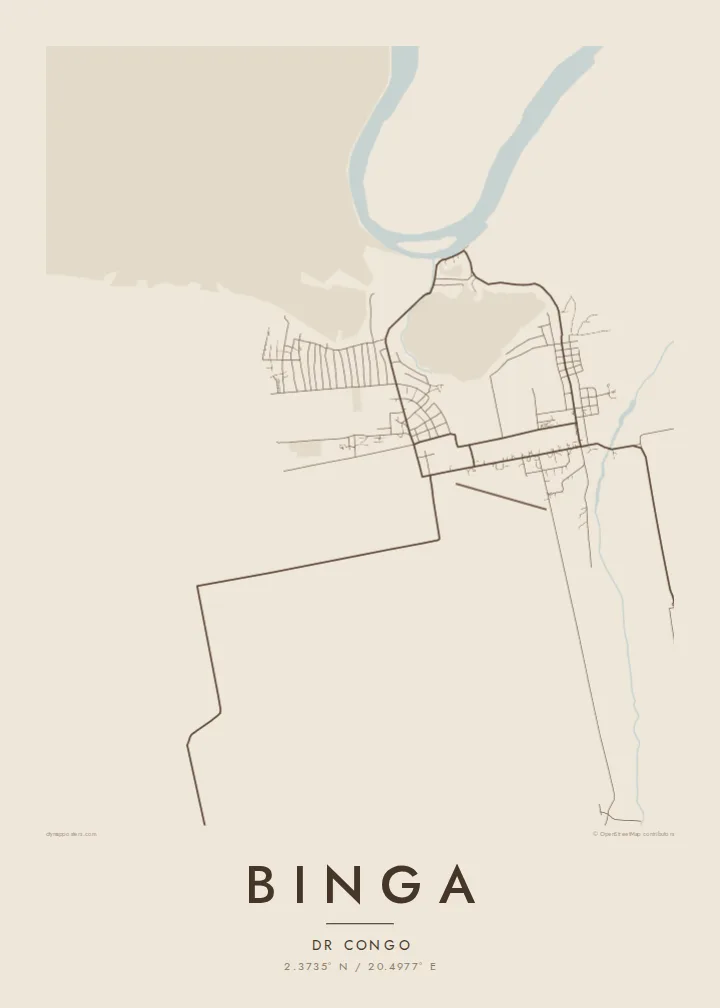
Dense equatorial vegetation surrounds the settlement on every side. The map therefore frames the town as a distinct cluster of lines set in broad, quiet empty space.
Nunap assingata plakatia minimalistiusoq · CD
2.3735° N / 20.4977° E
A town in the Congo Basin forest, its roads and clearings drawn against wide stretches of equatorial green.


Illoqarfik ataaseq, misigisat tallimat
Stiili toqqaruk illumi qanoq isikkoqarnersoq takuniassallugu. Stiilit tamaasa akiisa assigiipput — naqitat, qaammatitat imaluunniit HD-filit.
 Pikselit tamakkerlugit · 24 × 36″ naqitat filii
Naqitamut erseqqissoq
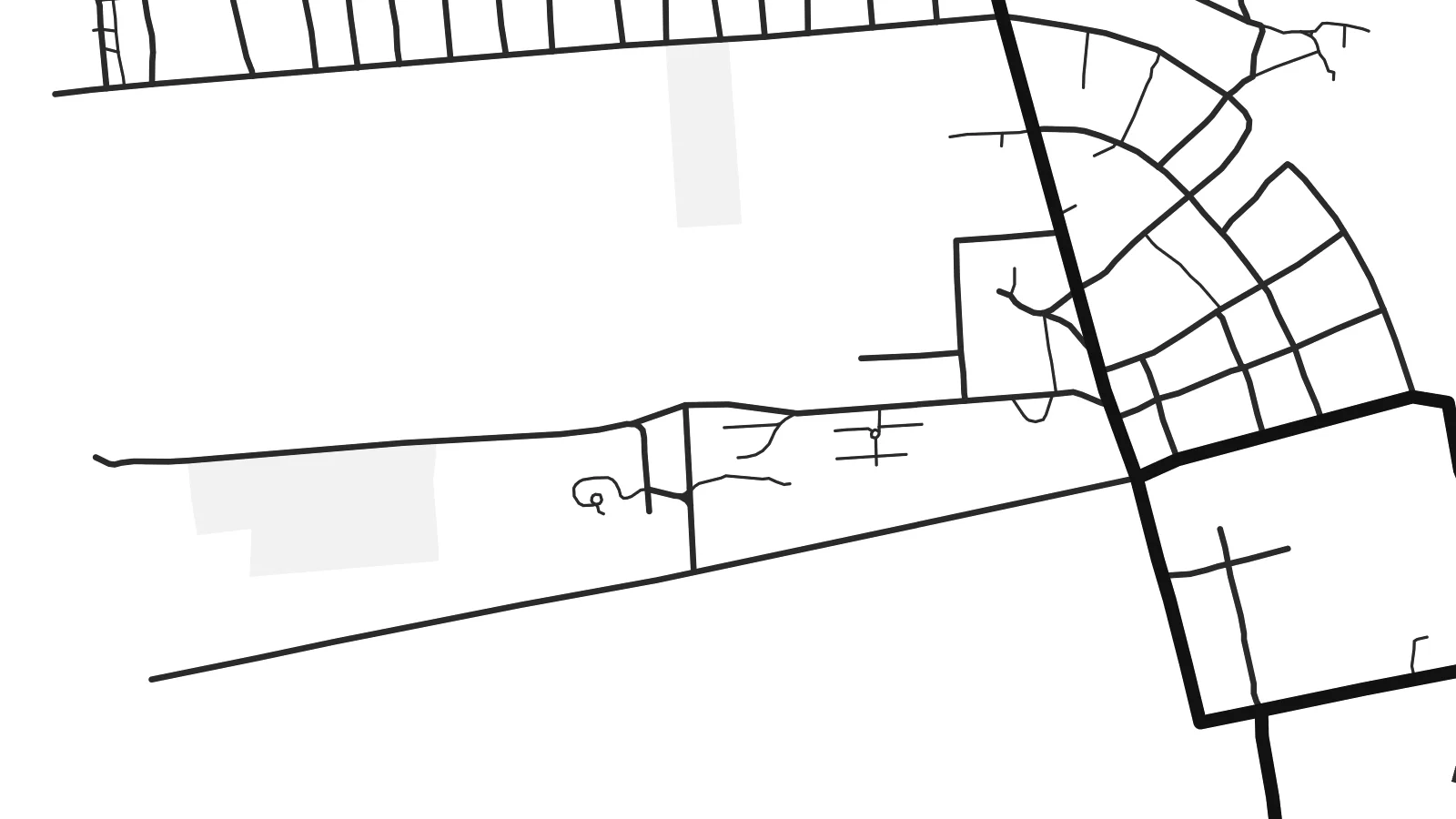
Tamanna naqitat filiata 100%-ia ilaannaanga. Poster tamaasa — naqitat, qaammatitallu imaluunniit aalajangersimasumik ikkussat — serverivitsinni 300 DPI-mik, 7,200 × 10,800 pikselinnut tikillugu, suliarineqarput, taamaattumik aqquserpiit mikinerpaaqisut 24 × 36″-imi naqitami erseqqissuarlutik takuneqarsinnaapput.
Sarfamiippoq


Nunap assinga
Binga is in Mongala Province in the north of the Democratic Republic of the Congo, deep in the equatorial forest of the Congo Basin. On a map the town reads as a cluster of streets and plots cut into a largely unbroken landscape. A few roads lead away toward other settlements in the region.
The area is associated with large oil palm plantations established during the colonial period, and that farming history shows in the surrounding land. More regular clearings and tracks appear among the forest there. Within the town, streets tend to follow simple lines, with homes and compounds gathered along them and open space between neighbourhoods.
A Binga map poster is sparse by nature, and that is its strength. The composition rests on a small network of roads and a great deal of open ground, which in monochrome creates a calm, almost abstract image. For anyone connected to the town, it is a precise and dignified way to show where it sits.
Dense equatorial vegetation surrounds the settlement on every side. The map therefore frames the town as a distinct cluster of lines set in broad, quiet empty space.
Around the town, cleared plantation land has straighter tracks and more regular divisions than natural forest. This subtle pattern becomes visible in a clean print.
A handful of roads lead out of Binga toward other settlements in Mongala. They are drawn as long single lines that give the composition its structure and direction.
Nammineq ilusilersoruk
Ulloq, ateq imaluunniit oqaaseqaatitit ilanngukkit, ilusaa, angissusaa imaluunniit sammivia allanngortiguk.
Akeqanngitsoq takuniassaq qaffasissuseq appasinnerusoq ilisarnaataqarluni. Naqitat aamma HD filit 300 DPI-mik, 7,200 × 10,800 px-nut tikillugu, ilisarnaataqanngitsumik suliarineqarput.
Sooq Binga
For people from Binga living in Kinshasa, Lisala or abroad, images of their home town can be hard to find. A map offers something exact and personal: the layout of the streets they know, set in the landscape that defines the region.
Add a title, a subtitle such as a family name or a year, and the coordinates line, then select one of five styles. The $9 download includes 300 DPI PNG and print-ready PDF files in six sizes, and printed posters are also available.
Binga posteri tunisaqarfigiuk| Naqitap angissusia | Erseqqissusia | Fiilit |
|---|---|---|
| 30 × 40 cm (11.8 × 15.7″) | 3,543 × 4,724 px | PNG · PDF |
| 29.7 × 42 cm (A3, 11.7 × 16.5″) | 3,508 × 4,961 px | PNG · PDF |
| 42 × 59.4 cm (A2, 16.5 × 23.4″) | 4,961 × 7,016 px | PNG · PDF |
| 45.7 × 61 cm (18 × 24″) | 5,400 × 7,200 px | PNG · PDF |
| 50 × 70 cm (19.7 × 27.6″) | 5,906 × 8,268 px | PNG · PDF |
| 61 × 91.4 cm (24 × 36″) | 7,200 × 10,800 px | PNG · PDF |
Sanilliussigaanni takutitsineq akeqanngitsoq 900 px-inik silissuseqarpoq, nalunaaqutaqarpoq skærmimilu takuneqarnissaanut naatsorsuussaalluni. HD-fiilit sammivimmi tamarmi 8-riaammik erseqqinnerusinnaapput plakatitullu angissusilimmi tamarmi kusanartumik naqiterneqarsinnaallutik.
Qupperneq qulaani stiili toqqaruk, taavalu Poster Naqitat toqqarlugu — angissusia, kissaatigigukku qaammatitaaleraluarlutit — imaluunniit Digital HD Filit toqqaruk. Akiliuteqarnissaq ataatsimik pisarpoq, akiliutigineqareerpat tunisassat qupperneraat immiaassaaq.
Naqinneqarpoq assigiinngitsumik pitsaasumik 200 gsm-imik matte-mik paapimi, angissusit arfinillit ilaanni, 30 × 40 cm-miit 24 × 36″-mut. Naqitat posterit {printFrom}-miit aallartissapput, assartuineq ilanngullugu.
Aap. Qaammatit qernertumik, qaqortumik, naturimik eegimik imaluunniit qernertumik qisummik pilersorlugu toqqaruk. Igalaaq qisuutinnavianngitsoq ilaalluni tunniunneqarpoq, aammalu illumut qaleriiffigineqarnissamut piareersimavoq. Qaammatitat posterit {framedFrom}-miit aallartissapput, assartuineq ilanngullugu.
Assartuineq silarsuup tamakkerlugu akeqanngilaq. Poster tamaasa nunani 30+-mi suleqatigisatta naqitat naammattukkaanniit naqinneqarput, pisarialu ullormut 3-7-ni sulinerni tikittarpoq. Sumut killiffigisoq Tunisassakka ataani malinnaaffigisinnaavat.
Tikinneranit ullut 14-ni ingerlanngata ammasumik assiliaq nassiutigiuk, naqissaanngitsoq nutaamik naqinniassavarput imaluunniit akiliutit utertissavatit.
Aap. Qupperami editorimi, qulequtaq, qulequtaa ataani allaassutaq aamma sumiiffiup killiffiginera allanngortikkit kissaatigisatit malillugit, stiilillu angissusiallu toqqarlugit. Naqitat, qaammatitat aamma digitalit tunisassat tamarmik ilinnut sanaartorsimasoq atorput.
$9-mik akilerlugu 300 DPI PNG-mik aamma naqinnissamut piareersimasumik PDF-imik, angissusit arfinillit tamaasa, ilisarnaataqanngitsumik, sumiluunniit naqinniarnissamut pisaqassaatit. Suli isumaqanngiluit? Siullermik ilisarnaatilik akeqanngitsoq takuniassaq aallaqqaataani ikkussigit.
Qanittuni
