The Váh river
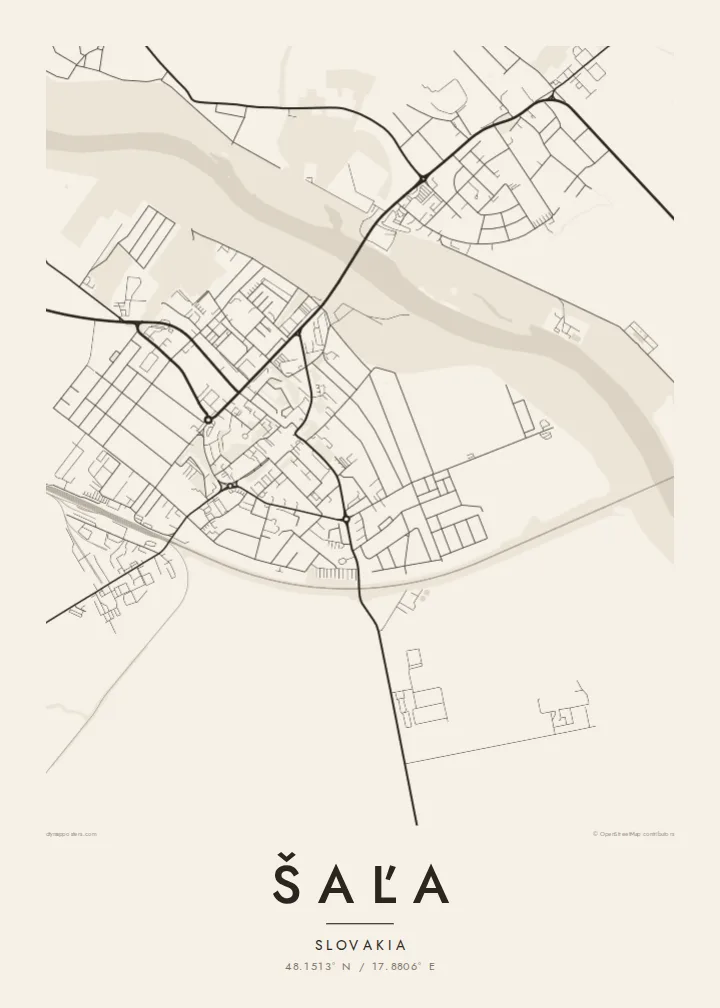
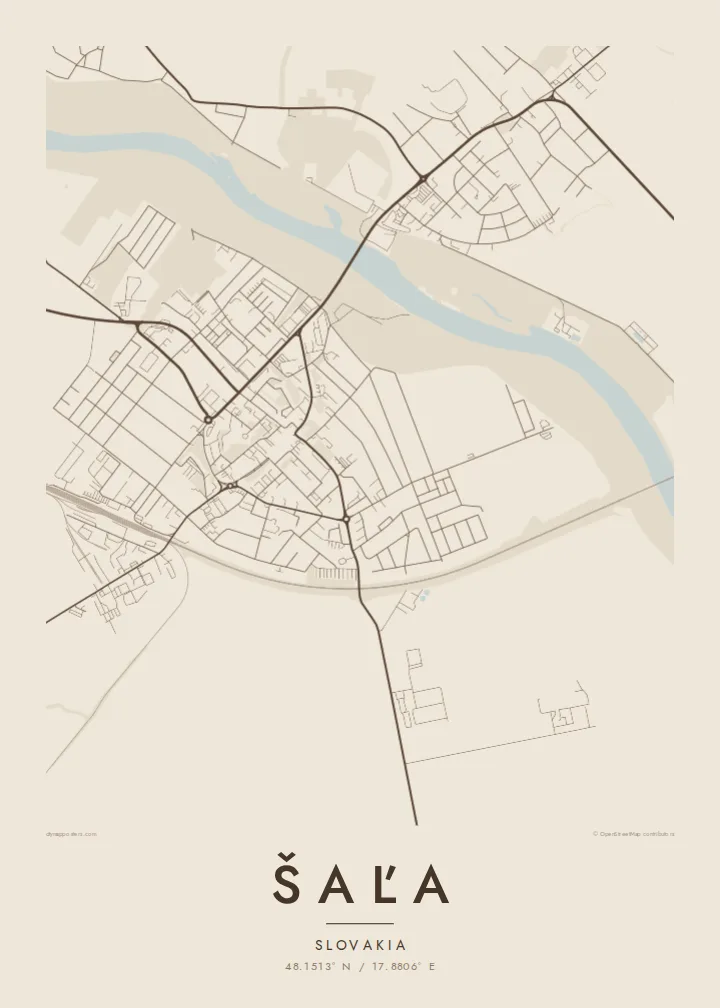
The Váh curves through the lowland and divides Šaľa in two. Its wide channel and the bridges across it form the strongest line on the poster, dark against the pale street pattern.
Nunap assingata plakatia minimalistiusoq · SK
48.1513° N / 17.8806° E
A compact lowland town drawn along the curve of the Váh, with bridges tying the centre to Veča on the opposite bank.



Illoqarfik ataaseq, misigisat tallimat
Stiili toqqaruk illumi qanoq isikkoqarnersoq takuniassallugu. Stiilit tamaasa akiisa assigiipput — naqitat, qaammatitat imaluunniit HD-filit.
 Pikselit tamakkerlugit · 24 × 36″ naqitat filii
Naqitamut erseqqissoq
Tamanna naqitat filiata 100%-ia ilaannaanga. Poster tamaasa — naqitat, qaammatitallu imaluunniit aalajangersimasumik ikkussat — serverivitsinni 300 DPI-mik, 7,200 × 10,800 pikselinnut tikillugu, suliarineqarput, taamaattumik aqquserpiit mikinerpaaqisut 24 × 36″-imi naqitami erseqqissuarlutik takuneqarsinnaapput.
Sarfamiippoq


Nunap assinga
Šaľa sits on the flat Danubian Lowland in the Nitra Region, and on a map the Váh is the first thing the eye follows. The river bends past the town in a broad, unhurried line and splits the built-up area in two: the main centre on one bank and the district of Veča on the other. Around them the land opens into large rectangular fields that run almost to the horizon.
Šaľa has one of the oldest written records of any town in Slovakia, with a first mention in a charter dated 1002. That long timeline is not obvious in the street pattern, which was mostly shaped in the twentieth century: housing estates, straight avenues and a railway line crossing the plain. The contrast between the river's curve and the geometry of the streets gives the map its character.
Šaľa is also home to Duslo, one of the largest chemical producers in the country, and its industrial site shows on the map as a block of large, regular shapes at the edge of town. A Šaľa map poster keeps all of this in black and white, so the river, the estates, the plant and the fields read together as one clean drawing.
The Váh curves through the lowland and divides Šaľa in two. Its wide channel and the bridges across it form the strongest line on the poster, dark against the pale street pattern.
On the opposite bank, Veča forms a second cluster of streets. Seen from above it balances the main centre, so the town reads as a pair rather than a single block.
Beyond the last houses the Danubian Lowland stretches out in long, rectangular plots. Their straight edges frame the town and give the composition a quiet, measured border.
Nammineq ilusilersoruk
Ulloq, ateq imaluunniit oqaaseqaatitit ilanngukkit, ilusaa, angissusaa imaluunniit sammivia allanngortiguk.
Akeqanngitsoq takuniassaq qaffasissuseq appasinnerusoq ilisarnaataqarluni. Naqitat aamma HD filit 300 DPI-mik, 7,200 × 10,800 px-nut tikillugu, ilisarnaataqanngitsumik suliarineqarput.
Sooq Šaľa
People who grew up in Šaľa, or who crossed the Váh every day on the way to school or work, often want a map that shows the whole town at once. The river's curve makes a strong central motif for a wall above a desk or in a hallway.
You can set your own title, subtitle and coordinates line, adding a family name or a meaningful date, and choose from five styles: Classic black & white, Noir, Paper, Blueprint or Sand. The $9 digital files include six print sizes as 300 DPI PNG and print-ready PDF.
Šaľa posteri tunisaqarfigiuk| Naqitap angissusia | Erseqqissusia | Fiilit |
|---|---|---|
| 30 × 40 cm (11.8 × 15.7″) | 3,543 × 4,724 px | PNG · PDF |
| 29.7 × 42 cm (A3, 11.7 × 16.5″) | 3,508 × 4,961 px | PNG · PDF |
| 42 × 59.4 cm (A2, 16.5 × 23.4″) | 4,961 × 7,016 px | PNG · PDF |
| 45.7 × 61 cm (18 × 24″) | 5,400 × 7,200 px | PNG · PDF |
| 50 × 70 cm (19.7 × 27.6″) | 5,906 × 8,268 px | PNG · PDF |
| 61 × 91.4 cm (24 × 36″) | 7,200 × 10,800 px | PNG · PDF |
Sanilliussigaanni takutitsineq akeqanngitsoq 900 px-inik silissuseqarpoq, nalunaaqutaqarpoq skærmimilu takuneqarnissaanut naatsorsuussaalluni. HD-fiilit sammivimmi tamarmi 8-riaammik erseqqinnerusinnaapput plakatitullu angissusilimmi tamarmi kusanartumik naqiterneqarsinnaallutik.
Qupperneq qulaani stiili toqqaruk, taavalu Poster Naqitat toqqarlugu — angissusia, kissaatigigukku qaammatitaaleraluarlutit — imaluunniit Digital HD Filit toqqaruk. Akiliuteqarnissaq ataatsimik pisarpoq, akiliutigineqareerpat tunisassat qupperneraat immiaassaaq.
Naqinneqarpoq assigiinngitsumik pitsaasumik 200 gsm-imik matte-mik paapimi, angissusit arfinillit ilaanni, 30 × 40 cm-miit 24 × 36″-mut. Naqitat posterit {printFrom}-miit aallartissapput, assartuineq ilanngullugu.
Aap. Qaammatit qernertumik, qaqortumik, naturimik eegimik imaluunniit qernertumik qisummik pilersorlugu toqqaruk. Igalaaq qisuutinnavianngitsoq ilaalluni tunniunneqarpoq, aammalu illumut qaleriiffigineqarnissamut piareersimavoq. Qaammatitat posterit {framedFrom}-miit aallartissapput, assartuineq ilanngullugu.
Nassiussineq nuna tamakkerlugu akeqanngilaq. Assitaq tamaat nunani 30+-ni naqiterisartugut ataani qaninnerpaamit naqiterneqartarpoq, ullunilu sulifiusuni 3–7-ni tikittarluni. Pisiat atuuffissaat aamma malinnaaffigineqarsinnaavoq Pisiassanni (My Orders). Nunat ilaanni sapaatit-akunneri 2–5-ni sivisussuseqarpoq, nunanilu suliffissaarutitsinnik nassiussaqarsinnaanngitsuni qiffissap saqqummiunneqartarpoq akiliinnginnermi.
Tikinneranit ullut 14-ni ingerlanngata ammasumik assiliaq nassiutigiuk, naqissaanngitsoq nutaamik naqinniassavarput imaluunniit akiliutit utertissavatit.
Aap. Qupperami editorimi, qulequtaq, qulequtaa ataani allaassutaq aamma sumiiffiup killiffiginera allanngortikkit kissaatigisatit malillugit, stiilillu angissusiallu toqqarlugit. Naqitat, qaammatitat aamma digitalit tunisassat tamarmik ilinnut sanaartorsimasoq atorput.
$9-mik akilerlugu 300 DPI PNG-mik aamma naqinnissamut piareersimasumik PDF-imik, angissusit arfinillit tamaasa, ilisarnaataqanngitsumik, sumiluunniit naqinniarnissamut pisaqassaatit. Suli isumaqanngiluit? Siullermik ilisarnaatilik akeqanngitsoq takuniassaq aallaqqaataani ikkussigit.
Qanittuni
