Confluence of rivers
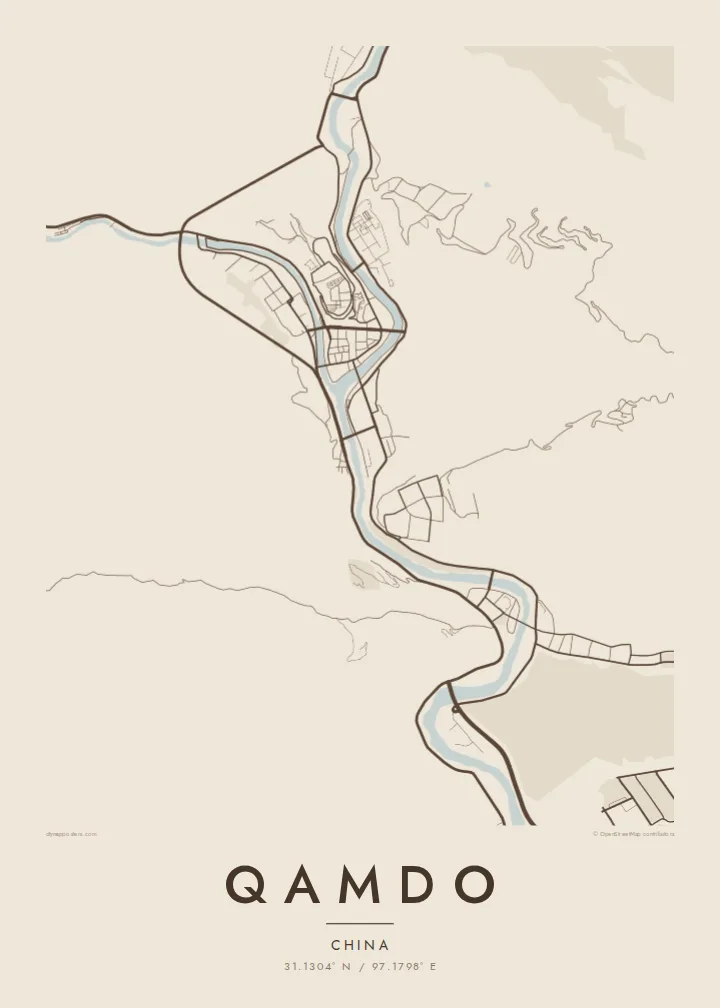
The Dza Chu and Ngom Chu meet at the heart of the town. Their joined channel heads south as the Lancang, and the fork gives the map its clear Y-shaped outline.
Boodh khariidad fudud · Shiinaha
31.1304° N / 97.1798° E
A narrow wedge of streets where two mountain rivers meet and join to form the upper Mekong, walled in by steep slopes


Hal magaalo, shan dareen
Taabo qaab si aad u aragto sida uu ku muuqdo darbiga. Dhammaan qaababka waa isku qiimo — daabacan, birxiin ah ama faylal HD ah.
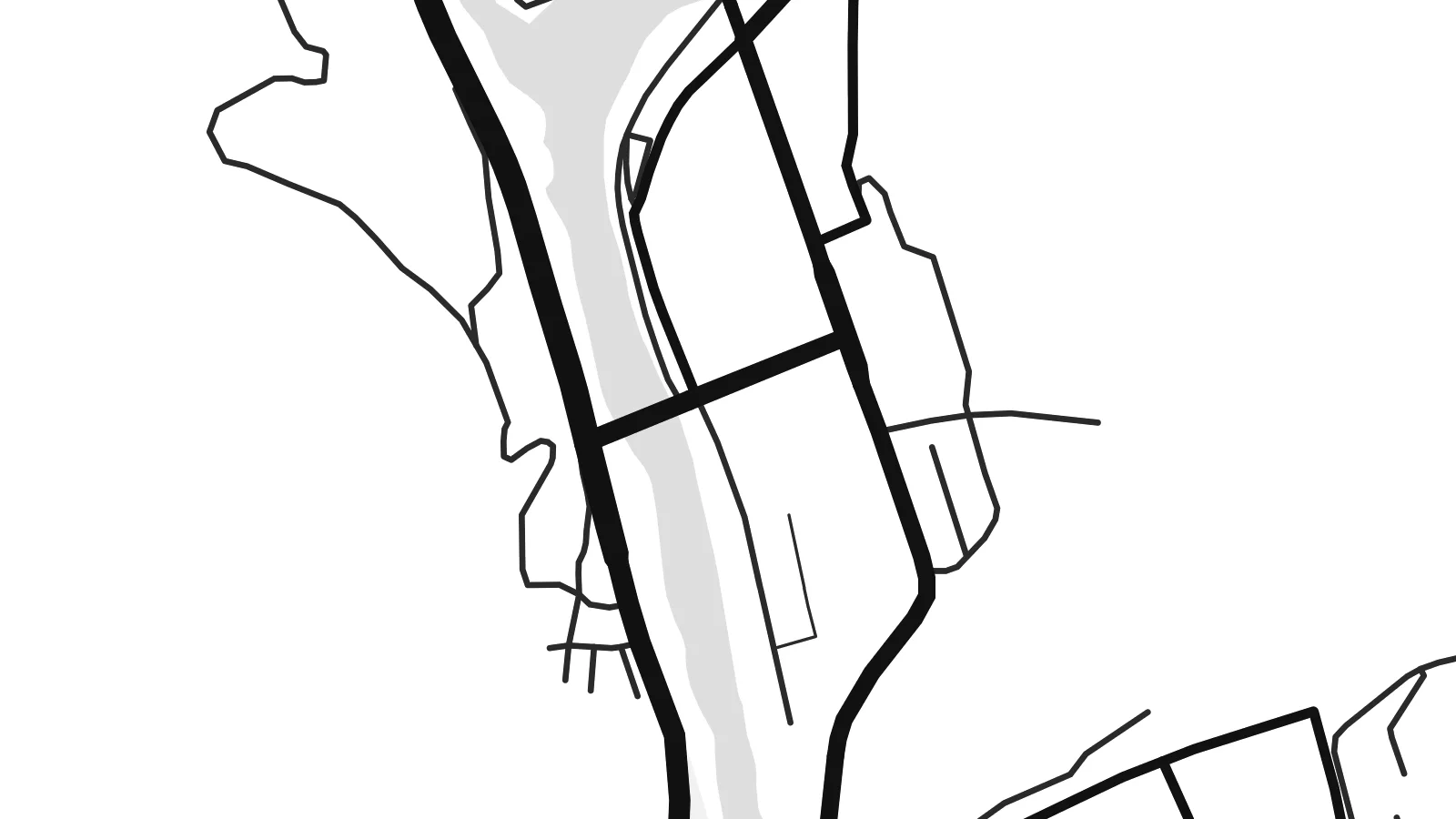 Pixel-yada dhabta ah · Faylka daabacaadda 24 × 36″
Daabacaad fiiqan
Kani waa go'an 100% ah oo ka mid ah faylka daabacaadda dhabta ah. Boostar kasta — daabacan, birxiin ah ama la soo dejiyay — waxaa lagu sameeyaa serfarradayada 300 DPI, ilaa 7,200 × 10,800 pixel, si xitaa waddooyinka ugu yaryar ugu sii muuqdaan si cad daabacaadda 24 × 36″.
Gidaarka


Khariidadda
Seen from above, Qamdo sits on a point of land in eastern Tibet, at the spot where two rivers, the Dza Chu and the Ngom Chu, flow together. Below the junction they carry on as the Lancang, the name the upper Mekong takes in China. The town fills the flat ground at the confluence and follows both valleys upstream, so its street plan looks like a letter Y cut into the mountains.
The terrain sets the shape of the city more than any plan does. The valley floors are narrow, and the slopes rise sharply on every side, so buildings line the riverbanks in long bands and the roads bend with the water. Bridges link the neighbourhoods on the far banks back to the central point. On a Qamdo map poster the rivers stay in clear view, and the blank hillsides around them read as open space.
Qamdo has long been one of the main towns of the Kham region and a stop on the old routes between Tibet and Sichuan and Yunnan. On a terrace above the confluence stands Qamdo Monastery, a large Gelug monastery founded in the fifteenth century, which still shapes the skyline. The town lies at roughly 3,200 metres, and that height matters in every valley and slope you see on the map.
The Dza Chu and Ngom Chu meet at the heart of the town. Their joined channel heads south as the Lancang, and the fork gives the map its clear Y-shaped outline.
Qamdo Monastery sits on raised ground between the two rivers, above the central streets. Its large compound shows up on the map as a distinct block at the top of the confluence.
Steep slopes hem the town in, so its roads run in long, curving lines beside the rivers. Bridges cross the water at intervals and tie the separate banks into one town.
Adigu u samee
Ku dar taariikh, magac ama weedh adiga kuu gaar ah, beddel qaabka, cabbirka ama jihada.
Tijaabada bilaashka ah waxay leedahay tayo hoose oo leh sumad-biyood. Daabacaadaha iyo faylalka HD waxaa lagu sameeyaa 300 DPI, ilaa 7,200 × 10,800 px, iyagoo aan lahayn sumad-biyood.
Maxaa Qamdo
Qamdo appeals to people who have made the long overland journey through Kham, or to anyone who grew up in these valleys. Where rivers meet in the mountains, the map has a strong outline, and in black and white it reads almost like a drawing of how the water runs.
You can personalise the poster with your own title, subtitle and coordinates line, perhaps the date you crossed a pass or first reached the town. Choose from five styles: Classic black & white, Noir, Paper, Blueprint or Sand. Get HD files for $9, or order a matte print with an optional wooden frame.
Dalbo boostarka Qamdo| Cabbirka daabacaadda | Tayada sawirka | Faylasha |
|---|---|---|
| 30 × 40 cm (11.8 × 15.7″) | 3,543 × 4,724 px | PNG · PDF |
| 29.7 × 42 cm (A3, 11.7 × 16.5″) | 3,508 × 4,961 px | PNG · PDF |
| 42 × 59.4 cm (A2, 16.5 × 23.4″) | 4,961 × 7,016 px | PNG · PDF |
| 45.7 × 61 cm (18 × 24″) | 5,400 × 7,200 px | PNG · PDF |
| 50 × 70 cm (19.7 × 27.6″) | 5,906 × 8,268 px | PNG · PDF |
| 61 × 91.4 cm (24 × 36″) | 7,200 × 10,800 px | PNG · PDF |
Isbarbardhig ahaan, muuqaalka hordhaca ah ee bilaashka ah waa 900 px ballac, wuxuu leeyahay calaamad biyo, waxaana loogu talagalay shaashadaha. Faylasha HD waxay leeyihiin ilaa 8× tayada jiho kasta, waxayna si nadiif ah ugu daabacmaan cabbirka buuxa ee boodhka.
Dooro qaab bogga kore, ka dibna dooro Boostar la Daabacay — cabbir iyo, haddii aad rabto, birxiin — ama Faylal HD ah oo Dijital ah. Bixinta waxay qaadataa hal tallaabo, boggaaga dalabkaana wuu cusboonaysiiyaa isla marka lacagta la bixiyo.
Waxaa lagu daabacaa warqad tayo sare ah oo 200 gsm ah oo matte ah, lix cabbir oo ka mid ah, laga bilaabo 30 × 40 cm ilaa 24 × 36″. Boostarrada la daabacay waxay ka bilaabmaan {printFrom}, rarista way ku jirtaa.
Haa. Dooro birxiin alwaax adag ah oo leh midab madow, cad, oak dabiici ah ama alwaax madow. Waxaa la socda muraayad aan jabin oo diyaar u ah in la sudho. Boostarrada birxiinta leh waxay ka bilaabmaan {framedFrom}, rarista way ku jirtaa.
Rarista adduunka oo dhan waa bilaash. Boostar kasta waxaa daabacaya shirkaddayada daabacaadda ee ugu dhow, oo ku sugan in ka badan 30 dal, waxaana caadi ahaan gaadhaya 3–7 maalmood oo shaqo. Waxaad ku raad-raaci kartaa xaaladda iyo la socodka Dalabaadkayga hoostiisa.
Noo soo dir sawir 14 maalmood gudahood laga bilaabo maalinta rarista, waxaanan mar labaad si bilaash ah u daabici doonaa ama lacagtaada dib kuu celin doonaa.
Haa. Tifaftiraha bogga ku yaal, beddel cinwaanka, cinwaanka hoose iyo khadka isku-duwidyada wax alla wixii aad doonayso, kadibna dooro qaab iyo cabbir. Dalabyada la daabacay, birxiinta leh, iyo kuwa dijitalka ahba waxay isticmaalayaan naqshaddaada saxda ah.
$9 ayaad ku heli doontaa faylal PNG 300 DPI ah iyo PDF diyaar u ah daabacaadda, lixda cabbir oo dhan, iyaga oo aan lahayn sumad-biyood, si aad meel kasta u daabacdo. Weli ma hubtid? Marka hore soo deji tijaabo bilaash ah oo leh sumad-biyood.
Agagaarka
