Meeting of valleys
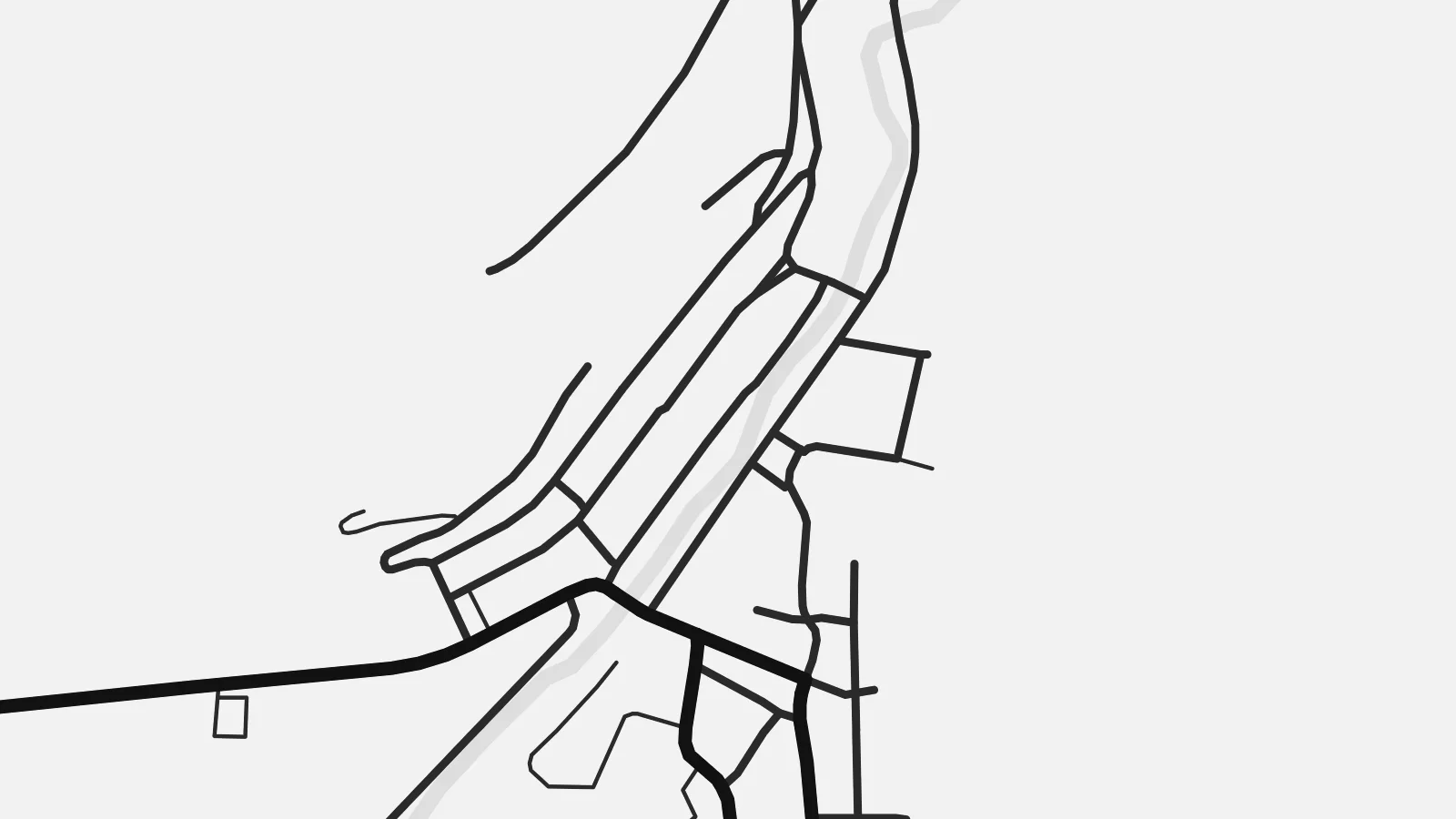
Abriès sits at a junction of valleys, so streams and paths radiate from the village, giving the map a gathered centre with lines reaching outward.
Pōhita mape faigofie · France
44.7953° N / 6.9272° E
A high Queyras village at a meeting of valleys near the Italian border, surrounded by wide mountain slopes.


Taone e tahi, lagona e lima
Pa'i se ata ke va'ai ai i luga o te pā. E tutusa te tau o ata uma — i lomiga, fakapipi'i i faleata, pe ko faila HD.
 Pixels mo'i · Faila lomiga 24 × 36″
Manino mo te lomiga
Ko se kupega 100% mai te faila lomiga mo'i. Poster uma — pe lomiina, fakapipi'i i faleata, pe download-ina — e fakaatagia i luga o a matou setula i te 300 DPI, e oo atu ki te 7,200 × 10,800 pixels, ina ia mautinoa e ma'ai pea auala tuai foki i luga o se lomiga 24 × 36″.
I luga o te pa


Te mape
Abriès lies in the upper Guil valley, in the Queyras area of the Hautes-Alpes, close to the border with Italy. The village sits where side valleys join the main valley, and roads and paths head off in several directions from its compact centre. With a territory of about seventy-seven square kilometres, the commune is largely high mountain ground, and the village forms a small, dense point within it.
Abriès is part of the Queyras Regional Natural Park, known for its traditional wooden and stone houses, clear light and relatively quiet ski areas. The small ski slopes above the village make only a light mark on the map. Beyond them, streams, tracks and mountain paths spread outward through larch woods and pasture toward the frontier ridges.
An Abriès map poster places the village at the centre of a wide, open composition. The Guil and its tributaries draw fine lines through the valleys, a single road follows the river, and white space dominates the upper part of the frame. It is a spare and quietly striking print for those who know the far end of the Queyras.
Abriès sits at a junction of valleys, so streams and paths radiate from the village, giving the map a gathered centre with lines reaching outward.
The Guil runs through the commune along the main valley, accompanied by the road, a clear axis connecting the village to the rest of the Queyras.
East of the village the ground rises toward the mountains along the Italian border, rendered on the print as broad open space crossed by a few paths.
Fai mo koe
Fakaopoopo he aho, he igoa pe he upu a koe, hui te faiga, te lahi pe te tūlaga.
Ko te va'aiga e leai se totogi e maualalo tona resolution ma iai se fakailoga vai. E fakaatagia lomiga ma faila HD i te 300 DPI, e oo atu ki te 7,200 × 10,800 px, e aunoa ma se fakailoga vai.
Aiheā Abriès
Abriès is a place people seek out for its distance from the largest resorts and its access to long walks and ski tours. A map records that sense of reaching the end of the road, and suits a study, a cabin or a quiet corner.
The title, subtitle and coordinates line can all be changed, and there are five styles: Classic black & white, Noir, Paper, Blueprint and Sand. The HD files cost $9 and cover six print sizes, while printed posters come on matte paper with an optional frame.
Oka te poster Abriès| Lahi o te lomiga | Manino | Faila |
|---|---|---|
| 30 × 40 cm (11.8 × 15.7″) | 3,543 × 4,724 px | PNG · PDF |
| 29.7 × 42 cm (A3, 11.7 × 16.5″) | 3,508 × 4,961 px | PNG · PDF |
| 42 × 59.4 cm (A2, 16.5 × 23.4″) | 4,961 × 7,016 px | PNG · PDF |
| 45.7 × 61 cm (18 × 24″) | 5,400 × 7,200 px | PNG · PDF |
| 50 × 70 cm (19.7 × 27.6″) | 5,906 × 8,268 px | PNG · PDF |
| 61 × 91.4 cm (24 × 36″) | 7,200 × 10,800 px | PNG · PDF |
Mo te fakatatau, ko te fakaakoakoga e hē totogi e 900 px te lautele, e ihi te fakailoga ma mo te lau komipiuta. Ko nā faila HD e oko ki te 8× te manino i itū taki tahi ma e lomia lelei i te lahi kātoa o te pōhita.
Filifili se ata i te pito i luga o te itulau, ona filifili lea o te Poster Lomiina — se lapoa ma, ka manako ai koe, se faleata — pe ko Faila HD Fakaonaonaina. E tasi te laasaga o te ōkaina, ma ka fakafou loa lau itulau ōkaina pe a mae'a te totogi.
E lomiina i luga o se pepa matte kaliki maualuga e 200 gsm, i se tasi o ni lapoa e ono, mai le 30 × 40 cm ki te 24 × 36″. E kamata te tau o poster lomiina mai le {printFrom}, aofia ai te uta.
Ioe. Filifili se faleata lakau malō i te lanu uli, tea, oki masani pe lakau pouli. E aumai fakatasi mo se tioata e le gagamu ma ua sauni ke tautau. E kamata te tau o poster fakapipi'i i se faleata mai le {framedFrom}, aofia ai te uta.
E leai se totogi o te ave i te lalolagi katoa. Ko te pepa ata taki tasi e lomi e te hoa lomi e latalata mai ki a matou i atunuku e 30+, ma e masani ona aulia i aso galuega e 3–7. E mafai ke e mulimuli i te tulaga ma te ala o tau poloaiga i lalo o Aku Poloaiga. E nai atunuku e 2–5 vaiaso te umi, ma i te mea e le i ave ai matou, e fakailoa atu e te initeneti a e le i totogi koe.
Auina mai se ata pikitia i loto o te 14 aso mai te taimi na oo mai ai, ka toe lomiina e matou e leai se totogi pe toe totogi atu lau tupe.
Ioe. I te mea fakasa'o i luga o lenei itulau, sui te ulutala, te ulutala lalo ma te laina fakamaoniga tulaga ki so se mea e manako ai koe, ona filifili lea o se ata ma se lapoa. Okaina lomiina, fakapipi'i i faleata, ma fakaonaonaina e fakaaogā uma i tau ata tonu.
Mo le $9 e maua e koe ni faila PNG 300 DPI ma PDF sauni-mo-lomiga i lapoa e ono uma, e aunoa ma se fakailoga vai, ke lomiina i so se mea. E le'i mautinoa? Download muamua se va'aiga fakailoga vai e leai se totogi.
