Indus floodplain
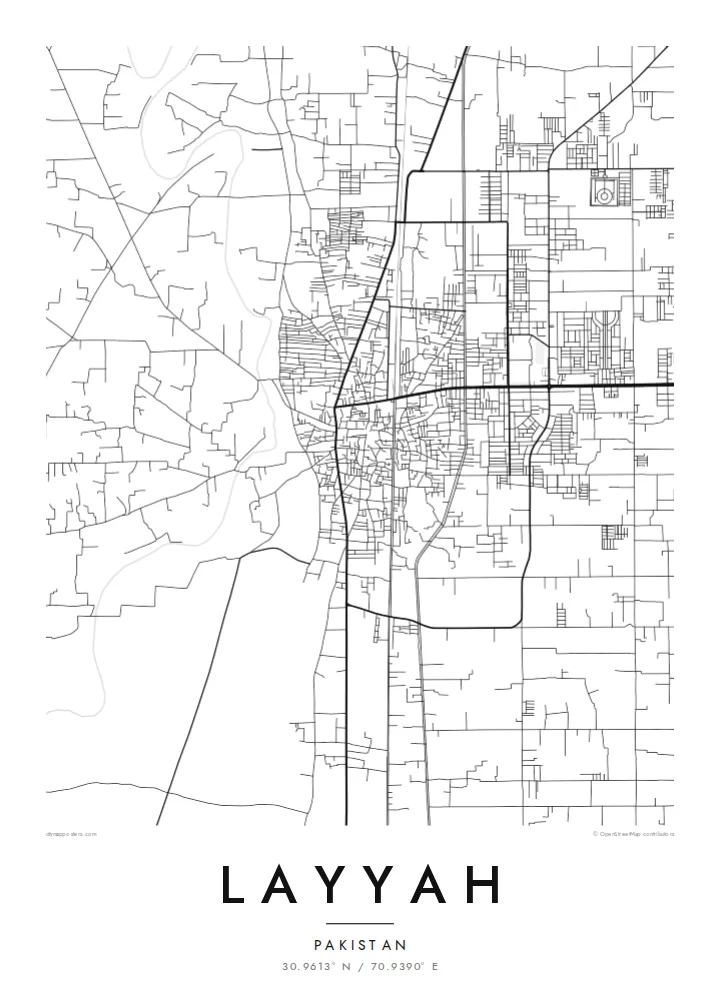
West of the town the river spreads into a wide braided bed of channels and sandbars, a restless landscape that gives the map its most organic shapes.
Pōhita mape faigofie · Pakistan
30.9613° N / 70.9390° E
A Punjab town on level ground between the braided Indus floodplain and the sandy expanse of the Thal.


Taone e tahi, lagona e lima
Pa'i se ata ke va'ai ai i luga o te pā. E tutusa te tau o ata uma — i lomiga, fakapipi'i i faleata, pe ko faila HD.
 Pixels mo'i · Faila lomiga 24 × 36″
Manino mo te lomiga
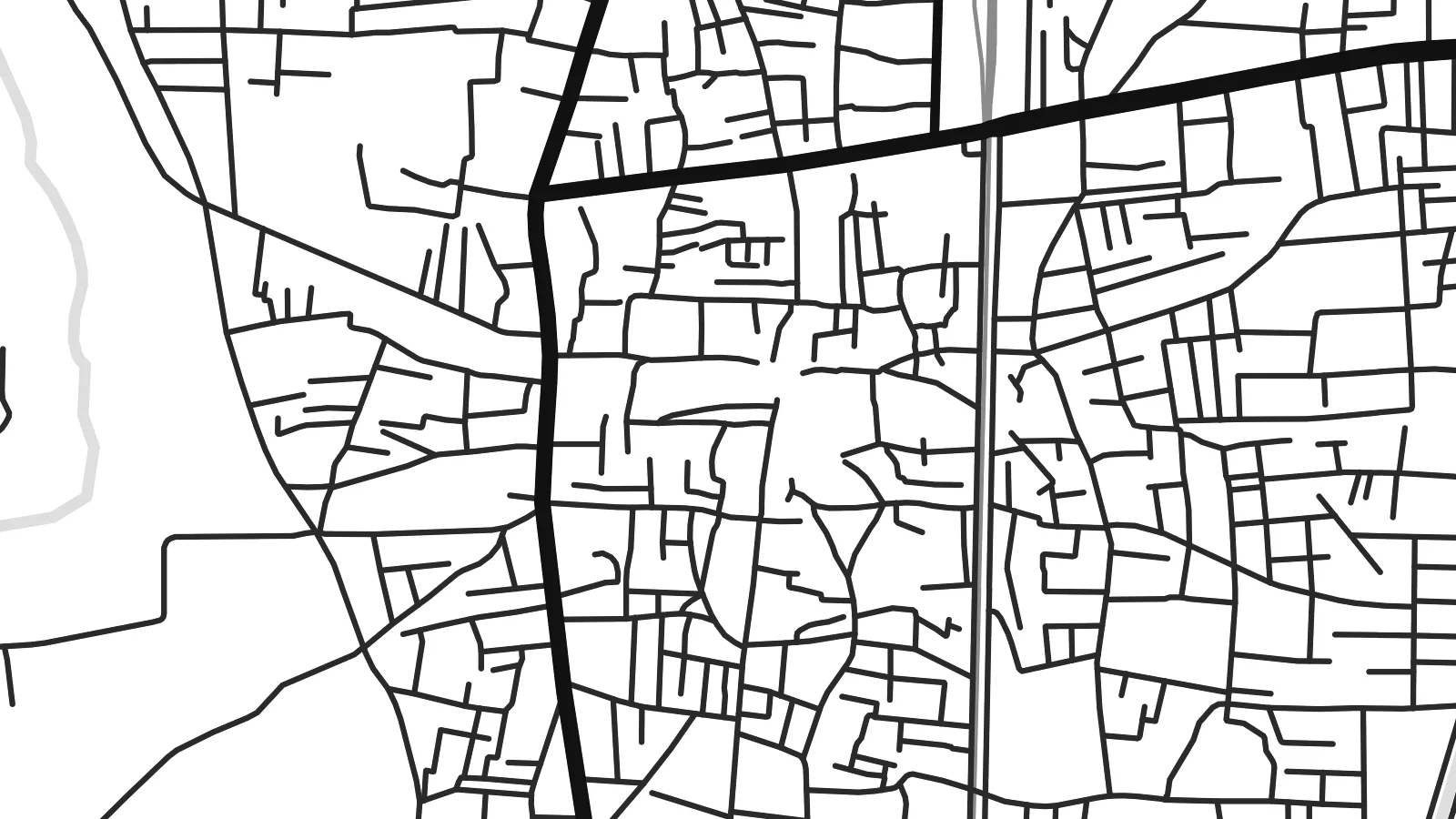
Ko se kupega 100% mai te faila lomiga mo'i. Poster uma — pe lomiina, fakapipi'i i faleata, pe download-ina — e fakaatagia i luga o a matou setula i te 300 DPI, e oo atu ki te 7,200 × 10,800 pixels, ina ia mautinoa e ma'ai pea auala tuai foki i luga o se lomiga 24 × 36″.
I luga o te pa


Te mape
Layyah lies in southwestern Punjab, on the eastern side of the Indus, where the wide river plain meets the drier lands of the Thal. On a map the surroundings are flat and open, crossed by canals, field tracks and scattered villages. The town itself forms a compact centre with roads fanning outward to neighbouring districts, and there are no hills or coastlines to interrupt its plan.
The river's presence is felt more than seen from the streets. To the west, the Indus spreads into a broad bed of channels, sandbars and seasonal floodland that shifts from year to year. To the east, the land becomes sandier and more sparsely settled. The town sits between these two landscapes, and its roads and canals mark the line where irrigation has made steady farming possible.
Layyah is the administrative centre of its district and a market town for the surrounding agricultural area. Its map is quiet and even in texture, a web of local streets rather than grand avenues. A Layyah map poster suits that modesty: a clear network of roads on level ground, with the river country on one side and the Thal on the other, rendered in simple lines.
West of the town the river spreads into a wide braided bed of channels and sandbars, a restless landscape that gives the map its most organic shapes.
Irrigation canals run across the level land around Layyah in long straight lines, dividing fields and guiding roads, and they are among the clearest features on the map.
To the east the ground turns sandier and settlement thins out, so the dense town streets stand out against a lighter, emptier background.
Fai mo koe
Fakaopoopo he aho, he igoa pe he upu a koe, hui te faiga, te lahi pe te tūlaga.
Ko te va'aiga e leai se totogi e maualalo tona resolution ma iai se fakailoga vai. E fakaatagia lomiga ma faila HD i te 300 DPI, e oo atu ki te 7,200 × 10,800 px, e aunoa ma se fakailoga vai.
Aiheā Layyah
For people from Layyah who now live in Lahore, the Gulf or further away, a map of home is a simple thing to keep on the wall. It shows the streets they know without needing any explanation.
You can personalise the title and subtitle, and set the coordinates line or a meaningful date. Five styles are available: Classic black & white, Noir, Paper, Blueprint and Sand, with Sand a natural fit for the Thal landscape nearby.
Oka te poster Layyah| Lahi o te lomiga | Manino | Faila |
|---|---|---|
| 30 × 40 cm (11.8 × 15.7″) | 3,543 × 4,724 px | PNG · PDF |
| 29.7 × 42 cm (A3, 11.7 × 16.5″) | 3,508 × 4,961 px | PNG · PDF |
| 42 × 59.4 cm (A2, 16.5 × 23.4″) | 4,961 × 7,016 px | PNG · PDF |
| 45.7 × 61 cm (18 × 24″) | 5,400 × 7,200 px | PNG · PDF |
| 50 × 70 cm (19.7 × 27.6″) | 5,906 × 8,268 px | PNG · PDF |
| 61 × 91.4 cm (24 × 36″) | 7,200 × 10,800 px | PNG · PDF |
Mo te fakatatau, ko te fakaakoakoga e hē totogi e 900 px te lautele, e ihi te fakailoga ma mo te lau komipiuta. Ko nā faila HD e oko ki te 8× te manino i itū taki tahi ma e lomia lelei i te lahi kātoa o te pōhita.
Filifili se ata i te pito i luga o te itulau, ona filifili lea o te Poster Lomiina — se lapoa ma, ka manako ai koe, se faleata — pe ko Faila HD Fakaonaonaina. E tasi te laasaga o te ōkaina, ma ka fakafou loa lau itulau ōkaina pe a mae'a te totogi.
E lomiina i luga o se pepa matte kaliki maualuga e 200 gsm, i se tasi o ni lapoa e ono, mai le 30 × 40 cm ki te 24 × 36″. E kamata te tau o poster lomiina mai le $39, aofia ai te uta.
Ioe. Filifili se faleata lakau malō i te lanu uli, tea, oki masani pe lakau pouli. E aumai fakatasi mo se tioata e le gagamu ma ua sauni ke tautau. E kamata te tau o poster fakapipi'i i se faleata mai le $99, aofia ai te uta.
E leai se totogi o te ave i te lalolagi katoa. Ko te pepa ata taki tasi e lomi e te hoa lomi e latalata mai ki a matou i atunuku e 30+, ma e masani ona aulia i aso galuega e 3–7. E mafai ke e mulimuli i te tulaga ma te ala o tau poloaiga i lalo o Aku Poloaiga. E nai atunuku e 2–5 vaiaso te umi, ma i te mea e le i ave ai matou, e fakailoa atu e te initeneti a e le i totogi koe.
Auina mai se ata pikitia i loto o te 14 aso mai te taimi na oo mai ai, ka toe lomiina e matou e leai se totogi pe toe totogi atu lau tupe.
Ioe. I te mea fakasa'o i luga o lenei itulau, sui te ulutala, te ulutala lalo ma te laina fakamaoniga tulaga ki so se mea e manako ai koe, ona filifili lea o se ata ma se lapoa. Okaina lomiina, fakapipi'i i faleata, ma fakaonaonaina e fakaaogā uma i tau ata tonu.
Mo le $9 e maua e koe ni faila PNG 300 DPI ma PDF sauni-mo-lomiga i lapoa e ono uma, e aunoa ma se fakailoga vai, ke lomiina i so se mea. E le'i mautinoa? Download muamua se va'aiga fakailoga vai e leai se totogi.
