Ebro waterfront
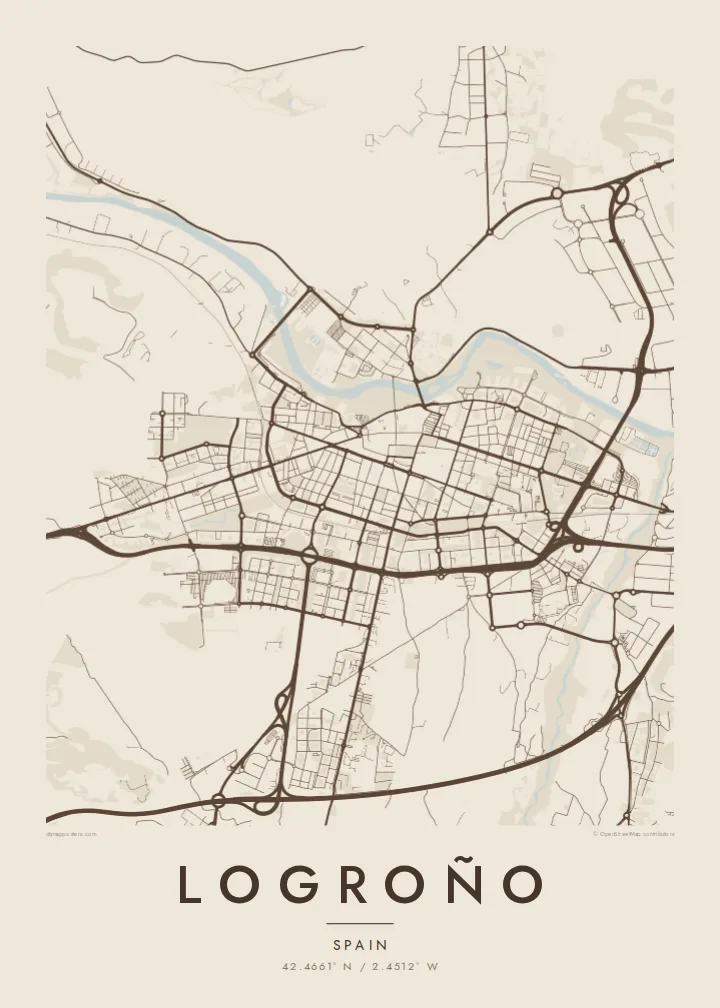
The river curves along the north of the city, bordered by long parks and riverside paths, giving the map a soft edge and a clear sense of orientation.
Pōhita mape faigofie · Spain
42.4661° N / 2.4512° W
A compact Rioja capital on the south bank of the Ebro, where the pilgrim route enters over an old stone bridge.


Taone e tahi, lagona e lima
Pa'i se ata ke va'ai ai i luga o te pā. E tutusa te tau o ata uma — i lomiga, fakapipi'i i faleata, pe ko faila HD.
 Pixels mo'i · Faila lomiga 24 × 36″
Manino mo te lomiga
Ko se kupega 100% mai te faila lomiga mo'i. Poster uma — pe lomiina, fakapipi'i i faleata, pe download-ina — e fakaatagia i luga o a matou setula i te 300 DPI, e oo atu ki te 7,200 × 10,800 pixels, ina ia mautinoa e ma'ai pea auala tuai foki i luga o se lomiga 24 × 36″.
I luga o te pa

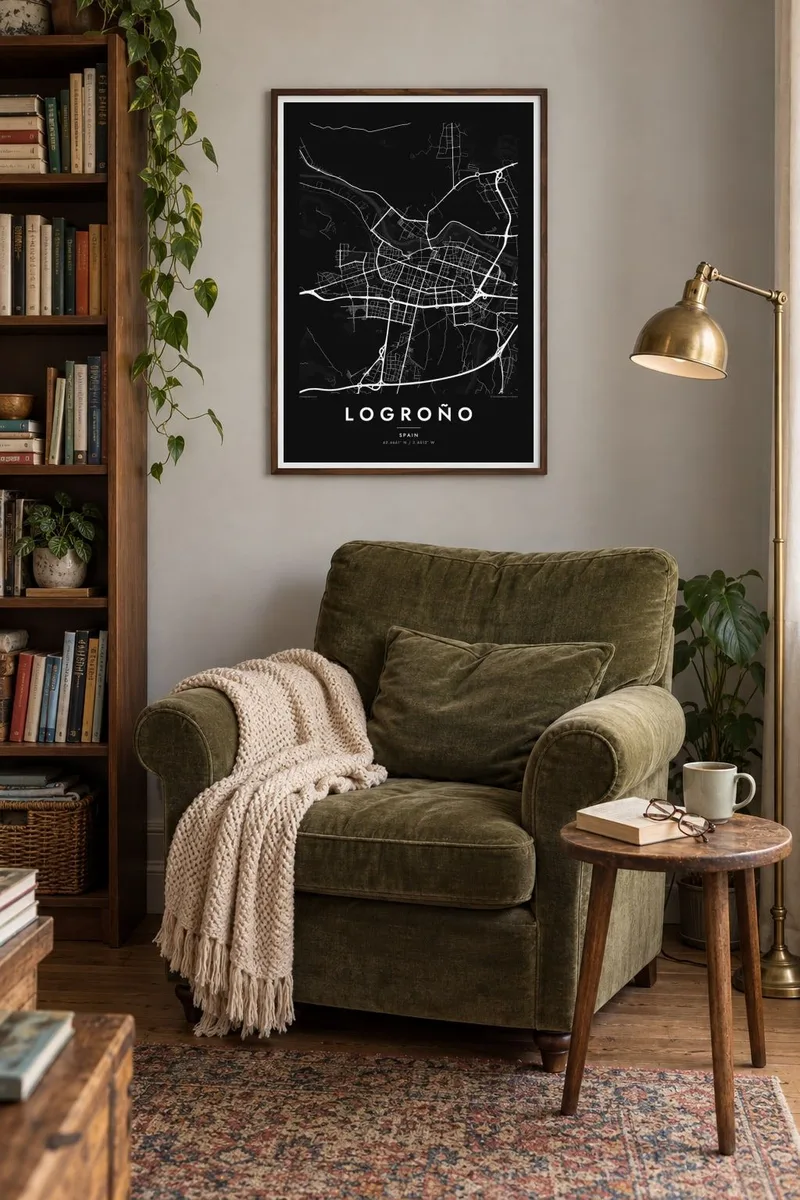
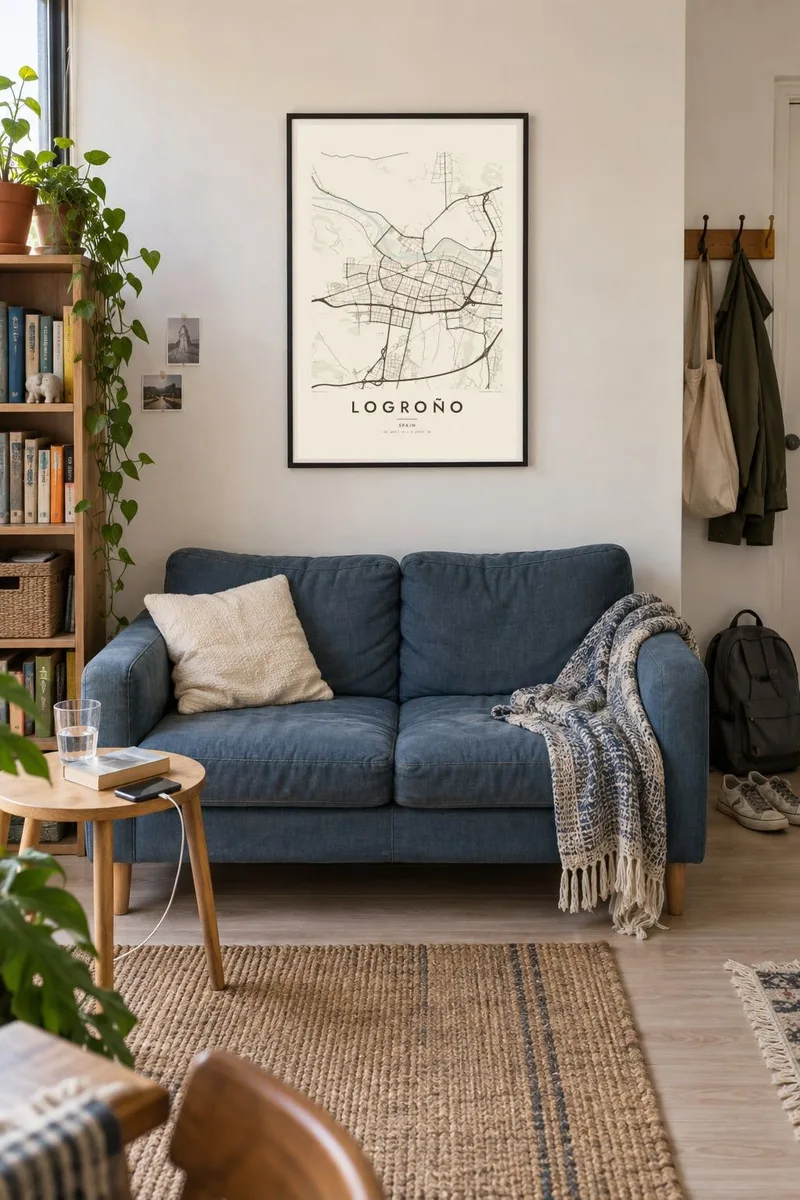
Te mape
Logroño spreads along the southern bank of the Ebro, with the river curving along its northern edge and parks lining much of the waterfront. From above, the old town forms a tight band close to the river, its streets running roughly parallel to the water. South of it, the later expansion follows a more regular grid, with wide avenues and larger blocks extending towards the ring roads.
Two historic crossings stand out on the map: the Puente de Piedra, the stone bridge used by pilgrims arriving on the Camino de Santiago from Navarre, and the Puente de Hierro, an iron bridge a short distance away. The Camino continues through the narrow streets of the old town before heading west, so the pilgrim route is written into the street plan itself.
Logroño is the capital of La Rioja and the centre of one of Spain's best-known wine regions. Calle Laurel and the lanes around it are famous for tapas bars packed close together. A Logroño map poster shows the city at a scale that feels walkable: the river, the bridges, the dense old quarter and the orderly blocks that grew beyond it.
The river curves along the north of the city, bordered by long parks and riverside paths, giving the map a soft edge and a clear sense of orientation.
The Puente de Piedra carries the Camino de Santiago into the city, a short straight stroke across the Ebro that marks the arrival of pilgrims walking in from Navarre.
Narrow streets run parallel to the river in the historic centre, including the tapas lanes around Calle Laurel, forming a fine-grained strip beside the more regular modern grid.
Fai mo koe
Fakaopoopo he aho, he igoa pe he upu a koe, hui te faiga, te lahi pe te tūlaga.
Ko te va'aiga e leai se totogi e maualalo tona resolution ma iai se fakailoga vai. E fakaatagia lomiga ma faila HD i te 300 DPI, e oo atu ki te 7,200 × 10,800 px, e aunoa ma se fakailoga vai.
Aiheā Logroño
Walkers who finished a stage of the Camino here, wine lovers who spent evenings on Calle Laurel, and people who grew up by the Ebro all have a reason to keep this city close. Its map is compact, balanced and easy to read.
Personalise the title, subtitle and coordinates line with a date, a stage of the walk or a name. Choose from Classic black & white, Noir, Paper, Blueprint or Sand; Paper has a warm, parchment feel that suits a pilgrimage keepsake.
Oka te poster Logroño| Lahi o te lomiga | Manino | Faila |
|---|---|---|
| 30 × 40 cm (11.8 × 15.7″) | 3,543 × 4,724 px | PNG · PDF |
| 29.7 × 42 cm (A3, 11.7 × 16.5″) | 3,508 × 4,961 px | PNG · PDF |
| 42 × 59.4 cm (A2, 16.5 × 23.4″) | 4,961 × 7,016 px | PNG · PDF |
| 45.7 × 61 cm (18 × 24″) | 5,400 × 7,200 px | PNG · PDF |
| 50 × 70 cm (19.7 × 27.6″) | 5,906 × 8,268 px | PNG · PDF |
| 61 × 91.4 cm (24 × 36″) | 7,200 × 10,800 px | PNG · PDF |
Mo te fakatatau, ko te fakaakoakoga e hē totogi e 900 px te lautele, e ihi te fakailoga ma mo te lau komipiuta. Ko nā faila HD e oko ki te 8× te manino i itū taki tahi ma e lomia lelei i te lahi kātoa o te pōhita.
Filifili se ata i te pito i luga o te itulau, ona filifili lea o te Poster Lomiina — se lapoa ma, ka manako ai koe, se faleata — pe ko Faila HD Fakaonaonaina. E tasi te laasaga o te ōkaina, ma ka fakafou loa lau itulau ōkaina pe a mae'a te totogi.
E lomiina i luga o se pepa matte kaliki maualuga e 200 gsm, i se tasi o ni lapoa e ono, mai le 30 × 40 cm ki te 24 × 36″. E kamata te tau o poster lomiina mai le {printFrom}, aofia ai te uta.
Ioe. Filifili se faleata lakau malō i te lanu uli, tea, oki masani pe lakau pouli. E aumai fakatasi mo se tioata e le gagamu ma ua sauni ke tautau. E kamata te tau o poster fakapipi'i i se faleata mai le {framedFrom}, aofia ai te uta.
E leai se totogi o te ave i te lalolagi katoa. Ko te pepa ata taki tasi e lomi e te hoa lomi e latalata mai ki a matou i atunuku e 30+, ma e masani ona aulia i aso galuega e 3–7. E mafai ke e mulimuli i te tulaga ma te ala o tau poloaiga i lalo o Aku Poloaiga. E nai atunuku e 2–5 vaiaso te umi, ma i te mea e le i ave ai matou, e fakailoa atu e te initeneti a e le i totogi koe.
Auina mai se ata pikitia i loto o te 14 aso mai te taimi na oo mai ai, ka toe lomiina e matou e leai se totogi pe toe totogi atu lau tupe.
Ioe. I te mea fakasa'o i luga o lenei itulau, sui te ulutala, te ulutala lalo ma te laina fakamaoniga tulaga ki so se mea e manako ai koe, ona filifili lea o se ata ma se lapoa. Okaina lomiina, fakapipi'i i faleata, ma fakaonaonaina e fakaaogā uma i tau ata tonu.
Mo le $9 e maua e koe ni faila PNG 300 DPI ma PDF sauni-mo-lomiga i lapoa e ono uma, e aunoa ma se fakailoga vai, ke lomiina i so se mea. E le'i mautinoa? Download muamua se va'aiga fakailoga vai e leai se totogi.
