Avenida Paulista
A straight avenue about 2.8 kilometres long, following one of the city’s high ridges south-west of the old centre and forming a clear diagonal through the surrounding grid.
Pōhita mape faigofie · Brazil
23.5475° S / 46.6361° W
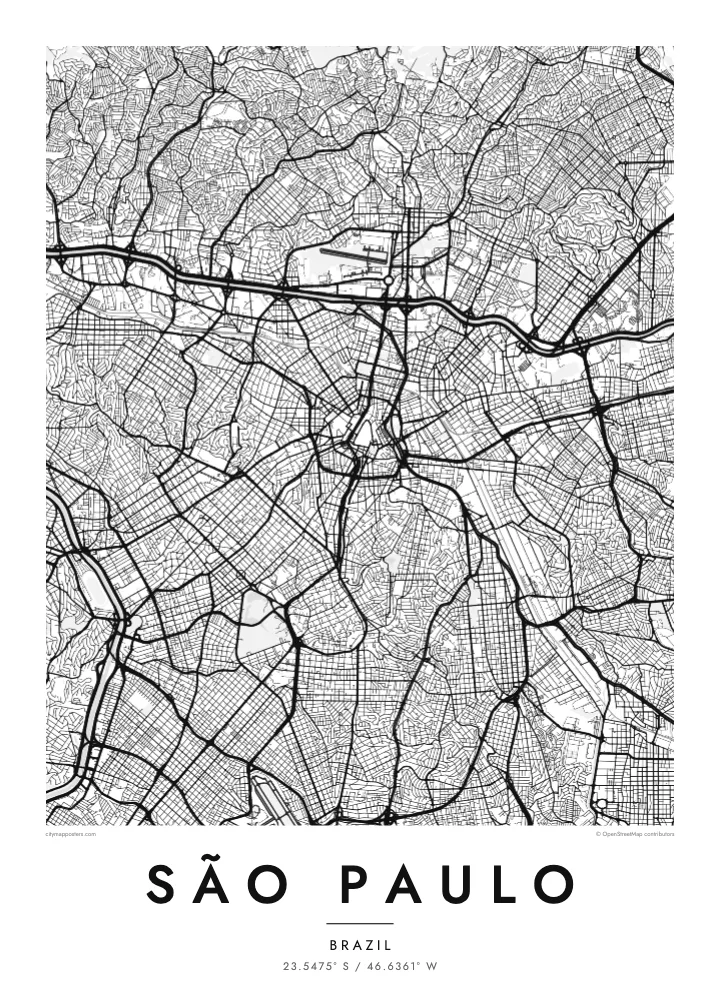
An immense plateau city held between two channelled rivers, with reservoirs to the south and forested hills to the north


Taone e tahi, lagona e lima
Pa'i se ata ke va'ai ai i luga o te pā. E tutusa te tau o ata uma — i lomiga, fakapipi'i i faleata, pe ko faila HD.
 Pixels mo'i · Faila lomiga 24 × 36″
Manino mo te lomiga
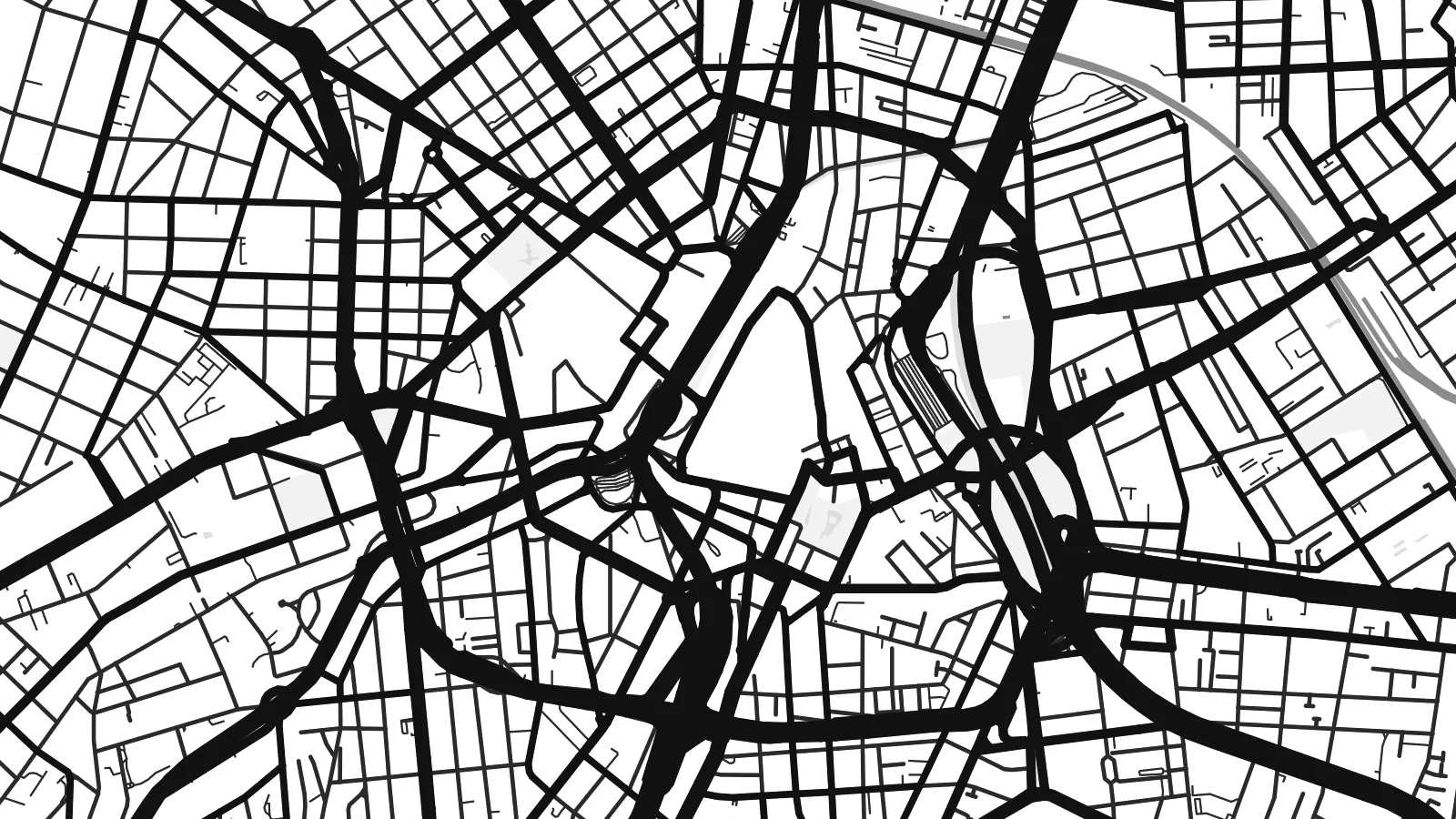
Ko se kupega 100% mai te faila lomiga mo'i. Poster uma — pe lomiina, fakapipi'i i faleata, pe download-ina — e fakaatagia i luga o a matou setula i te 300 DPI, e oo atu ki te 7,200 × 10,800 pixels, ina ia mautinoa e ma'ai pea auala tuai foki i luga o se lomiga 24 × 36″.
I luga o te pa


Te mape
São Paulo spreads across a high plateau above the Atlantic coast, and on a map it seems to fill every direction. Two rivers give it structure: the Tietê, crossing from east to west, and the Pinheiros, running north-west to meet it. Both have been straightened and lined by the Marginal expressways, creating long, rigid lines that frame the central districts, with the Serra da Cantareira rising beyond them to the north.
The historic centre, around the Praça da Sé and the Pátio do Colégio, is a knot of old streets and viaducts crossing small valleys. To the south-west, Avenida Paulista runs along a ridge lined with tall buildings, and Ibirapuera Park opens up a broad, irregular shape nearby. Further south, the Guarapiranga and Billings reservoirs spread their branching shorelines into the edges of the city.
The city was founded by Jesuit missionaries in 1554 and is today the largest city in Brazil and in the Southern Hemisphere. A São Paulo map poster gives form to a place that is hard to take in from the ground, reducing a dense metropolis to a clear pattern of rivers, ridges, parks and avenues.
A straight avenue about 2.8 kilometres long, following one of the city’s high ridges south-west of the old centre and forming a clear diagonal through the surrounding grid.
The two rivers meet west of the centre, both straightened and bordered by expressways. Together they draw a large angle that frames much of the urban core.
Guarapiranga and Billings spread across the southern edge of the city with long, branching arms of water, creating one of the most intricate shoreline patterns on the map.
Fai mo koe
Fakaopoopo he aho, he igoa pe he upu a koe, hui te faiga, te lahi pe te tūlaga.
Ko te va'aiga e leai se totogi e maualalo tona resolution ma iai se fakailoga vai. E fakaatagia lomiga ma faila HD i te 300 DPI, e oo atu ki te 7,200 × 10,800 px, e aunoa ma se fakailoga vai.
Aiheā São Paulo
São Paulo is a city of long careers, large families and constant movement, and many Paulistanos keep a strong attachment to their own bairro. A map poster puts that bairro in context, showing it as part of a vast and surprisingly ordered whole.
Name your bairro in the title, add a date or a short message to the subtitle and edit the coordinates line. Five styles are available, Classic black & white, Noir, Paper, Blueprint and Sand, as instant digital files or as a printed poster shipped from partners in more than 30 countries.
Oka te poster São Paulo| Lahi o te lomiga | Manino | Faila |
|---|---|---|
| 30 × 40 cm11.8 × 15.7″ | 3,543 × 4,724 px | PNG · PDF |
| 29.7 × 42 cm (A3)11.7 × 16.5″ | 3,508 × 4,961 px | PNG · PDF |
| 42 × 59.4 cm (A2)16.5 × 23.4″ | 4,961 × 7,016 px | PNG · PDF |
| 45.7 × 61 cm18 × 24″ | 5,400 × 7,200 px | PNG · PDF |
| 50 × 70 cm19.7 × 27.6″ | 5,906 × 8,268 px | PNG · PDF |
| 61 × 91.4 cm24 × 36″ | 7,200 × 10,800 px | PNG · PDF |
Mo te fakatatau, ko te fakaakoakoga e hē totogi e 900 px te lautele, e ihi te fakailoga ma mo te lau komipiuta. Ko nā faila HD e oko ki te 8× te manino i itū taki tahi ma e lomia lelei i te lahi kātoa o te pōhita.
Filifili se ata i te pito i luga o te itulau, ona filifili lea o te Poster Lomiina — se lapoa ma, ka manako ai koe, se faleata — pe ko Faila HD Fakaonaonaina. E tasi te laasaga o te ōkaina, ma ka fakafou loa lau itulau ōkaina pe a mae'a te totogi.
E lomiina i luga o se pepa matte kaliki maualuga e 200 gsm, i se tasi o ni lapoa e ono, mai le 30 × 40 cm ki te 24 × 36″. E kamata te tau o poster lomiina mai le $39, aofia ai te uta.
Ioe. Filifili se faleata lakau malō i te lanu uli, tea, oki masani pe lakau pouli. E aumai fakatasi mo se tioata e le gagamu ma ua sauni ke tautau. E kamata te tau o poster fakapipi'i i se faleata mai le $99, aofia ai te uta.
E tuku uma te uta ki fenua e 60+. Ko te pepa takitasi e lomi e te tasi o a matou paaga lomi i fenua e 30+, ka tae mai i aso galue e 3–7. E mafai ke e maimoa ki te tulaga mo te tulitaki i lalo o Taku Fakatonuga. E lauiti nei fenua e 2–5 wiki, ka ko nei fenua e le o tuku atu ai, e fakamatala atu e te weepisi i mua o te totogi.
Auina mai se ata pikitia i loto o te 14 aso mai te taimi na oo mai ai, ka toe lomiina e matou e leai se totogi pe toe totogi atu lau tupe.
Ioe. I te mea fakasa'o i luga o lenei itulau, sui te ulutala, te ulutala lalo ma te laina fakamaoniga tulaga ki so se mea e manako ai koe, ona filifili lea o se ata ma se lapoa. Okaina lomiina, fakapipi'i i faleata, ma fakaonaonaina e fakaaogā uma i tau ata tonu.
Mo le $9 e maua e koe ni faila PNG 300 DPI ma PDF sauni-mo-lomiga i lapoa e ono uma, e aunoa ma se fakailoga vai, ke lomiina i so se mea. E le'i mautinoa? Download muamua se va'aiga fakailoga vai e leai se totogi.
