Road and rail spine
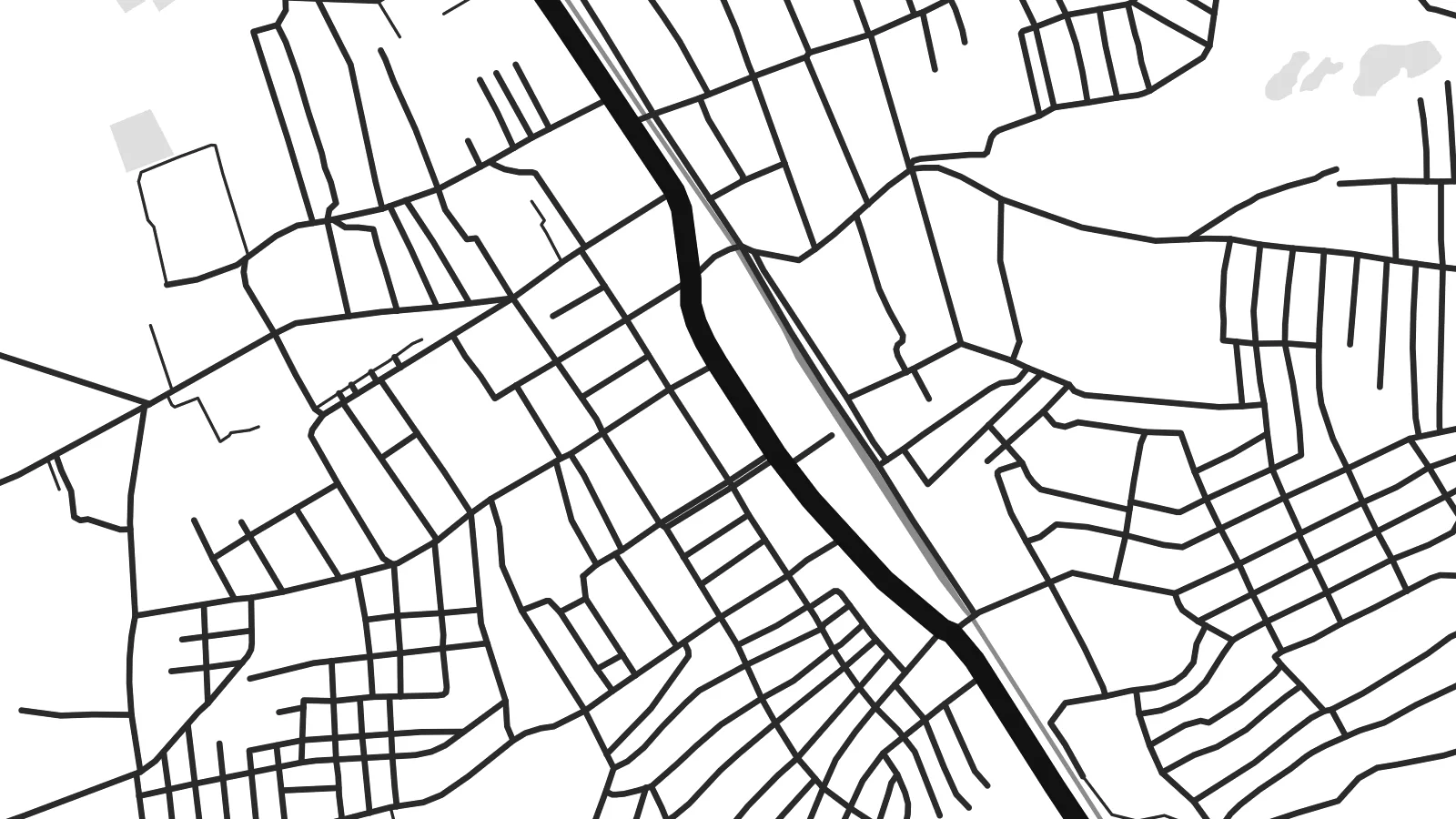
The main road north from Yangon and the railway run close together through the town. Together they form the long central axis the whole settlement is built around.
Pousita mape faigofie · Myanmar (Burma)
17.3144° N / 95.9629° E
A rural township north of Yangon, strung along the main road and railway across flat, rice-growing lowland.


Taone e tasi, lagona e lima
Pau te tapaki o se style ke lavea i luga i te puipui. E tutasi te tau o style takitasi — telotele mo faaki, e aunoa io me fai ki faila HD.
 Pixel tonu · faila lolomi 24 × 36″
Manino ki te lomiga
Tenei se 100% mai te faila lolomi tonu. Poster takitasi — telotele, faaki io me download — e faite i luga i a matou server i te 300 DPI, e oko atu ki 7,200 × 10,800 pixel, ko ala e maofio ei mo maiga vaega foliki i luga i te lolomi 24 × 36″.
I te pakitala


Te mape
Taikkyi lies in the northern part of Yangon Region, on the route that runs north from Yangon towards Pyay. The town is set in the wide, flat lowlands of lower Myanmar, a landscape of paddy fields, small waterways and scattered villages. Its shape follows that setting. It is a long, fairly narrow settlement that grew along the main transport line, not a compact circle.
From above, the road and the railway are the organising lines. Houses, markets and side streets cluster along them and then thin out quickly into cultivated land. Because the ground is so level, nothing forces the streets to bend. Where they curve, it is usually to follow a canal, a field boundary or an older track. A Taikkyi map poster shows that linear, practical pattern very clearly.
Taikkyi is a working agricultural town, not a place with a famous skyline, and the map reflects that honestly. Its strength is its simplicity: one long spine of settlement, the parallel paths of road and rail, and open farmland on either side. In black and white it becomes a restrained, almost diagrammatic image of life on the Irrawaddy plain.
The main road north from Yangon and the railway run close together through the town. Together they form the long central axis the whole settlement is built around.
Streets and buildings stretch out along the transport corridor instead of spreading in every direction. That gives the town an elongated, easily recognisable outline.
On both sides the settlement fades into flat farmland crossed by small watercourses and field tracks. It leaves wide, quiet space around the town.
Fai ke fakatau ki a koe
Fakaopoopo se aso, se igoa io me se fuaiupu o koe, sui te sitaila, te lasi io me te tuuga.
Te preview fua e maulalo te malamalama kae iai se watermark. Poster telotele mo faila HD e faite i te 300 DPI, e oko atu ki 7,200 × 10,800 px, aunoa mo se watermark.
Kaia a Taikkyi
For someone from Taikkyi or with family ties to the area, the map shows home in its most basic form: the road, the railway and the fields. It is understated, and that is exactly what makes it personal.
Change the title and subtitle to a family name, a date or a message, and keep the coordinates as a quiet reference. Five styles are available. Paper and Sand give the flat landscape a softer, warmer tone.
Otaina te poster Taikkyi| Lasi o te lomiga | Manino | Faila |
|---|---|---|
| 30 × 40 cm11.8 × 15.7″ | 3,543 × 4,724 px | PNG · PDF |
| 29.7 × 42 cm (A3)11.7 × 16.5″ | 3,508 × 4,961 px | PNG · PDF |
| 42 × 59.4 cm (A2)16.5 × 23.4″ | 4,961 × 7,016 px | PNG · PDF |
| 45.7 × 61 cm18 × 24″ | 5,400 × 7,200 px | PNG · PDF |
| 50 × 70 cm19.7 × 27.6″ | 5,906 × 8,268 px | PNG · PDF |
| 61 × 91.4 cm24 × 36″ | 7,200 × 10,800 px | PNG · PDF |
Ke fakatusa, a te ata fakataitai fua e 900 px te lautele, mo te fakailoga kae mo lau lavea i luga i te komipiuta. A faila HD e oko ki te 8× te manino i itu katoa kae lomi faka‵lei i te lasi katoa o te pousita.
Filifili se style i te pito i luga o te itulau, kae filifili Poster Telotele — se lasi mo se faaki manafai e manako koe — io me Faila Digital HD. E tasi te sitepu mo te checkout, kae ka fakafou te itulau o tau ota i te taimi e mafai ei te totogi.
E telotele i luga o te pepa vali gali 200 gsm i se tasi mai lasi e ono, mai te 30 × 40 cm ki te 24 × 36″. E kamata te poster telotele mai i te $39, kae aofia ei te uta.
Ioe. Filifili se faaki lakau maoli i te kulokula, tea, oak maoli io me lakau pogisa. E oo mai ki tioata e se malepe kae toka ke tautau. E kamata te poster faaki mai i te $99, kae aofia ei te uta.
E tuku fua ki fenua e 60+. A poloaiga taki tasi e ta ne te tauhaga e latalata mai i a matou tauhaga ta i fenua e 30+, kae e masani o aunoa i aso galue e 3–7. E mafai o salasala te tulaga mo te sukesuke i lalo o Aku poloaiga. I nisi fenua e 2–5 vaiaso, kae i mea e seki tuku atu ei matou, e fakailoa atu e te mea tafaoga i mua o te totogi.
Auina mai se ata i loto i te 14 aso mai te taimi e oko ei kae ka toe telotele fua ne matou io me toe totogi atu tau tupe.
Ioe. I te editor i te itulau tenei, sui te ulutala, te ulutala lalo mo te laina o coordinate ki so se mea e manako koe, kae filifili se style mo se lasi. Oga telotele, faaki mo digital e faigana katoa i tau tusiga tonu.
Mo te $9 ka maua ne koe faila PNG 300 DPI mo PDF fakatoka lolomi i lasi e ono katoa, aunoa mo se watermark, ke lolomi i so se koga. E se mautinoa koe? Download muamua se preview fua e iai te watermark.
