The Hai River
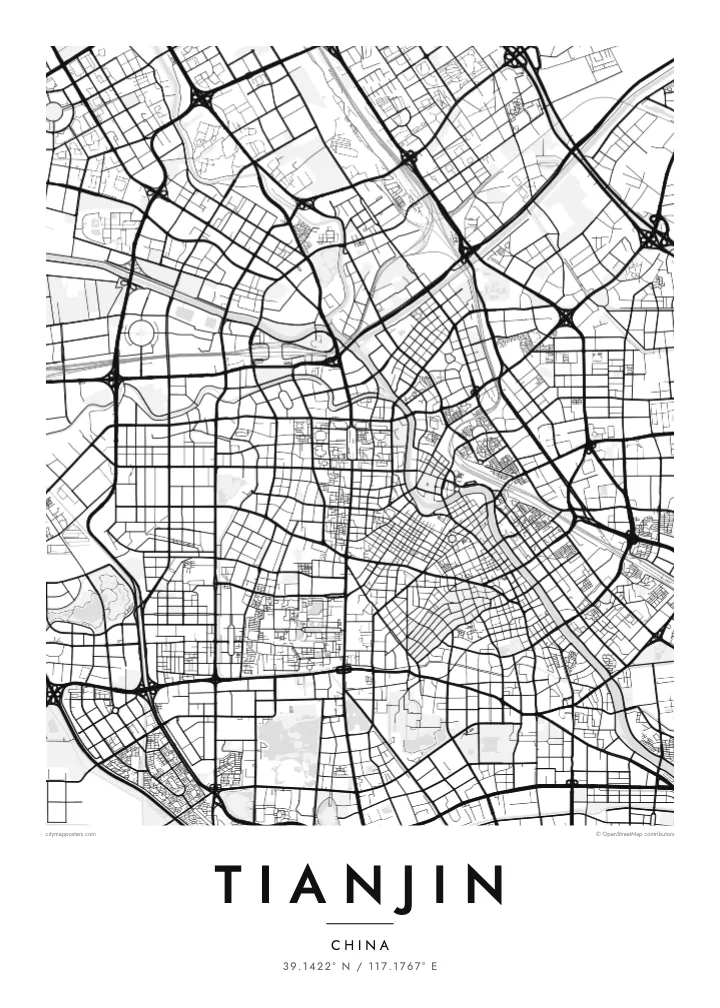
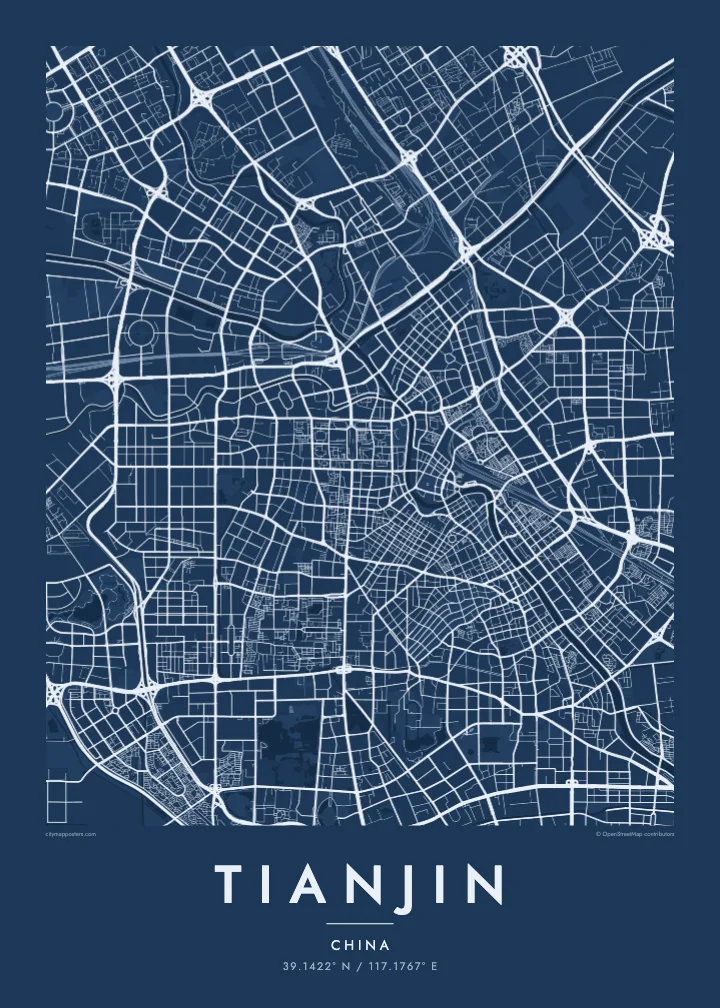
The river curves repeatedly through central Tianjin, forming loops and headlands that give the map its strongest shapes and connect the old city with the coast.
Pousita mape faigofie · China
39.1422° N / 117.1767° E
A port city threaded by the winding Hai River, with former concession quarters laid out along its banks



Taone e tasi, lagona e lima
Pau te tapaki o se style ke lavea i luga i te puipui. E tutasi te tau o style takitasi — telotele mo faaki, e aunoa io me fai ki faila HD.
 Pixel tonu · faila lolomi 24 × 36″
Manino ki te lomiga
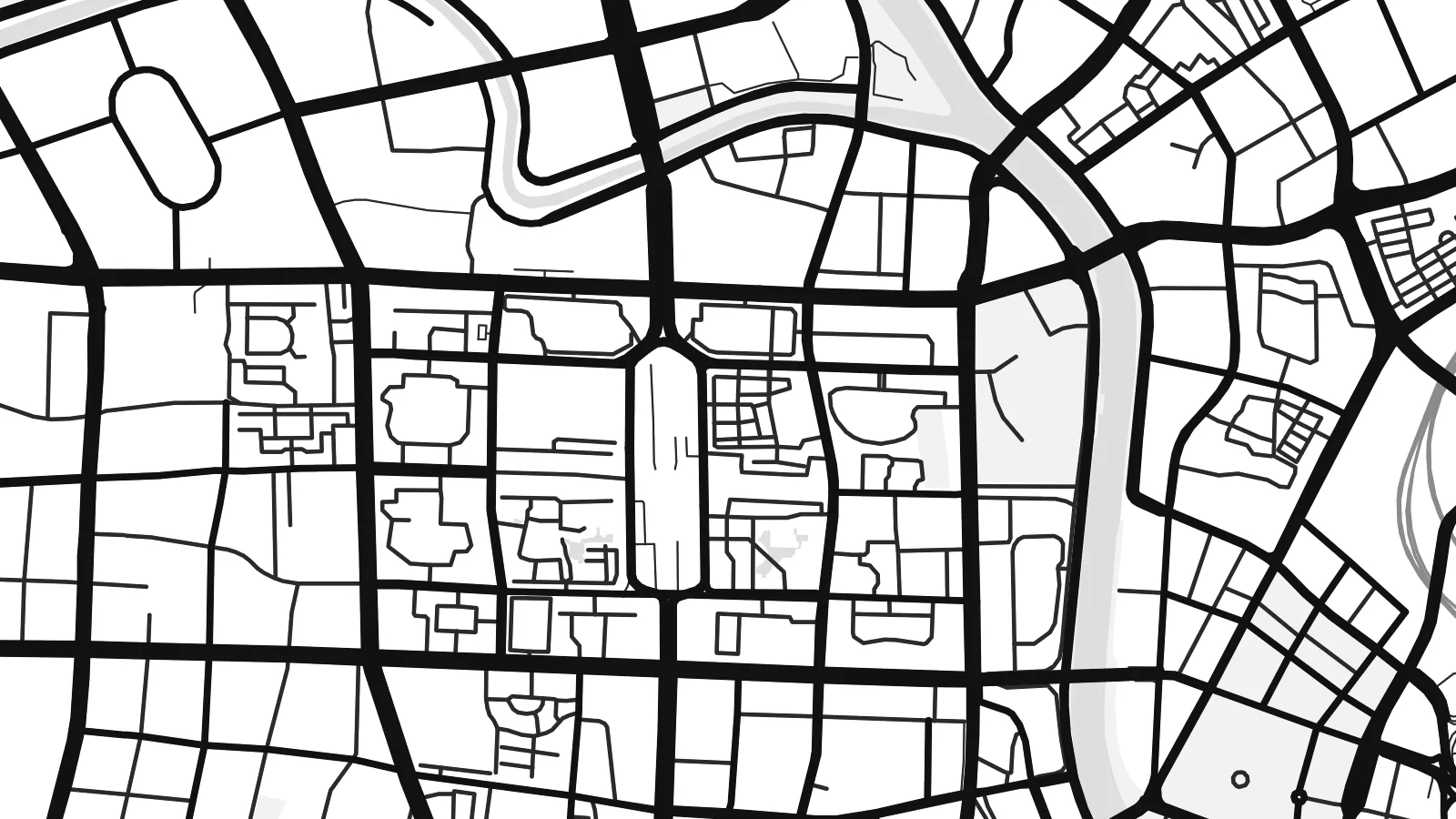
Tenei se 100% mai te faila lolomi tonu. Poster takitasi — telotele, faaki io me download — e faite i luga i a matou server i te 300 DPI, e oko atu ki 7,200 × 10,800 pixel, ko ala e maofio ei mo maiga vaega foliki i luga i te lolomi 24 × 36″.
I te pakitala


Te mape
Tianjin grew where several rivers and the Grand Canal meet to form the Hai River, which then winds south-east through the city toward the Bohai Sea. That winding course is the central line on any map of Tianjin. Streets meet it at angles rather than in a single grid, so neighbourhoods on each bank follow their own orientation, and the result is a patchwork of plans joined by bridges.
Along the river lie the former foreign concessions, established in the late nineteenth and early twentieth centuries. The Five Great Avenues area, once part of the British concession, keeps a fine grid of tree-lined streets with European villas. Nearby, the Tianjin Eye, a Ferris wheel built into a bridge over the Hai River, marks one of the city’s crossings. Downstream, the Binhai New Area stretches out to the port.
Tianjin has long served as Beijing’s gateway to the sea, and high-speed trains now link the two cities in around half an hour. Its port is one of the busiest in northern China. A Tianjin map poster records a city shaped by trade, where concession-era blocks, older Chinese lanes and modern districts sit along the same river.
The river curves repeatedly through central Tianjin, forming loops and headlands that give the map its strongest shapes and connect the old city with the coast.
A compact grid of parallel roads and connecting streets in the former British concession, lined with early twentieth-century houses and clearly distinct from the surrounding blocks.
A large observation wheel mounted on the Yongle Bridge over the Hai River, one of very few Ferris wheels in the world built above a river crossing.
Fai ke fakatau ki a koe
Fakaopoopo se aso, se igoa io me se fuaiupu o koe, sui te sitaila, te lasi io me te tuuga.
Te preview fua e maulalo te malamalama kae iai se watermark. Poster telotele mo faila HD e faite i te 300 DPI, e oko atu ki 7,200 × 10,800 px, aunoa mo se watermark.
Kaia a Tianjin
Tianjin suits people who know it beyond the commuter route from Beijing: former students, families from the old districts, anyone who has walked the concession streets. The winding river makes an elegant composition that feels calm on a wall.
Add your own title and subtitle, perhaps a street name or a date, and edit the coordinates line. Classic black & white, Noir, Paper, Blueprint and Sand are the five available styles, delivered as print-ready files or as a printed poster, framed or unframed.
Otaina te poster Tianjin| Lasi o te lomiga | Manino | Faila |
|---|---|---|
| 30 × 40 cm11.8 × 15.7″ | 3,543 × 4,724 px | PNG · PDF |
| 29.7 × 42 cm (A3)11.7 × 16.5″ | 3,508 × 4,961 px | PNG · PDF |
| 42 × 59.4 cm (A2)16.5 × 23.4″ | 4,961 × 7,016 px | PNG · PDF |
| 45.7 × 61 cm18 × 24″ | 5,400 × 7,200 px | PNG · PDF |
| 50 × 70 cm19.7 × 27.6″ | 5,906 × 8,268 px | PNG · PDF |
| 61 × 91.4 cm24 × 36″ | 7,200 × 10,800 px | PNG · PDF |
Ke fakatusa, a te ata fakataitai fua e 900 px te lautele, mo te fakailoga kae mo lau lavea i luga i te komipiuta. A faila HD e oko ki te 8× te manino i itu katoa kae lomi faka‵lei i te lasi katoa o te pousita.
Filifili se style i te pito i luga o te itulau, kae filifili Poster Telotele — se lasi mo se faaki manafai e manako koe — io me Faila Digital HD. E tasi te sitepu mo te checkout, kae ka fakafou te itulau o tau ota i te taimi e mafai ei te totogi.
E telotele i luga o te pepa vali gali 200 gsm i se tasi mai lasi e ono, mai te 30 × 40 cm ki te 24 × 36″. E kamata te poster telotele mai i te $39, kae aofia ei te uta.
Ioe. Filifili se faaki lakau maoli i te kulokula, tea, oak maoli io me lakau pogisa. E oo mai ki tioata e se malepe kae toka ke tautau. E kamata te poster faaki mai i te $99, kae aofia ei te uta.
E tuku fua ki fenua e 60+. A poloaiga taki tasi e ta ne te tauhaga e latalata mai i a matou tauhaga ta i fenua e 30+, kae e masani o aunoa i aso galue e 3–7. E mafai o salasala te tulaga mo te sukesuke i lalo o Aku poloaiga. I nisi fenua e 2–5 vaiaso, kae i mea e seki tuku atu ei matou, e fakailoa atu e te mea tafaoga i mua o te totogi.
Auina mai se ata i loto i te 14 aso mai te taimi e oko ei kae ka toe telotele fua ne matou io me toe totogi atu tau tupe.
Ioe. I te editor i te itulau tenei, sui te ulutala, te ulutala lalo mo te laina o coordinate ki so se mea e manako koe, kae filifili se style mo se lasi. Oga telotele, faaki mo digital e faigana katoa i tau tusiga tonu.
Mo te $9 ka maua ne koe faila PNG 300 DPI mo PDF fakatoka lolomi i lasi e ono katoa, aunoa mo se watermark, ke lolomi i so se koga. E se mautinoa koe? Download muamua se preview fua e iai te watermark.
