Sultanate quarter
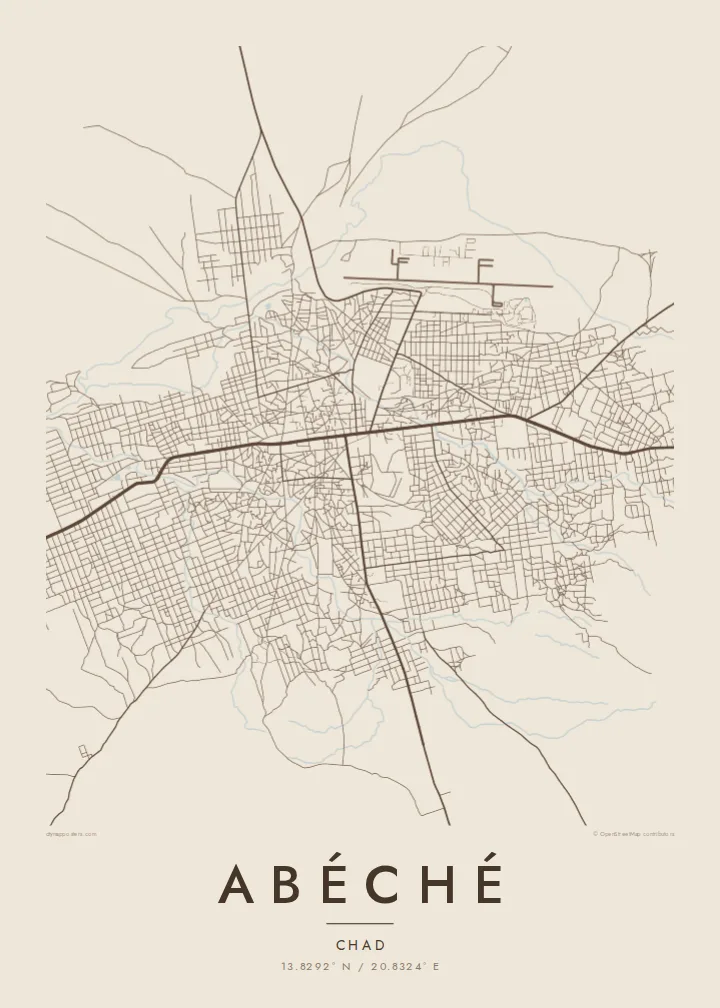
The historic heart of the Ouaddaï capital, with an irregular web of lanes around the old palace and mosque sites. It is the densest, least geometric part of the map.
Ipositeri y'ikarita yoroheje · TD
13.8292° N / 20.8324° E
A low, sprawling Sahelian town of sandy lanes and walled compounds, crossed by seasonal wadis on the eastern Chadian plain


Umujyi umwe, imiterere itanu
Kanda uburyo bumwe kugira ngo ubibone ku rukuta. Buri buryo bufite igiciro kimwe — cyacapwe, gishyizwemo cadre cyangwa mu madosiye HD.
 Pikiseli nyakuri · Dosiye yo gucapa ya 24 × 36″
Bisobanutse neza iyo bicapwe
Iki ni igice cya 100% cy'idosiye nyayo yo gucapa. Buri poster — yacapwe, ishyizwemo cadre cyangwa yakuwe kuri interineti — ikorwa kuri seriveri zacu ku 300 DPI, kugeza kuri pikiseli 7,200 × 10,800, bityo n'imihanda mito cyane igumana ubwiza ku gucapa kwa 24 × 36″.
Ku rukuta


Ikarita
Abéché is the main city of eastern Chad and the capital of Ouaddaï province. It stands on a dry plain far from the sea, and on a map it spreads out loosely rather than climbing upward. Lanes run between walled family compounds, and a handful of wider roads head out toward the rest of the region. Sandy wadis flow here only after the rains.
The town has a long political history. In the mid-nineteenth century it became the capital of the Ouaddaï Sultanate, one of the powerful Sahelian states of the region, and remains of the sultans' residence and old mosques still stand in the historic core. More recently Abéché has served as a logistics base for humanitarian operations in eastern Chad.
An Abéché map poster shows a city that does not follow a strict grid. The oldest quarters are made of irregular blocks, while the newer districts sit in looser rectangles farther out. The airport runway forms a clean, straight line on the edge. The result is an honest picture of a desert-edge town whose shape comes from climate, trade routes and centuries of regional power.
The historic heart of the Ouaddaï capital, with an irregular web of lanes around the old palace and mosque sites. It is the densest, least geometric part of the map.
Dry riverbeds wind through and around the town. They are drawn as soft, meandering bands that carry water only briefly during the rainy season.
A long, straight runway sits beside the built-up area. Its hard geometry contrasts with the organic street pattern and acts as a strong graphic anchor.
Yigire iyawe
Ongeraho itariki, izina cyangwa interuro yawe, uhindure imiterere, ingano cyangwa icyerekezo.
Urugero rw'ubuntu rufite ubwiza buke kandi rufite ikimenyetso cy'amazi. Poster zacapwe n'amadosiye ya HD bikorwa ku 300 DPI, kugeza kuri 7,200 × 10,800 px, nta kimenyetso cy'amazi.
Kuki Abéché
Abéché is a place people carry with them: aid workers, researchers and families from Ouaddaï often have a lasting tie to it. A map poster keeps that connection in a calm, understated form that works in almost any room.
Add a personal title, the years you spent there or the coordinates, and choose from Classic black & white, Noir, Paper, Blueprint or Sand. Sand and Paper suit the dry, earthen character of the city especially well.
Tumiza poster ya Abéché| Ingano yo gucapa | Ubwiza bw'ifoto | Amadosiye |
|---|---|---|
| 30 × 40 cm (11.8 × 15.7″) | 3,543 × 4,724 px | PNG · PDF |
| 29.7 × 42 cm (A3, 11.7 × 16.5″) | 3,508 × 4,961 px | PNG · PDF |
| 42 × 59.4 cm (A2, 16.5 × 23.4″) | 4,961 × 7,016 px | PNG · PDF |
| 45.7 × 61 cm (18 × 24″) | 5,400 × 7,200 px | PNG · PDF |
| 50 × 70 cm (19.7 × 27.6″) | 5,906 × 8,268 px | PNG · PDF |
| 61 × 91.4 cm (24 × 36″) | 7,200 × 10,800 px | PNG · PDF |
Ugereranyije, igerageza ry'ubuntu rifite ubugari bwa 900 px, ririho ikirango kandi ryagenewe kurebwa kuri ecran. Amadosiye ya HD afite ubwiza bugera kuri 8× kuri buri ruhande kandi acapwa neza ku ngano yuzuye y'ipositeri.
Hitamo uburyo hejuru y'urupapuro, hanyuma uhitemo Poster Yacapwe — ingano n'niba ubishaka, cadre — cyangwa Amadosiye ya Digital HD. Kwishyura bikorwa mu ntambwe imwe, kandi urupapuro rw'ikurikirana ry'ibyo watumije ruvugururwa vuba nyuma yo kwishyura.
Icapwa ku rupapuro rwa mbere rwa 200 gsm rutagaragaza umucyo, mu ngano imwe muri esheshatu, kuva kuri 30 × 40 cm kugeza kuri 24 × 36″. Poster zacapwe zitangirira kuri $39, harimo no kohereza.
Yego. Hitamo cadre y'igiti gikomeye mu ibara ry'umukara, umweru, oak isanzwe cyangwa igiti cyijimye. Iza n'ikirahure kidacika kandi yiteguye kumanikwa. Poster zifite cadre zitangirira kuri $99, harimo no kohereza.
Kohereza ni ubuntu ku isi hose. Buri paje icapwa n'umwe mu bafatanyabikorwa bacu mu gucapa ukwegereye, mu bihugu birenga 30, kandi akenshi igera ku muguzi mu minsi 3–7 y'akazi. Ushobora gukurikirana uko iteye n'aho igeze muri "Ibyo naguze". Ibihugu bimwe bifata ibyumweru 2–5, naho aho tutarohereza, urubuga ruzakubwira mbere y'uko wishyura.
Twoherereze ifoto mu minsi 14 ikurikira igihe cyo kuyakira, kandi tuzayicapa bundi bushya ku buntu cyangwa tukagusubiza amafaranga.
Yego. Muri editor iri kuri uru rupapuro, hindura umutwe, ikirongo cy'inyongera n'umurongo w'ibipimo ukagira icyo ushaka, hanyuma ugahitamo uburyo n'ingano. Amatumizo yacapwe, afite cadre n'aya digital yose akoresha ishushanyo ryawe nk'uko ryifashe.
Ku $9 ubona amadosiye ya PNG ya 300 DPI n'aya PDF yiteguye gucapwa mu ngano zose esheshatu, nta kimenyetso cy'amazi, ushobora gucapa aho ariho hose. Ntucyemeje? Banza umanure urugero rw'ubuntu rufite ikimenyetso cy'amazi.
Hafi aho
