The Iapó River
The river loops past the town in a series of soft bends. Its curve gives the map a natural boundary and a flowing counterpoint to the straight central streets.
Ipositeri y'ikarita yoroheje · BR
24.7893° S / 50.0123° W
An old tropeiro town on the Iapó River, its historic centre set among the open plateau fields of the Campos Gerais


Umujyi umwe, imiterere itanu
Kanda uburyo bumwe kugira ngo ubibone ku rukuta. Buri buryo bufite igiciro kimwe — cyacapwe, gishyizwemo cadre cyangwa mu madosiye HD.
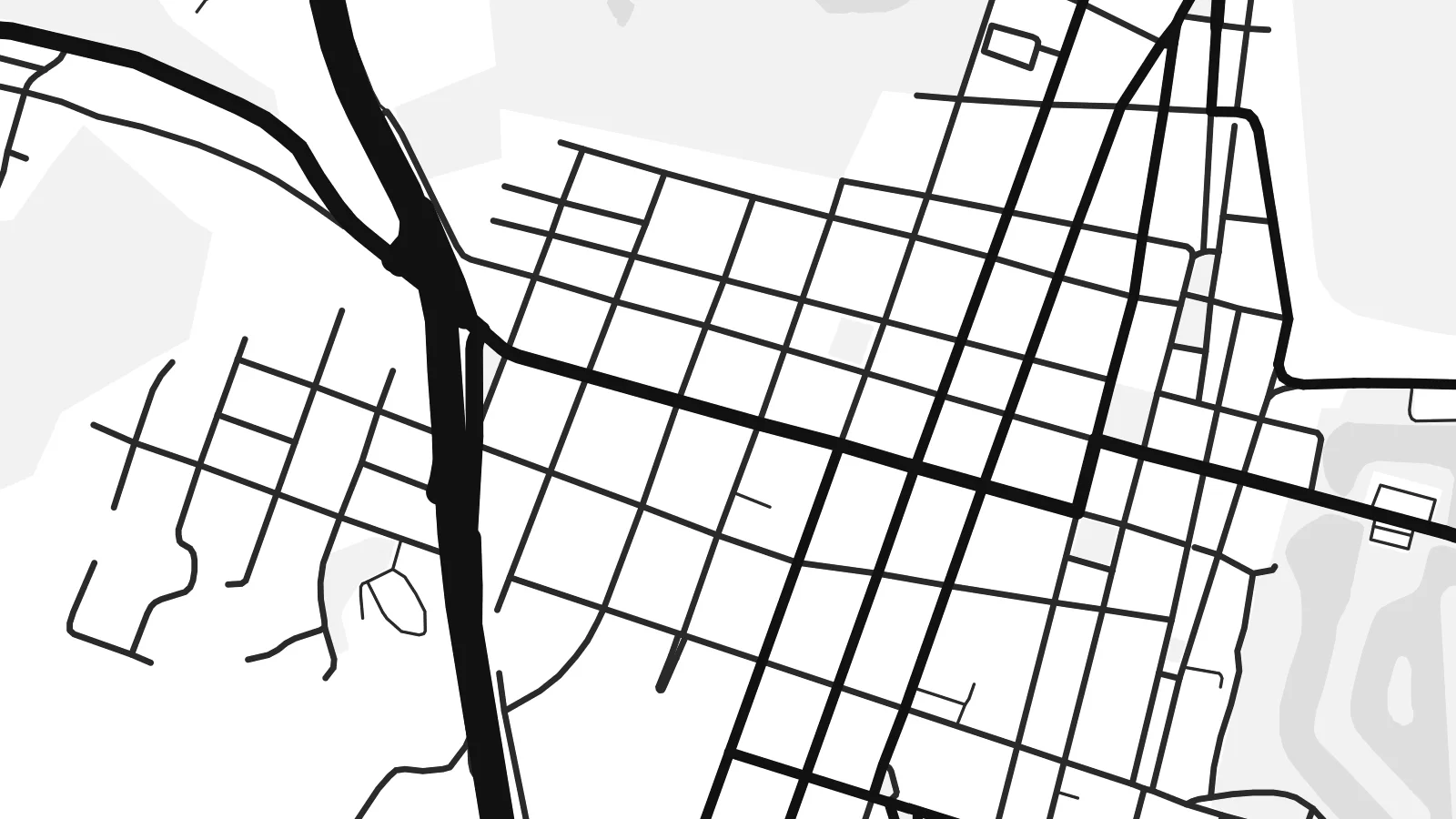 Pikiseli nyakuri · Dosiye yo gucapa ya 24 × 36″
Bisobanutse neza iyo bicapwe
Iki ni igice cya 100% cy'idosiye nyayo yo gucapa. Buri poster — yacapwe, ishyizwemo cadre cyangwa yakuwe kuri interineti — ikorwa kuri seriveri zacu ku 300 DPI, kugeza kuri pikiseli 7,200 × 10,800, bityo n'imihanda mito cyane igumana ubwiza ku gucapa kwa 24 × 36″.
Ku rukuta


Ikarita
Castro is one of the oldest towns in Paraná. It grew in the eighteenth century as a stopping place on the cattle-drovers' route that linked the southern plains with the markets of São Paulo. The Iapó River passes along the town, and the historic core sits on the ground above it. On a map, this origin shows in a compact central grid, with roads leaving toward the surrounding countryside.
Around the town lies the Campos Gerais, a high, open plateau of grassland, farms and scattered woods. That openness gives the map generous margins, where rural roads and field boundaries replace dense streets. Castro is known today as a major dairy region, a tradition closely tied to the Dutch immigrant colony of Castrolanda, founded nearby in the mid-twentieth century.
Newer neighbourhoods have spread out from the centre along the main roads, and the river's winding course gives them an irregular edge on one side. A Castro map poster brings together the orderly old centre, the curving Iapó and the looser streets beyond, making a composition that feels both historic and clearly linked to its farmland.
The river loops past the town in a series of soft bends. Its curve gives the map a natural boundary and a flowing counterpoint to the straight central streets.
The oldest blocks form a small, regular grid on the higher ground. It is a reminder of the town's beginnings as a rest stop for cattle drovers.
Beyond the built area, long rural roads cross the open Campos Gerais. In a minimalist style they read as spare lines across wide, quiet space.
Yigire iyawe
Ongeraho itariki, izina cyangwa interuro yawe, uhindure imiterere, ingano cyangwa icyerekezo.
Urugero rw'ubuntu rufite ubwiza buke kandi rufite ikimenyetso cy'amazi. Poster zacapwe n'amadosiye ya HD bikorwa ku 300 DPI, kugeza kuri 7,200 × 10,800 px, nta kimenyetso cy'amazi.
Kuki Castro
The poster suits anyone from Castro or Castrolanda, and families whose history runs through the farms of the Campos Gerais. A custom title and subtitle can name a farm, a family or a year of arrival, while the coordinates line pins the exact place.
Sand suits the rural character with warm tones, and Paper gives a gentle, almanac-like finish. The $9 digital files come in six print sizes as 300 DPI PNG and print-ready PDF. You can also order a matte printed poster, with an optional wooden frame, for delivery.
Tumiza poster ya Castro| Ingano yo gucapa | Ubwiza bw'ifoto | Amadosiye |
|---|---|---|
| 30 × 40 cm (11.8 × 15.7″) | 3,543 × 4,724 px | PNG · PDF |
| 29.7 × 42 cm (A3, 11.7 × 16.5″) | 3,508 × 4,961 px | PNG · PDF |
| 42 × 59.4 cm (A2, 16.5 × 23.4″) | 4,961 × 7,016 px | PNG · PDF |
| 45.7 × 61 cm (18 × 24″) | 5,400 × 7,200 px | PNG · PDF |
| 50 × 70 cm (19.7 × 27.6″) | 5,906 × 8,268 px | PNG · PDF |
| 61 × 91.4 cm (24 × 36″) | 7,200 × 10,800 px | PNG · PDF |
Ugereranyije, igerageza ry'ubuntu rifite ubugari bwa 900 px, ririho ikirango kandi ryagenewe kurebwa kuri ecran. Amadosiye ya HD afite ubwiza bugera kuri 8× kuri buri ruhande kandi acapwa neza ku ngano yuzuye y'ipositeri.
Hitamo uburyo hejuru y'urupapuro, hanyuma uhitemo Poster Yacapwe — ingano n'niba ubishaka, cadre — cyangwa Amadosiye ya Digital HD. Kwishyura bikorwa mu ntambwe imwe, kandi urupapuro rw'ikurikirana ry'ibyo watumije ruvugururwa vuba nyuma yo kwishyura.
Icapwa ku rupapuro rwa mbere rwa 200 gsm rutagaragaza umucyo, mu ngano imwe muri esheshatu, kuva kuri 30 × 40 cm kugeza kuri 24 × 36″. Poster zacapwe zitangirira kuri {printFrom}, harimo no kohereza.
Yego. Hitamo cadre y'igiti gikomeye mu ibara ry'umukara, umweru, oak isanzwe cyangwa igiti cyijimye. Iza n'ikirahure kidacika kandi yiteguye kumanikwa. Poster zifite cadre zitangirira kuri {framedFrom}, harimo no kohereza.
Kohereza ni ubuntu ku isi hose. Buri paje icapwa n'umwe mu bafatanyabikorwa bacu mu gucapa ukwegereye, mu bihugu birenga 30, kandi akenshi igera ku muguzi mu minsi 3–7 y'akazi. Ushobora gukurikirana uko iteye n'aho igeze muri "Ibyo naguze". Ibihugu bimwe bifata ibyumweru 2–5, naho aho tutarohereza, urubuga ruzakubwira mbere y'uko wishyura.
Twoherereze ifoto mu minsi 14 ikurikira igihe cyo kuyakira, kandi tuzayicapa bundi bushya ku buntu cyangwa tukagusubiza amafaranga.
Yego. Muri editor iri kuri uru rupapuro, hindura umutwe, ikirongo cy'inyongera n'umurongo w'ibipimo ukagira icyo ushaka, hanyuma ugahitamo uburyo n'ingano. Amatumizo yacapwe, afite cadre n'aya digital yose akoresha ishushanyo ryawe nk'uko ryifashe.
Ku $9 ubona amadosiye ya PNG ya 300 DPI n'aya PDF yiteguye gucapwa mu ngano zose esheshatu, nta kimenyetso cy'amazi, ushobora gucapa aho ariho hose. Ntucyemeje? Banza umanure urugero rw'ubuntu rufite ikimenyetso cy'amazi.
Hafi aho
