Confluence of rivers
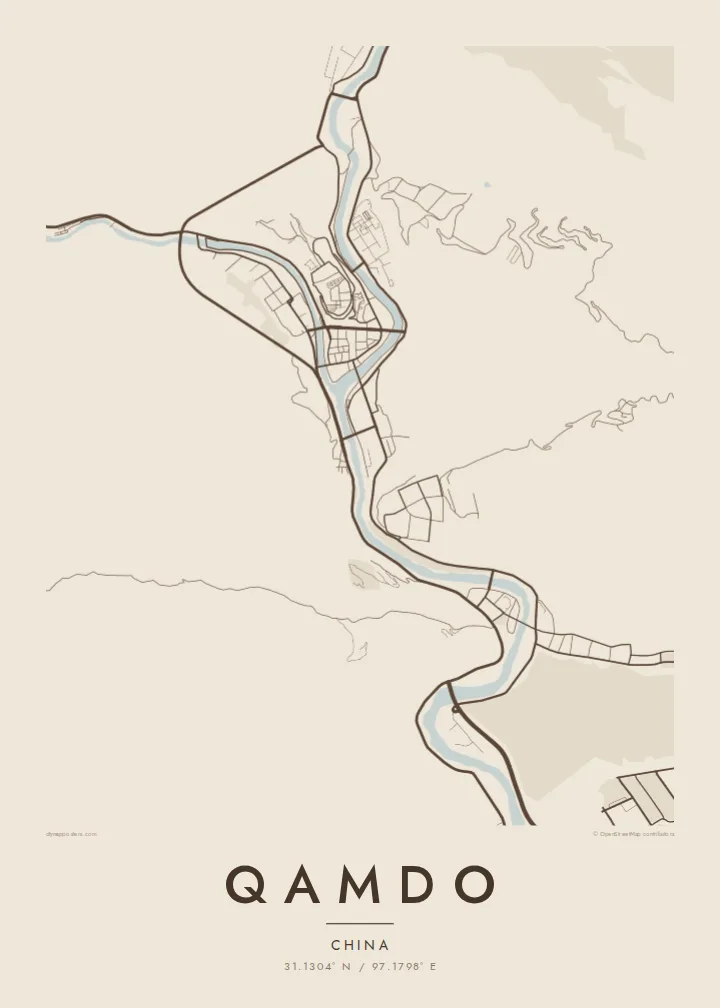
The Dza Chu and Ngom Chu meet at the heart of the town. Their joined channel heads south as the Lancang, and the fork gives the map its clear Y-shaped outline.
Ipositeri y'ikarita yoroheje · CN
31.1304° N / 97.1798° E
A narrow wedge of streets where two mountain rivers meet and join to form the upper Mekong, walled in by steep slopes


Umujyi umwe, imiterere itanu
Kanda uburyo bumwe kugira ngo ubibone ku rukuta. Buri buryo bufite igiciro kimwe — cyacapwe, gishyizwemo cadre cyangwa mu madosiye HD.
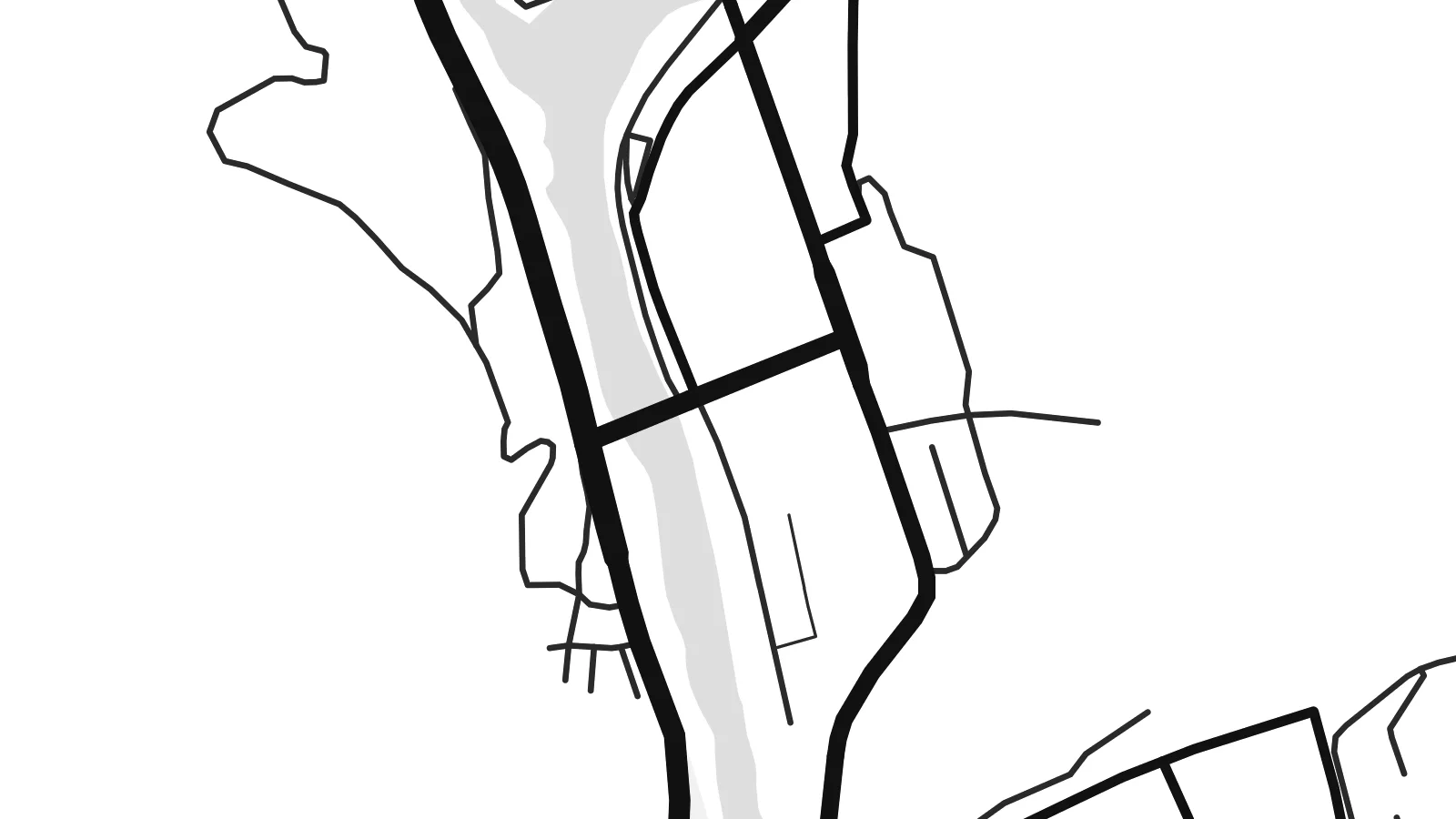 Pikiseli nyakuri · Dosiye yo gucapa ya 24 × 36″
Bisobanutse neza iyo bicapwe
Iki ni igice cya 100% cy'idosiye nyayo yo gucapa. Buri poster — yacapwe, ishyizwemo cadre cyangwa yakuwe kuri interineti — ikorwa kuri seriveri zacu ku 300 DPI, kugeza kuri pikiseli 7,200 × 10,800, bityo n'imihanda mito cyane igumana ubwiza ku gucapa kwa 24 × 36″.
Ku rukuta


Ikarita
Seen from above, Qamdo sits on a point of land in eastern Tibet, at the spot where two rivers, the Dza Chu and the Ngom Chu, flow together. Below the junction they carry on as the Lancang, the name the upper Mekong takes in China. The town fills the flat ground at the confluence and follows both valleys upstream, so its street plan looks like a letter Y cut into the mountains.
The terrain sets the shape of the city more than any plan does. The valley floors are narrow, and the slopes rise sharply on every side, so buildings line the riverbanks in long bands and the roads bend with the water. Bridges link the neighbourhoods on the far banks back to the central point. On a Qamdo map poster the rivers stay in clear view, and the blank hillsides around them read as open space.
Qamdo has long been one of the main towns of the Kham region and a stop on the old routes between Tibet and Sichuan and Yunnan. On a terrace above the confluence stands Qamdo Monastery, a large Gelug monastery founded in the fifteenth century, which still shapes the skyline. The town lies at roughly 3,200 metres, and that height matters in every valley and slope you see on the map.
The Dza Chu and Ngom Chu meet at the heart of the town. Their joined channel heads south as the Lancang, and the fork gives the map its clear Y-shaped outline.
Qamdo Monastery sits on raised ground between the two rivers, above the central streets. Its large compound shows up on the map as a distinct block at the top of the confluence.
Steep slopes hem the town in, so its roads run in long, curving lines beside the rivers. Bridges cross the water at intervals and tie the separate banks into one town.
Yigire iyawe
Ongeraho itariki, izina cyangwa interuro yawe, uhindure imiterere, ingano cyangwa icyerekezo.
Urugero rw'ubuntu rufite ubwiza buke kandi rufite ikimenyetso cy'amazi. Poster zacapwe n'amadosiye ya HD bikorwa ku 300 DPI, kugeza kuri 7,200 × 10,800 px, nta kimenyetso cy'amazi.
Kuki Qamdo
Qamdo appeals to people who have made the long overland journey through Kham, or to anyone who grew up in these valleys. Where rivers meet in the mountains, the map has a strong outline, and in black and white it reads almost like a drawing of how the water runs.
You can personalise the poster with your own title, subtitle and coordinates line, perhaps the date you crossed a pass or first reached the town. Choose from five styles: Classic black & white, Noir, Paper, Blueprint or Sand. Get HD files for $9, or order a matte print with an optional wooden frame.
Tumiza poster ya Qamdo| Ingano yo gucapa | Ubwiza bw'ifoto | Amadosiye |
|---|---|---|
| 30 × 40 cm (11.8 × 15.7″) | 3,543 × 4,724 px | PNG · PDF |
| 29.7 × 42 cm (A3, 11.7 × 16.5″) | 3,508 × 4,961 px | PNG · PDF |
| 42 × 59.4 cm (A2, 16.5 × 23.4″) | 4,961 × 7,016 px | PNG · PDF |
| 45.7 × 61 cm (18 × 24″) | 5,400 × 7,200 px | PNG · PDF |
| 50 × 70 cm (19.7 × 27.6″) | 5,906 × 8,268 px | PNG · PDF |
| 61 × 91.4 cm (24 × 36″) | 7,200 × 10,800 px | PNG · PDF |
Ugereranyije, igerageza ry'ubuntu rifite ubugari bwa 900 px, ririho ikirango kandi ryagenewe kurebwa kuri ecran. Amadosiye ya HD afite ubwiza bugera kuri 8× kuri buri ruhande kandi acapwa neza ku ngano yuzuye y'ipositeri.
Hitamo uburyo hejuru y'urupapuro, hanyuma uhitemo Poster Yacapwe — ingano n'niba ubishaka, cadre — cyangwa Amadosiye ya Digital HD. Kwishyura bikorwa mu ntambwe imwe, kandi urupapuro rw'ikurikirana ry'ibyo watumije ruvugururwa vuba nyuma yo kwishyura.
Icapwa ku rupapuro rwa mbere rwa 200 gsm rutagaragaza umucyo, mu ngano imwe muri esheshatu, kuva kuri 30 × 40 cm kugeza kuri 24 × 36″. Poster zacapwe zitangirira kuri {printFrom}, harimo no kohereza.
Yego. Hitamo cadre y'igiti gikomeye mu ibara ry'umukara, umweru, oak isanzwe cyangwa igiti cyijimye. Iza n'ikirahure kidacika kandi yiteguye kumanikwa. Poster zifite cadre zitangirira kuri {framedFrom}, harimo no kohereza.
Kohereza ni ubuntu ku isi yose. Buri poster icapwa n'umufatanyabikorwa wacu wo gucapa uri hafi mu bihugu birenga 30 kandi ikunze kugera mu minsi 3-7 y'akazi. Ushobora gukurikirana aho igeze munsi ya Ibyo Natumije.
Twoherereze ifoto mu minsi 14 ikurikira igihe cyo kuyakira, kandi tuzayicapa bundi bushya ku buntu cyangwa tukagusubiza amafaranga.
Yego. Muri editor iri kuri uru rupapuro, hindura umutwe, ikirongo cy'inyongera n'umurongo w'ibipimo ukagira icyo ushaka, hanyuma ugahitamo uburyo n'ingano. Amatumizo yacapwe, afite cadre n'aya digital yose akoresha ishushanyo ryawe nk'uko ryifashe.
Ku $9 ubona amadosiye ya PNG ya 300 DPI n'aya PDF yiteguye gucapwa mu ngano zose esheshatu, nta kimenyetso cy'amazi, ushobora gucapa aho ariho hose. Ntucyemeje? Banza umanure urugero rw'ubuntu rufite ikimenyetso cy'amazi.
Hafi aho
