The coastal road
A main north–south route runs through Mareth, linking it to Gabès and the south. On the poster it becomes the strongest single line, and the rest of the town is arranged along it.
Постери минималистии харита · Тунис
33.6179° N / 10.2854° E
A low oasis town on the coastal plain of southern Tunisia, its streets gathered between palm gardens, a dry riverbed and the open road north.
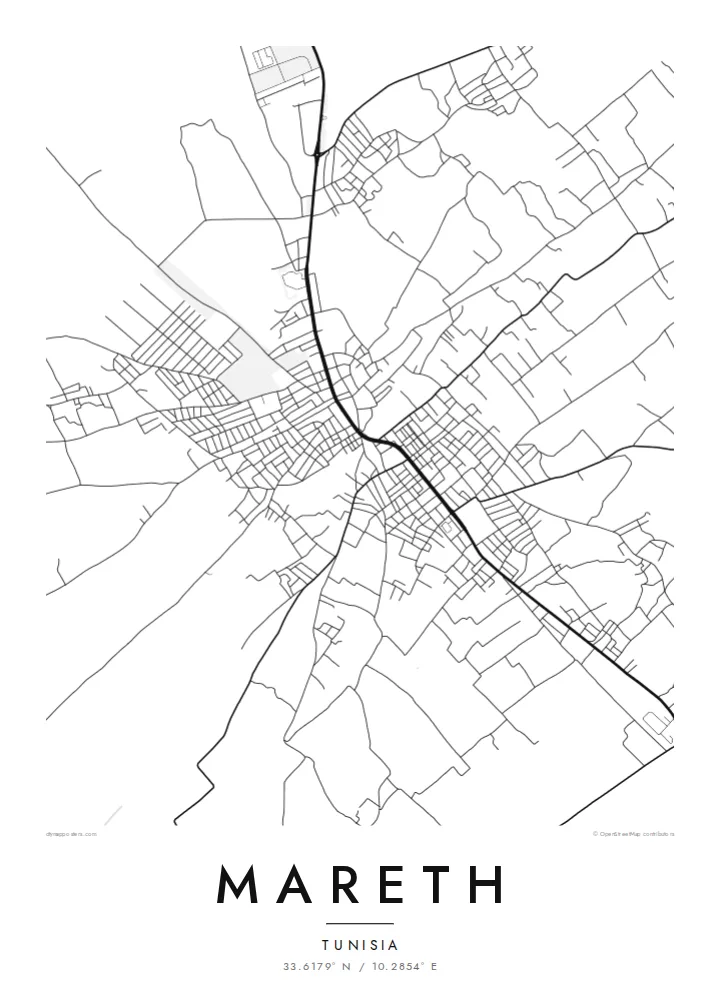

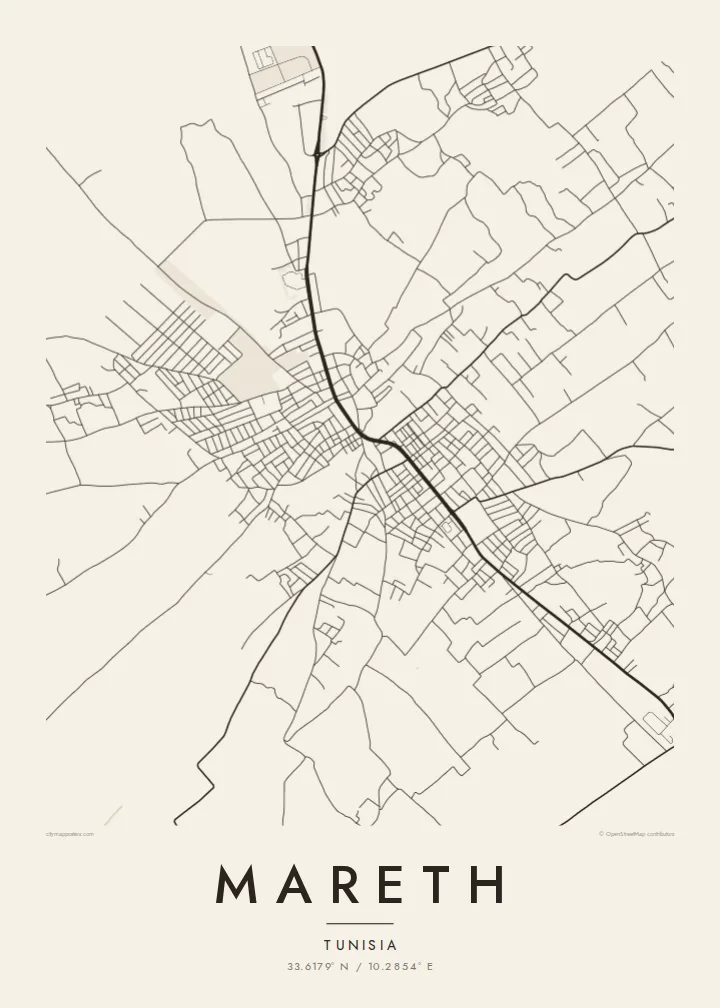


Як шаҳр, панҷ кайфият
Ба як услуб зер кунед, то онро дар девор бинед. Ҳамаи услубҳо нархи якхела доранд — чопшуда, дар қолаб ё файлҳои HD.
 Пикселҳои воқеӣ · файли чоп барои 24 × 36″
Возеҳ барои чоп
Ин порчаи 100%-и файли воқеии чоп аст. Ҳар як постер — чопшуда, дар қолаб ё зеркашидашуда — дар серверҳои мо бо 300 DPI, то 7,200 × 10,800 пиксел, тарҳрезӣ мешавад, то ҳатто хурдтарин кӯчаҳо дар чопи 24 × 36″ равшан бимонанд.
Дар девор


Харита
Mareth sits a short distance inland from the Gulf of Gabès, on the flat strip of land between the sea and the Matmata hills. From above, the town is a loose cluster of streets set among cultivated plots and palm groves, with the main road running through it. Around the edge, the pattern thins into field boundaries and scattered buildings instead of stopping at a hard line.
The name is best known from the Second World War. Before the war, French engineers built the Mareth Line, a chain of fortifications running from the coast to the hills. In March 1943 it was the scene of heavy fighting between the British Eighth Army and Axis forces. The Wadi Zigzaou, a natural obstacle in that defensive line, still cuts across the landscape near the town.
A Mareth map poster turns this quiet geography into line work: the through-road, the tight grain of the older lanes and the looser pattern of streets and plots around them. Water shows up on a map here in a particular way. It follows seasonal wadis, not rivers, and the poster keeps those faint channels next to the denser street network.
A main north–south route runs through Mareth, linking it to Gabès and the south. On the poster it becomes the strongest single line, and the rest of the town is arranged along it.
This seasonal watercourse near the town was part of the Mareth Line's defences in 1943. On a map it reads as a thin, winding channel through otherwise flat ground.
Where the streets end, garden plots and palm groves take over. The grid loosens into irregular parcels, which gives the poster a soft, uneven border and no sharp city limit.
Аз они худ кунед
Сана, ном ё сатри худро илова кунед, услуб, андоза ё самтро иваз кунед.
Пешнамоиши ройгон бо резолютсияи паст ва нишони обӣ аст. Чопҳо ва файлҳои HD бо 300 DPI, то 7,200 × 10,800 px, бидуни нишони обӣ тарҳрезӣ мешаванд.
Чаро Mareth
For some people Mareth is home or a family town in the Gabès region. For others it is a name from military history they have read about or visited. A map of it is a plain, unsentimental way to keep that connection on the wall, drawn from the street pattern itself.
You can personalise the title, subtitle and coordinates line, for example with a family name or a year that matters. Choose from five styles: Classic black & white, Noir, Paper, Blueprint or Sand. Sand suits the southern Tunisian setting especially well.
Постери Mareth-ро фармоиш диҳед| Андозаи чоп | Ҳалнокӣ | Файлҳо |
|---|---|---|
| 30 × 40 cm (11.8 × 15.7″) | 3,543 × 4,724 px | PNG · PDF |
| 29.7 × 42 cm (A3, 11.7 × 16.5″) | 3,508 × 4,961 px | PNG · PDF |
| 42 × 59.4 cm (A2, 16.5 × 23.4″) | 4,961 × 7,016 px | PNG · PDF |
| 45.7 × 61 cm (18 × 24″) | 5,400 × 7,200 px | PNG · PDF |
| 50 × 70 cm (19.7 × 27.6″) | 5,906 × 8,268 px | PNG · PDF |
| 61 × 91.4 cm (24 × 36″) | 7,200 × 10,800 px | PNG · PDF |
Барои муқоиса, пешнамоиши ройгон 900 px паҳно дорад, бо тамғаи обӣ аст ва барои экран пешбинӣ шудааст. Файлҳои HD дар ҳар самт то 8 маротиба ҳалнокии баландтар доранд ва дар андозаи пурраи постер тоза чоп мешаванд.
Дар боло саҳифа як услубро интихоб кунед, сипас Постери чопшударо — андоза ва агар хоҳед, қолабро — ё Файлҳои рақамии HD-ро интихоб кунед. Пардохт танҳо як қадам мегирад ва саҳифаи фармоиши шумо баробари пардохт нав мешавад.
Он дар коғази матти дараҷаи олӣ 200 gsm дар яке аз шаш андоза, аз 30 × 40 см то 24 × 36″, чоп мешавад. Нархи постерҳои чопшуда аз $39 оғоз мешавад ва интиқол дар нарх ҳисоб шудааст.
Бале. Қолаби чӯбии яклухтро дар ранги сиёҳ, сафед, булути табиӣ ё чӯби торик интихоб кунед. Он бо шишаи зиддипартоӣ меояд ва барои овехтан омода аст. Нархи постерҳои дар қолаб аз $99 оғоз мешавад ва интиқол дар нарх ҳисоб шудааст.
Таҳвил дар саросари ҷаҳон ройгон аст. Ҳар постерро наздиктарин шарики чопии мо аз беш аз 30 кишвар чоп мекунад ва одатан дар муддати 3–7 рӯзи корӣ мерасад. Ҳолат ва рақами пайгириро дар «Фармоишҳои ман» дидан мумкин аст. Ба баъзе кишварҳо 2–5 ҳафта лозим мешавад ва ба ҷое, ки ҳоло намефиристем, сайт пеш аз пардохт хабар медиҳад.
Дар давоми 14 рӯз пас аз расидан ба мо сурат фиристед ва мо онро ройгон дубора чоп мекунем ё пулатонро бармегардонем.
Бале. Дар муҳаррири ин саҳифа сарлавҳа, зерсарлавҳа ва сатри координатаро ба дилхоҳ тарзе тағйир диҳед ва услуб ва андозаро интихоб кунед. Фармоишҳои чопшуда, дар қолаб ва рақамӣ ҳамагӣ айнан тарҳи шуморо истифода мебаранд.
Бо $9 шумо файлҳои PNG бо 300 DPI ва PDF-и омодаи чоп дар ҳамаи шаш андоза, бидуни нишони обӣ, мегиред, то дар ҳар ҷо чоп кунед. Ҳанӯз мутмаин нестед? Аввал пешнамоиши ройгони дорои нишони обиро зеркашӣ кунед.
