Valiasr Street
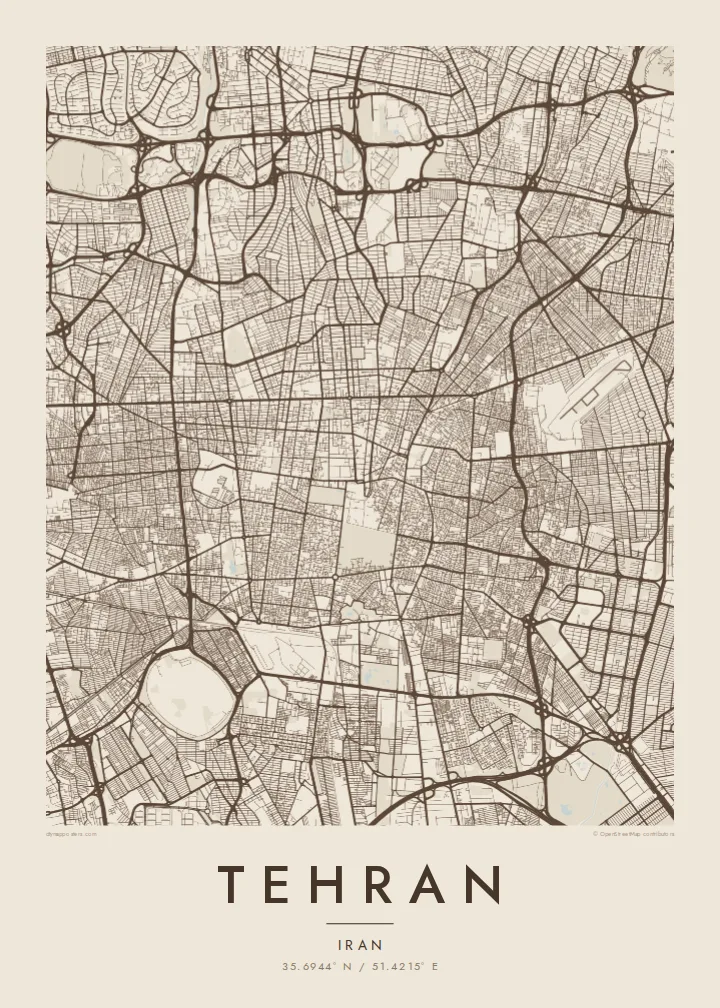
A single avenue running roughly north to south across the whole city, from the railway station area up into the foothills near Tajrish, visible on the map as a long, almost unbroken line.
Постери минималистии харита · Эрон
35.6944° N / 51.4215° E
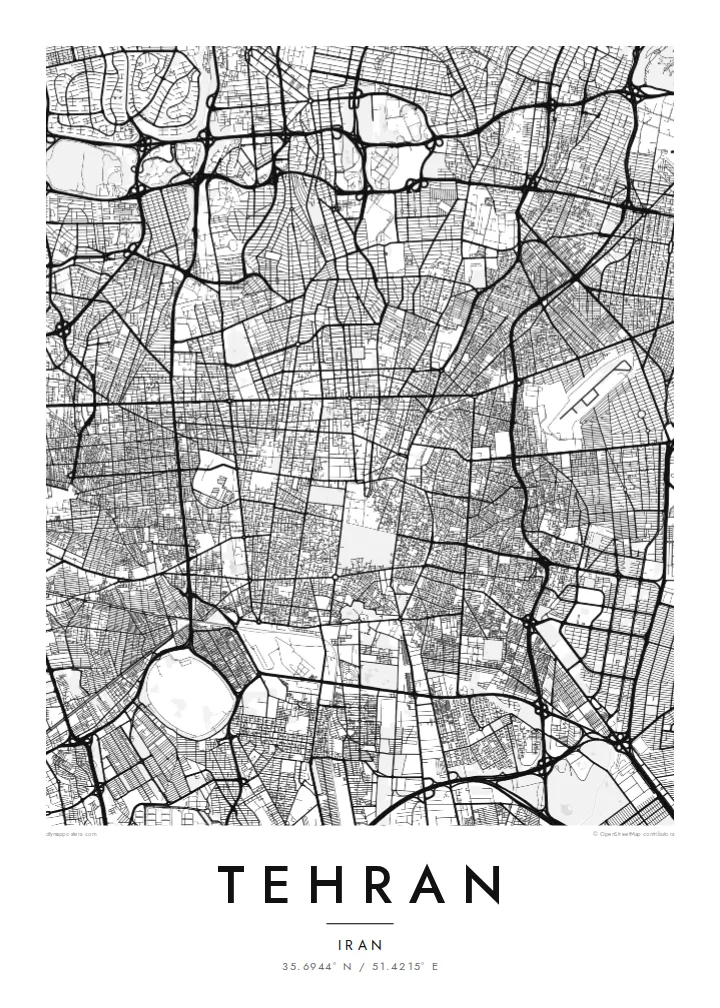
A vast city tilted against the Alborz mountains, its long avenues running downhill from the northern foothills to the southern plain.
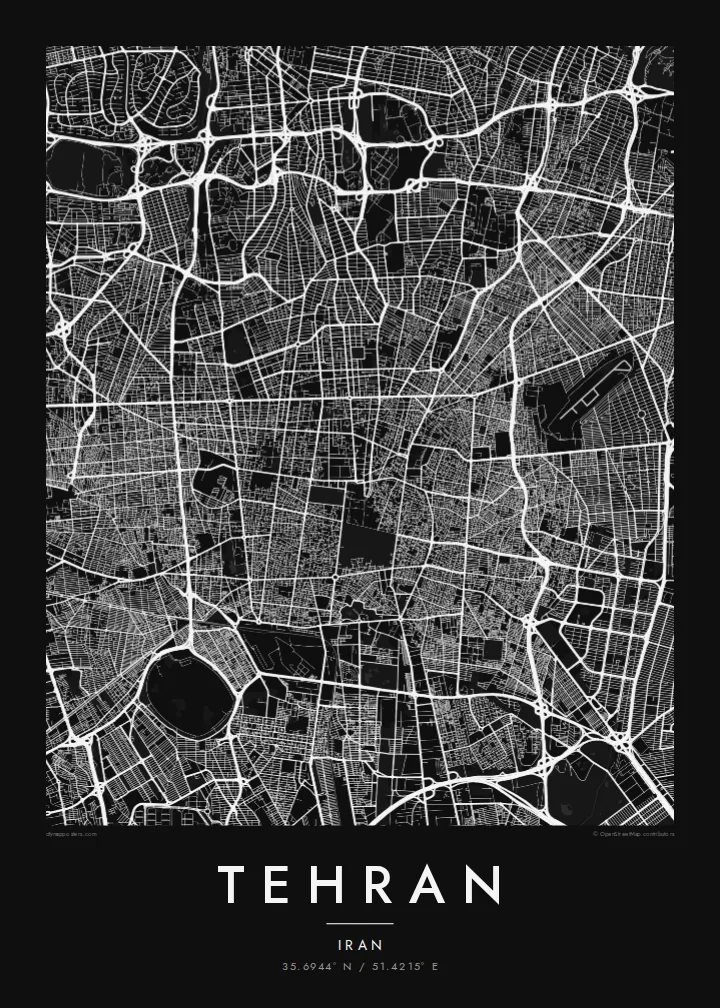
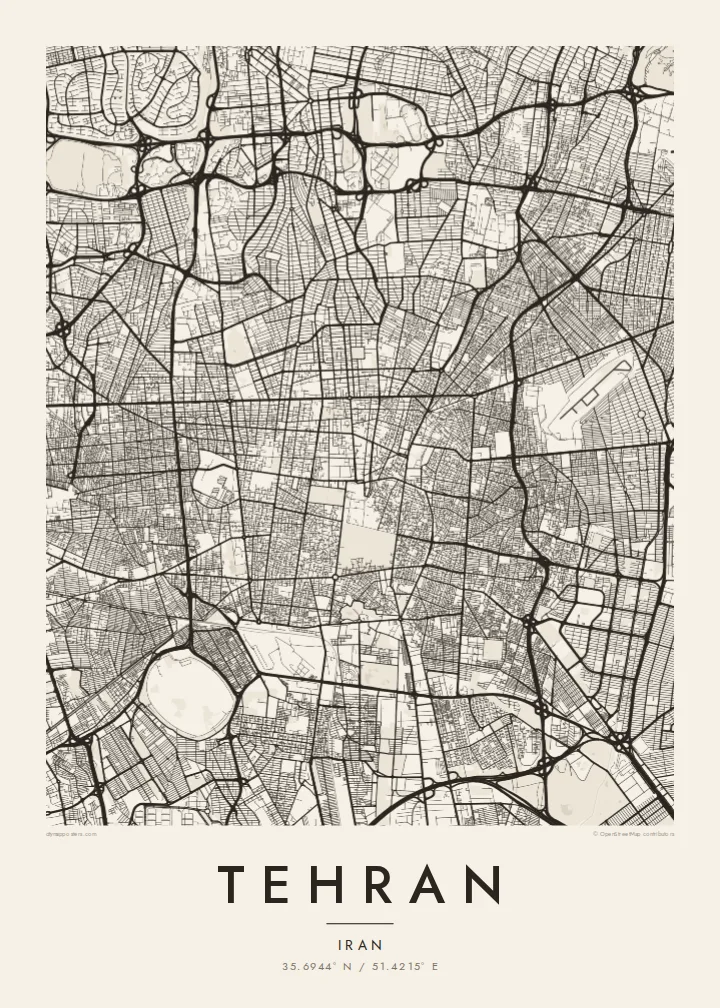
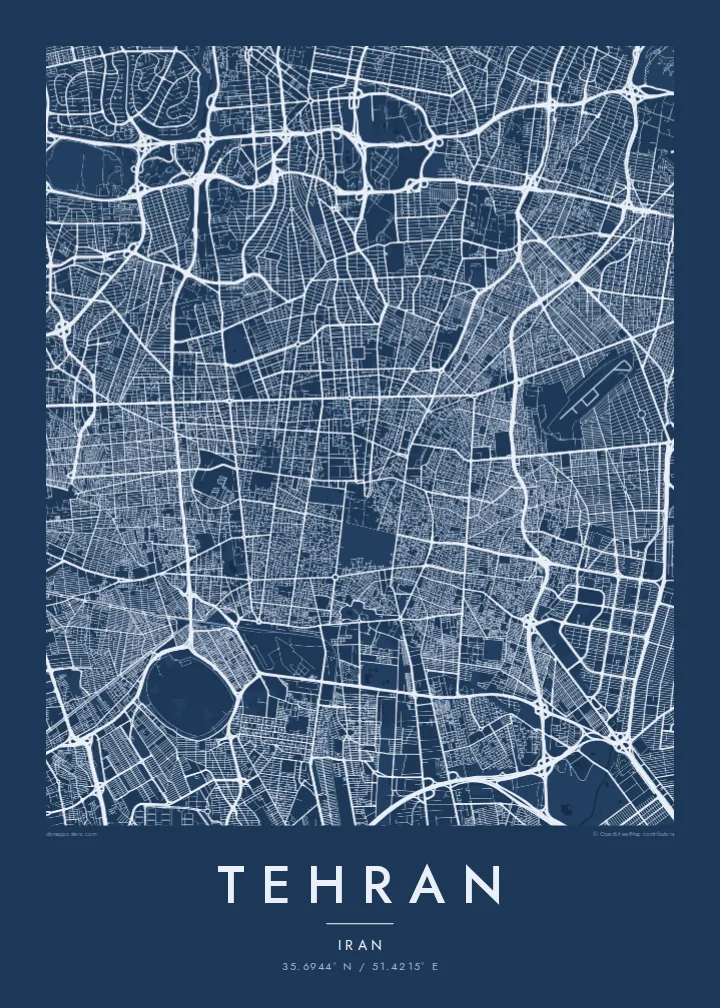
Як шаҳр, панҷ кайфият
Ба як услуб зер кунед, то онро дар девор бинед. Ҳамаи услубҳо нархи якхела доранд — чопшуда, дар қолаб ё файлҳои HD.
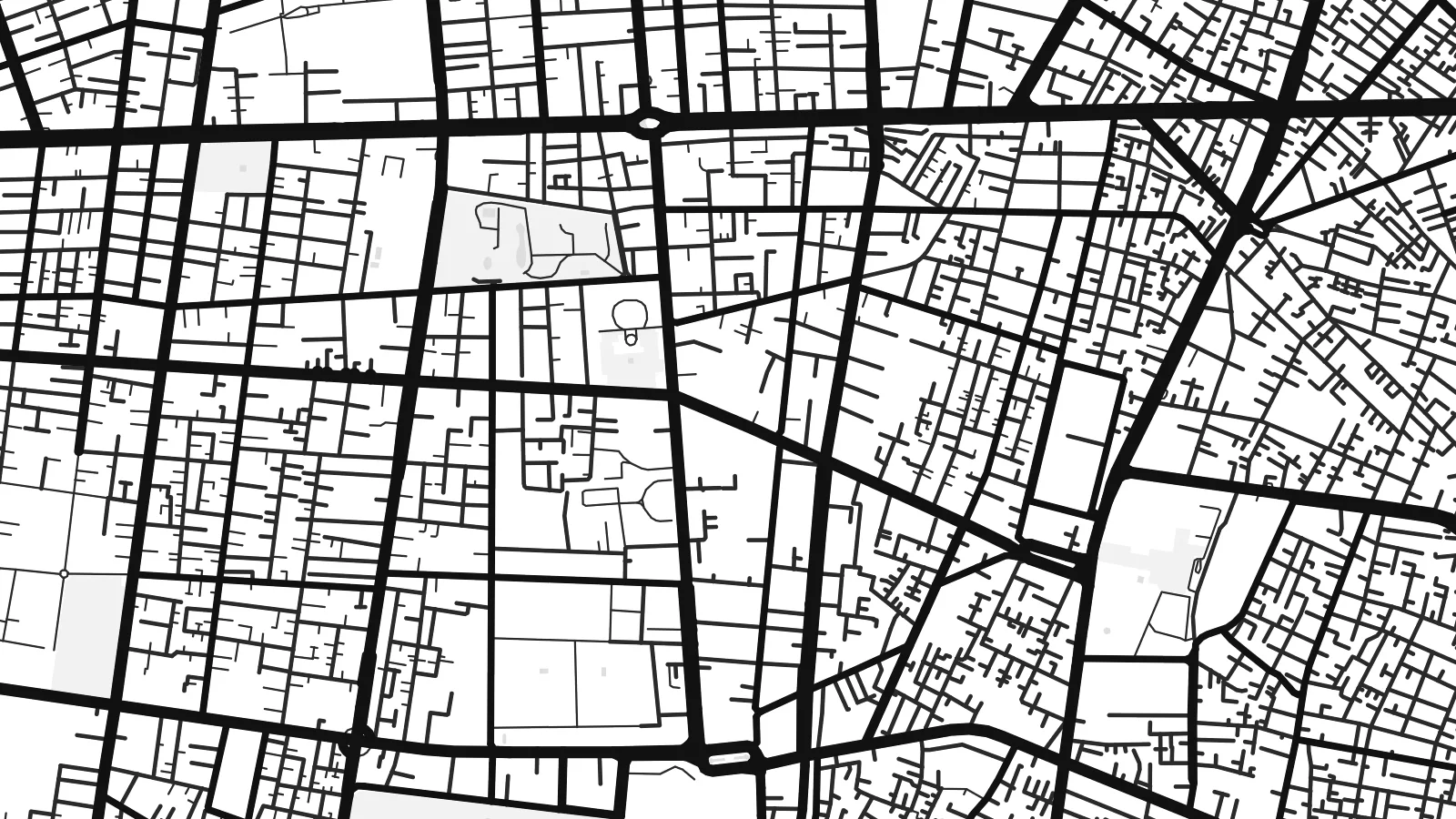 Пикселҳои воқеӣ · файли чоп барои 24 × 36″
Возеҳ барои чоп
Ин порчаи 100%-и файли воқеии чоп аст. Ҳар як постер — чопшуда, дар қолаб ё зеркашидашуда — дар серверҳои мо бо 300 DPI, то 7,200 × 10,800 пиксел, тарҳрезӣ мешавад, то ҳатто хурдтарин кӯчаҳо дар чопи 24 × 36″ равшан бимонанд.
Дар девор


Харита
Tehran spreads across a gentle slope at the foot of the Alborz range, and that incline shapes almost everything on the map. The northern districts fold into mountain valleys and winding roads, while the south opens onto flat land where streets settle into a broader, more regular pattern. Dry riverbeds and green corridors run north to south, following the way water once came down from the peaks.
Cutting through the city from top to bottom is Valiasr Street, often described as one of the longest avenues in the Middle East and lined with old plane trees. Around it, a dense web of expressways divides the city into large blocks, while the Grand Bazaar in the south keeps the narrow, covered passages of the older town.
Tehran became the capital in the late eighteenth century under the Qajar dynasty and has grown many times over since. A Tehran map poster shows that growth as layers: the tight core near the bazaar, the planned twentieth-century districts, and the expressways reaching west toward Azadi Tower and Mehrabad airport.
A single avenue running roughly north to south across the whole city, from the railway station area up into the foothills near Tajrish, visible on the map as a long, almost unbroken line.
A large oval junction in western Tehran, built around the Azadi Tower of 1971, where several major roads converge on the approach from Mehrabad airport.
The northern edge of the map, where the regular street network breaks into winding lanes and valleys as the city climbs toward the mountains that frame its skyline.
Аз они худ кунед
Сана, ном ё сатри худро илова кунед, услуб, андоза ё самтро иваз кунед.
Пешнамоиши ройгон бо резолютсияи паст ва нишони обӣ аст. Чопҳо ва файлҳои HD бо 300 DPI, то 7,200 × 10,800 px, бидуни нишони обӣ тарҳрезӣ мешаванд.
Чаро Tehran
For people who grew up in Tehran or left it for somewhere else, the map is instantly familiar: the long avenues, the expressway loops, the mountains along the top edge. It is a large, detailed city, and it rewards the bigger formats such as 50×70 cm or 24×36″.
Personalise the title, the subtitle and the coordinates line to mark a neighbourhood, a wedding year or a family story, then pick one of five styles. Noir works well for the dense street web, while Sand gives it a warmer tone. Digital files are $9, with a free watermarked preview first.
Постери Tehran-ро фармоиш диҳед| Андозаи чоп | Ҳалнокӣ | Файлҳо |
|---|---|---|
| 30 × 40 cm (11.8 × 15.7″) | 3,543 × 4,724 px | PNG · PDF |
| 29.7 × 42 cm (A3, 11.7 × 16.5″) | 3,508 × 4,961 px | PNG · PDF |
| 42 × 59.4 cm (A2, 16.5 × 23.4″) | 4,961 × 7,016 px | PNG · PDF |
| 45.7 × 61 cm (18 × 24″) | 5,400 × 7,200 px | PNG · PDF |
| 50 × 70 cm (19.7 × 27.6″) | 5,906 × 8,268 px | PNG · PDF |
| 61 × 91.4 cm (24 × 36″) | 7,200 × 10,800 px | PNG · PDF |
Барои муқоиса, пешнамоиши ройгон 900 px паҳно дорад, бо тамғаи обӣ аст ва барои экран пешбинӣ шудааст. Файлҳои HD дар ҳар самт то 8 маротиба ҳалнокии баландтар доранд ва дар андозаи пурраи постер тоза чоп мешаванд.
Дар боло саҳифа як услубро интихоб кунед, сипас Постери чопшударо — андоза ва агар хоҳед, қолабро — ё Файлҳои рақамии HD-ро интихоб кунед. Пардохт танҳо як қадам мегирад ва саҳифаи фармоиши шумо баробари пардохт нав мешавад.
Он дар коғази матти дараҷаи олӣ 200 gsm дар яке аз шаш андоза, аз 30 × 40 см то 24 × 36″, чоп мешавад. Нархи постерҳои чопшуда аз {printFrom} оғоз мешавад ва интиқол дар нарх ҳисоб шудааст.
Бале. Қолаби чӯбии яклухтро дар ранги сиёҳ, сафед, булути табиӣ ё чӯби торик интихоб кунед. Он бо шишаи зиддипартоӣ меояд ва барои овехтан омода аст. Нархи постерҳои дар қолаб аз {framedFrom} оғоз мешавад ва интиқол дар нарх ҳисоб шудааст.
Таҳвил дар саросари ҷаҳон ройгон аст. Ҳар постерро наздиктарин шарики чопии мо аз беш аз 30 кишвар чоп мекунад ва одатан дар муддати 3–7 рӯзи корӣ мерасад. Ҳолат ва рақами пайгириро дар «Фармоишҳои ман» дидан мумкин аст. Ба баъзе кишварҳо 2–5 ҳафта лозим мешавад ва ба ҷое, ки ҳоло намефиристем, сайт пеш аз пардохт хабар медиҳад.
Дар давоми 14 рӯз пас аз расидан ба мо сурат фиристед ва мо онро ройгон дубора чоп мекунем ё пулатонро бармегардонем.
Бале. Дар муҳаррири ин саҳифа сарлавҳа, зерсарлавҳа ва сатри координатаро ба дилхоҳ тарзе тағйир диҳед ва услуб ва андозаро интихоб кунед. Фармоишҳои чопшуда, дар қолаб ва рақамӣ ҳамагӣ айнан тарҳи шуморо истифода мебаранд.
Бо $9 шумо файлҳои PNG бо 300 DPI ва PDF-и омодаи чоп дар ҳамаи шаш андоза, бидуни нишони обӣ, мегиред, то дар ҳар ҷо чоп кунед. Ҳанӯз мутмаин нестед? Аввал пешнамоиши ройгони дорои нишони обиро зеркашӣ кунед.
