Okozu diversion channel
In the Bunsui district a large channel leaves the Shinano River and heads towards the Sea of Japan. It was built in the early twentieth century to control flooding on the plain, and it cuts a bold diagonal across the map.
Постери минималистии харита · Япония
37.6645° N / 138.9252° E
A flat grid of streets and paddies on the Echigo Plain, bounded by the Shinano River and cut through by a great diversion channel


Як шаҳр, панҷ кайфият
Ба як услуб зер кунед, то онро дар девор бинед. Ҳамаи услубҳо нархи якхела доранд — чопшуда, дар қолаб ё файлҳои HD.
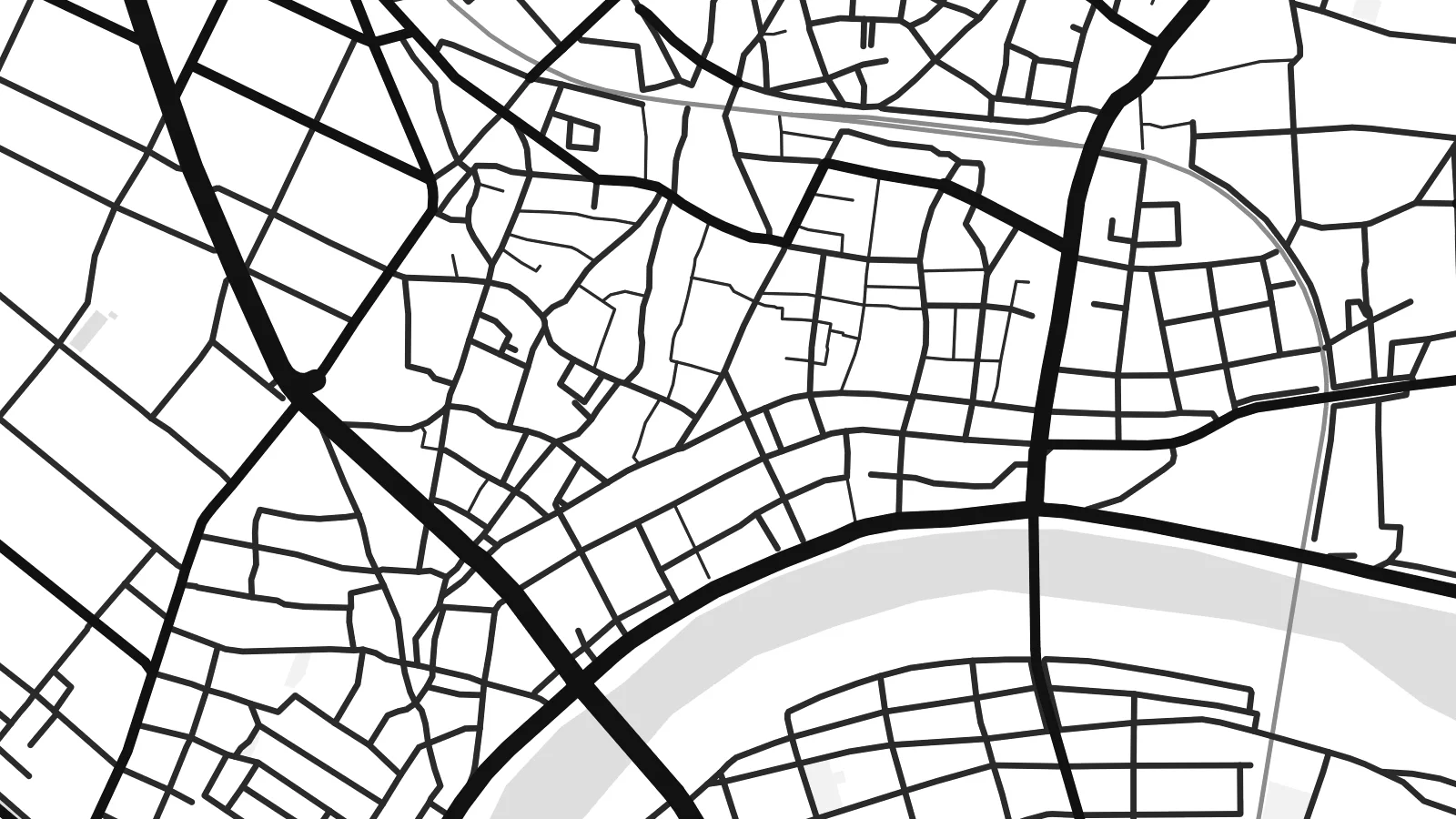 Пикселҳои воқеӣ · файли чоп барои 24 × 36″
Возеҳ барои чоп
Ин порчаи 100%-и файли воқеии чоп аст. Ҳар як постер — чопшуда, дар қолаб ё зеркашидашуда — дар серверҳои мо бо 300 DPI, то 7,200 × 10,800 пиксел, тарҳрезӣ мешавад, то ҳатто хурдтарин кӯчаҳо дар чопи 24 × 36″ равшан бимонанд.
Дар девор


Харита
Seen from above, Tsubame sits on the wide, level ground of the Echigo Plain in Niigata Prefecture. The Shinano River, Japan's longest, runs along its edge, and smaller waterways cross the plain beside it. The built-up centre has a fairly tight grain of streets. Beyond it the pattern opens into long rectangular rice fields, so the map moves from dense linework to a quieter geometry of field boundaries and farm roads.
The city in its current form dates from 2006, when Tsubame merged with the neighbouring towns of Yoshida and Bunsui. On the map this shows as more than one cluster of streets, joined by roads and railway lines across open farmland. The Joetsu Shinkansen passes nearby, with Tsubame-Sanjo Station close to the boundary with Sanjo. A Tsubame map poster shows how these separate settlements fit together on the plain.
Tsubame is best known for metalworking. Nail-making began here centuries ago and later gave way to copperware. Today the city is one of Japan's main centres for stainless-steel cutlery and tableware. Workshops and small factories sit among the houses, though the map shows none of that directly. It records the setting instead: flat ground, reliable water and routes to the rest of the country, which helped a local craft grow into an industry.
In the Bunsui district a large channel leaves the Shinano River and heads towards the Sea of Japan. It was built in the early twentieth century to control flooding on the plain, and it cuts a bold diagonal across the map.
The broad river curves along the city's edge, with embankments and wide floodplain on either side. In black and white it forms the main natural line on the poster, and the street pattern is set against it.
Around the urban areas, rice fields divide the land into long regular plots with straight farm roads between them. The result is a calm, almost woven texture that sets off the denser streets of the town centres.
Аз они худ кунед
Сана, ном ё сатри худро илова кунед, услуб, андоза ё самтро иваз кунед.
Пешнамоиши ройгон бо резолютсияи паст ва нишони обӣ аст. Чопҳо ва файлҳои HD бо 300 DPI, то 7,200 × 10,800 px, бидуни нишони обӣ тарҳрезӣ мешаванд.
Чаро Tsubame
For people from Tsubame, or anyone who owns a set of its cutlery, this map is a quiet reminder of a place that makes useful things. The river, the channel and the fields give it a clear structure, and it looks good in a kitchen, a workshop or a study.
You can personalise the title, subtitle and coordinates line to mark a hometown, a factory visit or a family date. There are five styles: Classic black and white, Noir, Paper, Blueprint or Sand. You can buy HD digital files for $9, or order a matte print with an optional wooden frame.
Постери Tsubame-ро фармоиш диҳед| Андозаи чоп | Ҳалнокӣ | Файлҳо |
|---|---|---|
| 30 × 40 cm11.8 × 15.7″ | 3,543 × 4,724 px | PNG · PDF |
| 29.7 × 42 cm (A3)11.7 × 16.5″ | 3,508 × 4,961 px | PNG · PDF |
| 42 × 59.4 cm (A2)16.5 × 23.4″ | 4,961 × 7,016 px | PNG · PDF |
| 45.7 × 61 cm18 × 24″ | 5,400 × 7,200 px | PNG · PDF |
| 50 × 70 cm19.7 × 27.6″ | 5,906 × 8,268 px | PNG · PDF |
| 61 × 91.4 cm24 × 36″ | 7,200 × 10,800 px | PNG · PDF |
Барои муқоиса, пешнамоиши ройгон 900 px паҳно дорад, бо тамғаи обӣ аст ва барои экран пешбинӣ шудааст. Файлҳои HD дар ҳар самт то 8 маротиба ҳалнокии баландтар доранд ва дар андозаи пурраи постер тоза чоп мешаванд.
Дар боло саҳифа як услубро интихоб кунед, сипас Постери чопшударо — андоза ва агар хоҳед, қолабро — ё Файлҳои рақамии HD-ро интихоб кунед. Пардохт танҳо як қадам мегирад ва саҳифаи фармоиши шумо баробари пардохт нав мешавад.
Он дар коғази матти дараҷаи олӣ 200 gsm дар яке аз шаш андоза, аз 30 × 40 см то 24 × 36″, чоп мешавад. Нархи постерҳои чопшуда аз $39 оғоз мешавад ва интиқол дар нарх ҳисоб шудааст.
Бале. Қолаби чӯбии яклухтро дар ранги сиёҳ, сафед, булути табиӣ ё чӯби торик интихоб кунед. Он бо шишаи зиддипартоӣ меояд ва барои овехтан омода аст. Нархи постерҳои дар қолаб аз $99 оғоз мешавад ва интиқол дар нарх ҳисоб шудааст.
Расонидан ба зиёда аз 60 кишвар ройгон аст. Ҳар постер аз ҷониби наздиктарин шарики чопии мо дар зиёда аз 30 кишвар чоп мешавад ва одатан дар муддати 3–7 рӯзи корӣ мерасад. Ҳолат ва пайгирии фармоишро дар бахши «Фармоишҳои ман» дидан мумкин аст. Ба чанд кишвар 2–5 ҳафта лозим мешавад ва дар ҷое, ки мо ҳоло намерасонем, сайт пеш аз пардохт хабар медиҳад.
Дар давоми 14 рӯз пас аз расидан ба мо сурат фиристед ва мо онро ройгон дубора чоп мекунем ё пулатонро бармегардонем.
Бале. Дар муҳаррири ин саҳифа сарлавҳа, зерсарлавҳа ва сатри координатаро ба дилхоҳ тарзе тағйир диҳед ва услуб ва андозаро интихоб кунед. Фармоишҳои чопшуда, дар қолаб ва рақамӣ ҳамагӣ айнан тарҳи шуморо истифода мебаранд.
Бо $9 шумо файлҳои PNG бо 300 DPI ва PDF-и омодаи чоп дар ҳамаи шаш андоза, бидуни нишони обӣ, мегиред, то дар ҳар ҷо чоп кунед. Ҳанӯз мутмаин нестед? Аввал пешнамоиши ройгони дорои нишони обиро зеркашӣ кунед.
