Road and rail spine
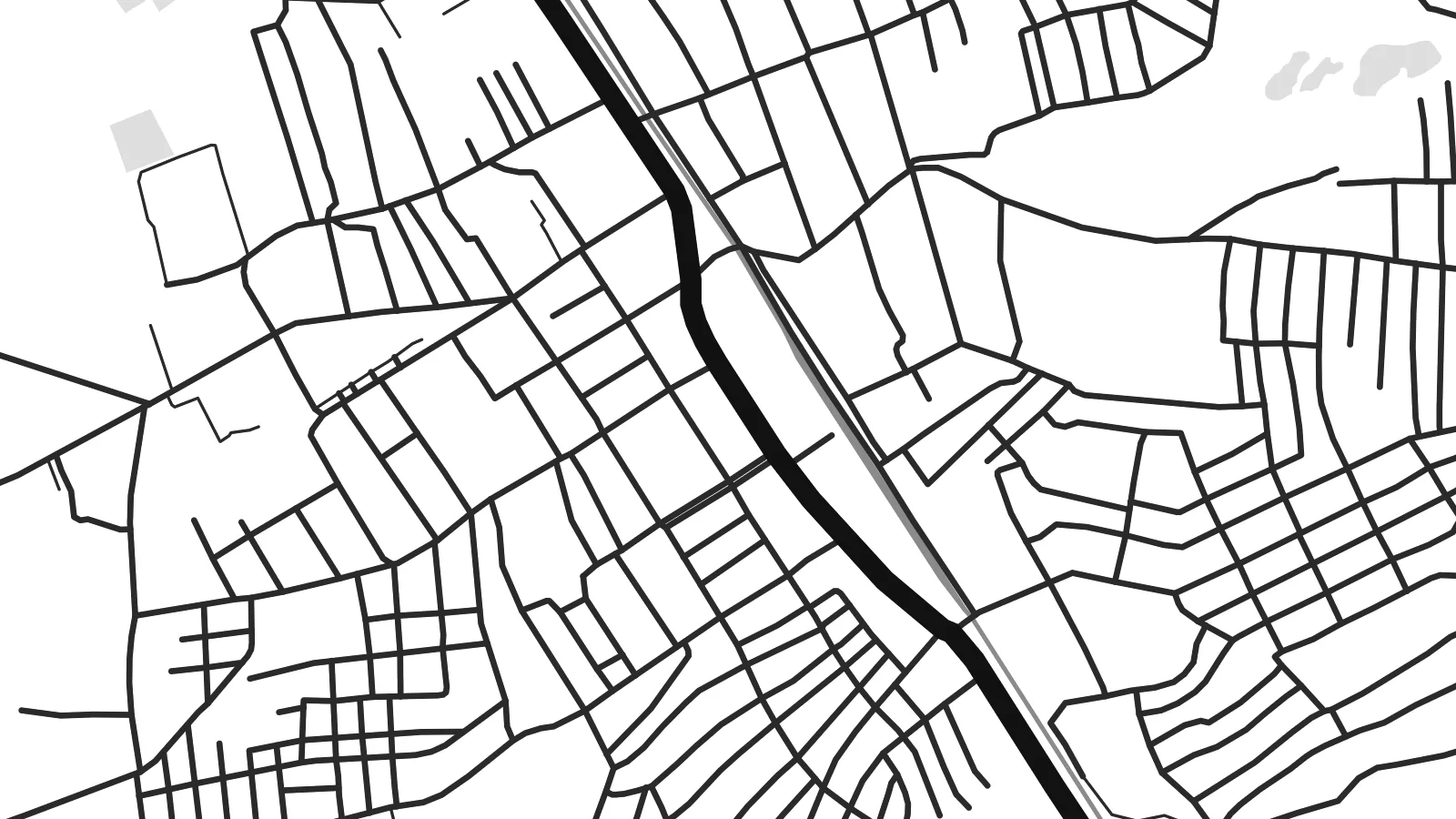
The main road north from Yangon and the railway run close together through the town. Together they form the long central axis the whole settlement is built around.
Pōhita mape faigofie · Myanmar (Burma)
17.3144° N / 95.9629° E
A rural township north of Yangon, strung along the main road and railway across flat, rice-growing lowland.


Taone e tahi, lagona e lima
Pa'i se ata ke va'ai ai i luga o te pā. E tutusa te tau o ata uma — i lomiga, fakapipi'i i faleata, pe ko faila HD.
 Pixels mo'i · Faila lomiga 24 × 36″
Manino mo te lomiga
Ko se kupega 100% mai te faila lomiga mo'i. Poster uma — pe lomiina, fakapipi'i i faleata, pe download-ina — e fakaatagia i luga o a matou setula i te 300 DPI, e oo atu ki te 7,200 × 10,800 pixels, ina ia mautinoa e ma'ai pea auala tuai foki i luga o se lomiga 24 × 36″.
I luga o te pa


Te mape
Taikkyi lies in the northern part of Yangon Region, on the route that runs north from Yangon towards Pyay. The town is set in the wide, flat lowlands of lower Myanmar, a landscape of paddy fields, small waterways and scattered villages. Its shape follows that setting. It is a long, fairly narrow settlement that grew along the main transport line, not a compact circle.
From above, the road and the railway are the organising lines. Houses, markets and side streets cluster along them and then thin out quickly into cultivated land. Because the ground is so level, nothing forces the streets to bend. Where they curve, it is usually to follow a canal, a field boundary or an older track. A Taikkyi map poster shows that linear, practical pattern very clearly.
Taikkyi is a working agricultural town, not a place with a famous skyline, and the map reflects that honestly. Its strength is its simplicity: one long spine of settlement, the parallel paths of road and rail, and open farmland on either side. In black and white it becomes a restrained, almost diagrammatic image of life on the Irrawaddy plain.
The main road north from Yangon and the railway run close together through the town. Together they form the long central axis the whole settlement is built around.
Streets and buildings stretch out along the transport corridor instead of spreading in every direction. That gives the town an elongated, easily recognisable outline.
On both sides the settlement fades into flat farmland crossed by small watercourses and field tracks. It leaves wide, quiet space around the town.
Fai mo koe
Fakaopoopo he aho, he igoa pe he upu a koe, hui te faiga, te lahi pe te tūlaga.
Ko te va'aiga e leai se totogi e maualalo tona resolution ma iai se fakailoga vai. E fakaatagia lomiga ma faila HD i te 300 DPI, e oo atu ki te 7,200 × 10,800 px, e aunoa ma se fakailoga vai.
Aiheā Taikkyi
For someone from Taikkyi or with family ties to the area, the map shows home in its most basic form: the road, the railway and the fields. It is understated, and that is exactly what makes it personal.
Change the title and subtitle to a family name, a date or a message, and keep the coordinates as a quiet reference. Five styles are available. Paper and Sand give the flat landscape a softer, warmer tone.
Oka te poster Taikkyi| Lahi o te lomiga | Manino | Faila |
|---|---|---|
| 30 × 40 cm11.8 × 15.7″ | 3,543 × 4,724 px | PNG · PDF |
| 29.7 × 42 cm (A3)11.7 × 16.5″ | 3,508 × 4,961 px | PNG · PDF |
| 42 × 59.4 cm (A2)16.5 × 23.4″ | 4,961 × 7,016 px | PNG · PDF |
| 45.7 × 61 cm18 × 24″ | 5,400 × 7,200 px | PNG · PDF |
| 50 × 70 cm19.7 × 27.6″ | 5,906 × 8,268 px | PNG · PDF |
| 61 × 91.4 cm24 × 36″ | 7,200 × 10,800 px | PNG · PDF |
Mo te fakatatau, ko te fakaakoakoga e hē totogi e 900 px te lautele, e ihi te fakailoga ma mo te lau komipiuta. Ko nā faila HD e oko ki te 8× te manino i itū taki tahi ma e lomia lelei i te lahi kātoa o te pōhita.
Filifili se ata i te pito i luga o te itulau, ona filifili lea o te Poster Lomiina — se lapoa ma, ka manako ai koe, se faleata — pe ko Faila HD Fakaonaonaina. E tasi te laasaga o te ōkaina, ma ka fakafou loa lau itulau ōkaina pe a mae'a te totogi.
E lomiina i luga o se pepa matte kaliki maualuga e 200 gsm, i se tasi o ni lapoa e ono, mai le 30 × 40 cm ki te 24 × 36″. E kamata te tau o poster lomiina mai le $39, aofia ai te uta.
Ioe. Filifili se faleata lakau malō i te lanu uli, tea, oki masani pe lakau pouli. E aumai fakatasi mo se tioata e le gagamu ma ua sauni ke tautau. E kamata te tau o poster fakapipi'i i se faleata mai le $99, aofia ai te uta.
E tuku uma te uta ki fenua e 60+. Ko te pepa takitasi e lomi e te tasi o a matou paaga lomi i fenua e 30+, ka tae mai i aso galue e 3–7. E mafai ke e maimoa ki te tulaga mo te tulitaki i lalo o Taku Fakatonuga. E lauiti nei fenua e 2–5 wiki, ka ko nei fenua e le o tuku atu ai, e fakamatala atu e te weepisi i mua o te totogi.
Auina mai se ata pikitia i loto o te 14 aso mai te taimi na oo mai ai, ka toe lomiina e matou e leai se totogi pe toe totogi atu lau tupe.
Ioe. I te mea fakasa'o i luga o lenei itulau, sui te ulutala, te ulutala lalo ma te laina fakamaoniga tulaga ki so se mea e manako ai koe, ona filifili lea o se ata ma se lapoa. Okaina lomiina, fakapipi'i i faleata, ma fakaonaonaina e fakaaogā uma i tau ata tonu.
Mo le $9 e maua e koe ni faila PNG 300 DPI ma PDF sauni-mo-lomiga i lapoa e ono uma, e aunoa ma se fakailoga vai, ke lomiina i so se mea. E le'i mautinoa? Download muamua se va'aiga fakailoga vai e leai se totogi.
