El Ávila mountain
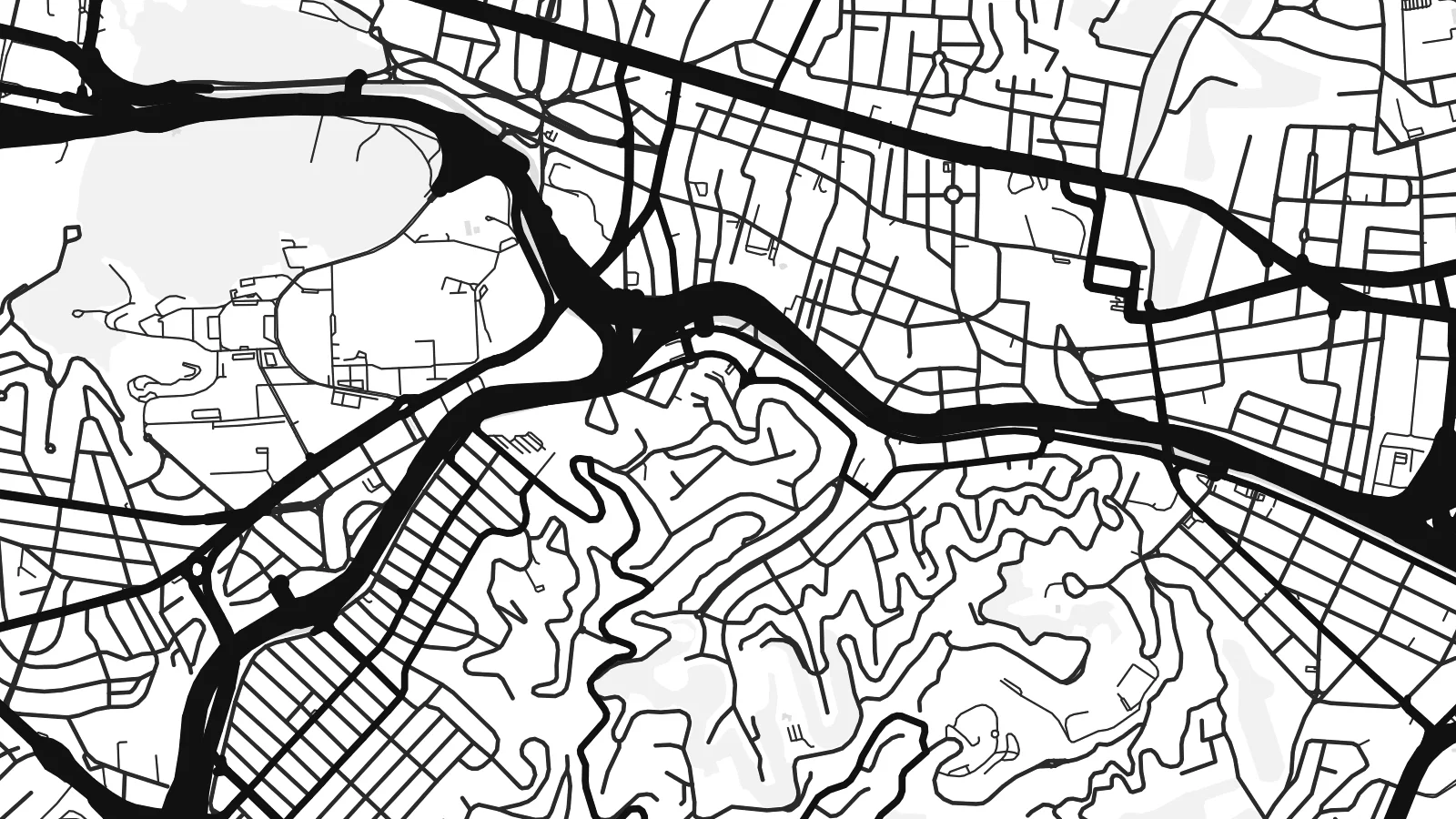
The Waraira Repano national park rises directly north of the city. On the map it leaves a large empty space, making the valley shape of Caracas unusually clear.
Fakatino mape mukamuka · Venezuela
10.4880° N / 66.8792° W
A long, narrow city squeezed into a mountain valley, with El Ávila forming a wall along its northern edge


Taha e taone, lima e onoonoaga
Tapaki e taha puhala ke kitia ai ki luga he puipui. Kua tatai e totogi he tau puhala oti — pete he lolomi, poloka, po ke faila HD.
 Tau pikselo mooli · faila lolomi 24 × 36″
Maama mitaki ke lolomi
Ko e 100% e fahi mooli mai he faila lolomi. Ko e tau poster oti — pete kua lolomi, poloka, po ke utu hifo — kua taute ke he ha mautolu a tau tokoluga (server) ke he 300 DPI, hokotia ke he 7,200 × 10,800 piksela, ke maeke ai e tau ala ikiiki tote ke maaliali fakamitaki he lolomi 24 × 36″.
He Pā


Ko e mape
Caracas lies in a valley about 900 metres above sea level, separated from the Caribbean by the mountain range of El Ávila, also known as Waraira Repano. From above, the city is drawn as a long east–west band. Its northern edge stops sharply where the national park begins, while the southern hills are covered in dense, irregular streets.
The Guaire River runs along the valley floor in a straightened channel, followed closely by the main east–west highway. Around them sit the formal districts: the colonial grid around Plaza Bolívar in the west, and newer areas such as Altamira, Chacao and Las Mercedes to the east. The hillside barrios form a very different, organic texture of paths and stairways.
The Ciudad Universitaria de Caracas, designed by Carlos Raúl Villanueva, is a UNESCO World Heritage Site and shows up as a large planned campus in the centre of the valley. Caracas is also the birthplace of Simón Bolívar. A Caracas map poster captures the contrast between the regular valley grid and the steep, crowded slopes around it.
The Waraira Repano national park rises directly north of the city. On the map it leaves a large empty space, making the valley shape of Caracas unusually clear.
The canalised Guaire River runs through the valley from west to east, with the main highway alongside it. Together they form the city's central line.
Villanueva's modernist university campus is a UNESCO World Heritage Site. Its large, planned layout of buildings and green spaces stands out among the surrounding streets.
Taute ke ha hau
Lafi e aho, taha higoa po ke taha kupu haau, hiki e fakatino, lahi po ke tuaga.
Ko e kitiaaga nakai totogi kua tote e maaliali mo e fakamailoga vai. Ko e tau lolomi mo e tau faila HD kua taute ke he 300 DPI, hokotia ke he 7,200 × 10,800 px, nakai fai fakamailoga vai.
Ko e ha Caracas
Many people hang Caracas to stay connected to a city they left, or to remember family neighbourhoods on the hills and in the valley. With the mountain wall and the long valley, the map is instantly recognisable.
Add your own title, subtitle and coordinates line, perhaps a barrio name or a year, and choose from Classic black & white, Noir, Paper, Blueprint and Sand. It is available as a $9 digital download or as a printed poster.
Talaage e poster Caracas| Lahi he lolomi | Maama | Tau faila |
|---|---|---|
| 30 × 40 cm11.8 × 15.7″ | 3,543 × 4,724 px | PNG · PDF |
| 29.7 × 42 cm (A3)11.7 × 16.5″ | 3,508 × 4,961 px | PNG · PDF |
| 42 × 59.4 cm (A2)16.5 × 23.4″ | 4,961 × 7,016 px | PNG · PDF |
| 45.7 × 61 cm18 × 24″ | 5,400 × 7,200 px | PNG · PDF |
| 50 × 70 cm19.7 × 27.6″ | 5,906 × 8,268 px | PNG · PDF |
| 61 × 91.4 cm24 × 36″ | 7,200 × 10,800 px | PNG · PDF |
Ke fakatatai, ko e fakatino noa kua 900 px e laulahi, fai fakamailoga mo e mo e tau mata komipiuta ni. Ko e tau faila HD kua ato hoko ke he 8× e maama ke he tau faahi takitaha mo e lolomi mitaki he lahi katoa he fakatino.
Fifili e taha puhala i luga he kupega, ti fifili e Poster Lolomi — e lahi mo e, kaeke ke manako ai koe, taha poloka — po ke Tau Faila HD Fakaeletonika. Ko e fakaotiaga totogi ko e taha gahua ni, ti ko e kupega he hau a talaaga ka fakafou fakahaga i mua he fakaotiaga e totogi.
Kua lolomi ai ke he pepa mitaki 200 gsm matte he taha he tau lahi ono, mai he 30 × 40 cm ke hoko ke he 24 × 36″. Kamata e tau poster lolomi mai he $39, kua putoia ai e utaaga.
E. Fifili e poloka akau malolō ke he lanu uli, tea, akau oki mooli, po ke akau pouli. Kua fakalataha mo e sioga malolō nakai malepe ti kua mautali ke tautau. Kamata e tau poster poloka mai he $99, kua putoia ai e utaaga.
Nakai totogi e fakafano ke he motu 60+. Ko e fakatino taha kua lolomi he fenoga lolomi ha mautolu kua tata mo e tau motu 30+, kua hoko mai he tau aho gahua 3–7. Maeke ia koe ke kikite e tuaga mo e fakamuitua he lalo he Haku Tau Fakatonu. Ke he falu motu kua 2–5 e tau tapu, ti ka nakai fakafano a mautolu ki ai, to fakaha he api tupe ia ki mua he totogi.
Fakafano mai e taha ata ki a mautolu he loto he 14 e tau aho tali mai he hokoaga, ti to lolomi foki e mautolu nakai totogi po ke liu atu e totogi ki a koe.
E. He editor i luga he kupega nei, hikihiki e matakupu, e matakupu lalo mo e laini coordinates ke he taha mena kua manako a koe ki ai, ti fifili e puhala mo e lahi. Ko e tau talaaga lolomi, poloka mo e fakaeletonika oti kua fakaaoga tonu e hau a fakatino.
Ma e $9 ka moua e koe e tau faila PNG 300 DPI mo e PDF kua mautali ke lolomi he tau lahi ono oti, nakai fai fakamailoga vai, ke lolomi i fe mena. Nakai maopoopo agaia? Utu hifo fakamua e kitiaaga nakai totogi ne fai fakamailoga vai.
