Mundaú Lagoon
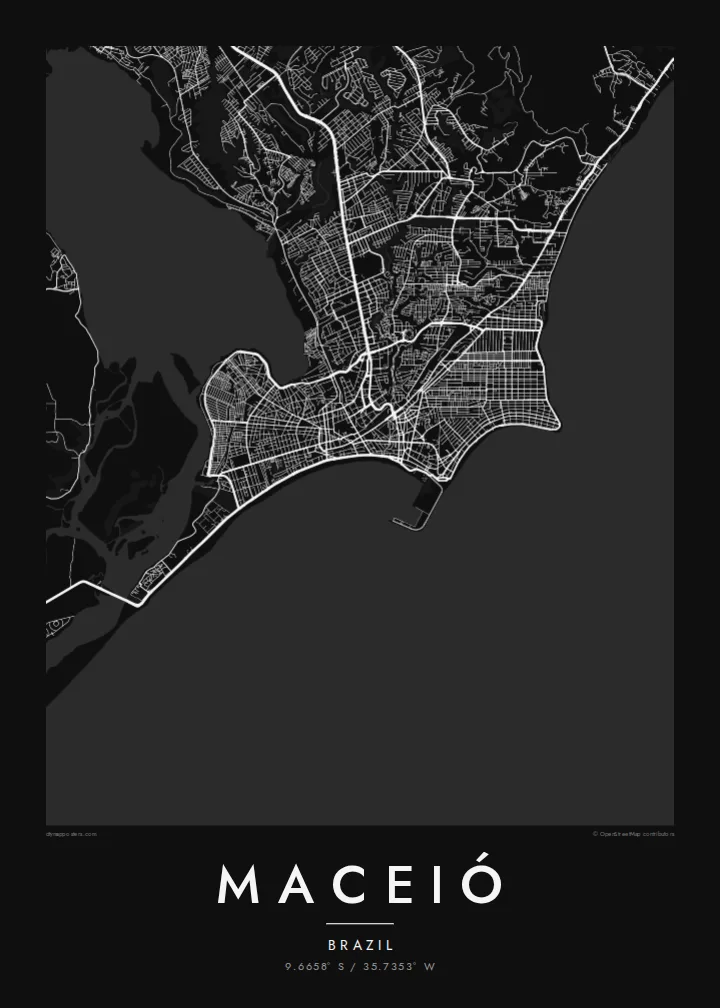
A wide, shallow lagoon borders the city to the west, its irregular shoreline, islands and channels creating an intricate, watery edge that contrasts with the ocean side.
Fakatino mape mukamuka · Brazil
9.6658° S / 35.7353° W
A city between offshore reefs and a wide lagoon, its beaches curving along the Atlantic in long arcs.



Taha e taone, lima e onoonoaga
Tapaki e taha puhala ke kitia ai ki luga he puipui. Kua tatai e totogi he tau puhala oti — pete he lolomi, poloka, po ke faila HD.
 Tau pikselo mooli · faila lolomi 24 × 36″
Maama mitaki ke lolomi
Ko e 100% e fahi mooli mai he faila lolomi. Ko e tau poster oti — pete kua lolomi, poloka, po ke utu hifo — kua taute ke he ha mautolu a tau tokoluga (server) ke he 300 DPI, hokotia ke he 7,200 × 10,800 piksela, ke maeke ai e tau ala ikiiki tote ke maaliali fakamitaki he lolomi 24 × 36″.
He Pā
Ko e mape
Maceió, capital of the Brazilian state of Alagoas, occupies a strip of land between the Atlantic Ocean and the broad Mundaú Lagoon. On a map the city is framed by water on two sides: the lagoon to the west with its channels and islands, and the ocean to the east, where the coastline bends into a series of gentle bays and points.
Coral reefs lie a short distance offshore, and at low tide they form natural pools, most famously off Pajuçara beach, where small sailboats called jangadas take visitors out to the reef. The beaches of Pajuçara, Ponta Verde and Jatiúca follow one another along the waterfront, backed by blocks of apartment buildings and a long seaside avenue.
A Maceió map poster brings the city's relationship with water into focus. The historic centre sits near the port, the Farol district occupies the higher ground above it, and newer districts spread north along the coast. Between the reefs, the beaches and the lagoon, the composition is full of curves, with the straighter streets inland providing structure.
A wide, shallow lagoon borders the city to the west, its irregular shoreline, islands and channels creating an intricate, watery edge that contrasts with the ocean side.
Offshore reefs create natural pools at low tide, reached by jangada sailboats from Pajuçara beach, and give this stretch of coastline its sheltered, calm character.
The coast turns at Ponta Verde, dividing the city beaches into two arcs, a shape that makes the waterfront immediately recognisable on the map.
Taute ke ha hau
Lafi e aho, taha higoa po ke taha kupu haau, hiki e fakatino, lahi po ke tuaga.
Ko e kitiaaga nakai totogi kua tote e maaliali mo e fakamailoga vai. Ko e tau lolomi mo e tau faila HD kua taute ke he 300 DPI, hokotia ke he 7,200 × 10,800 px, nakai fai fakamailoga vai.
Ko e ha Maceió
Maceió is a favourite of travellers from across Brazil and abroad, and for people from Alagoas it is simply home. A map of the lagoon, the reefs and the beaches is a calm way to keep that coastal light in a room far from the sea.
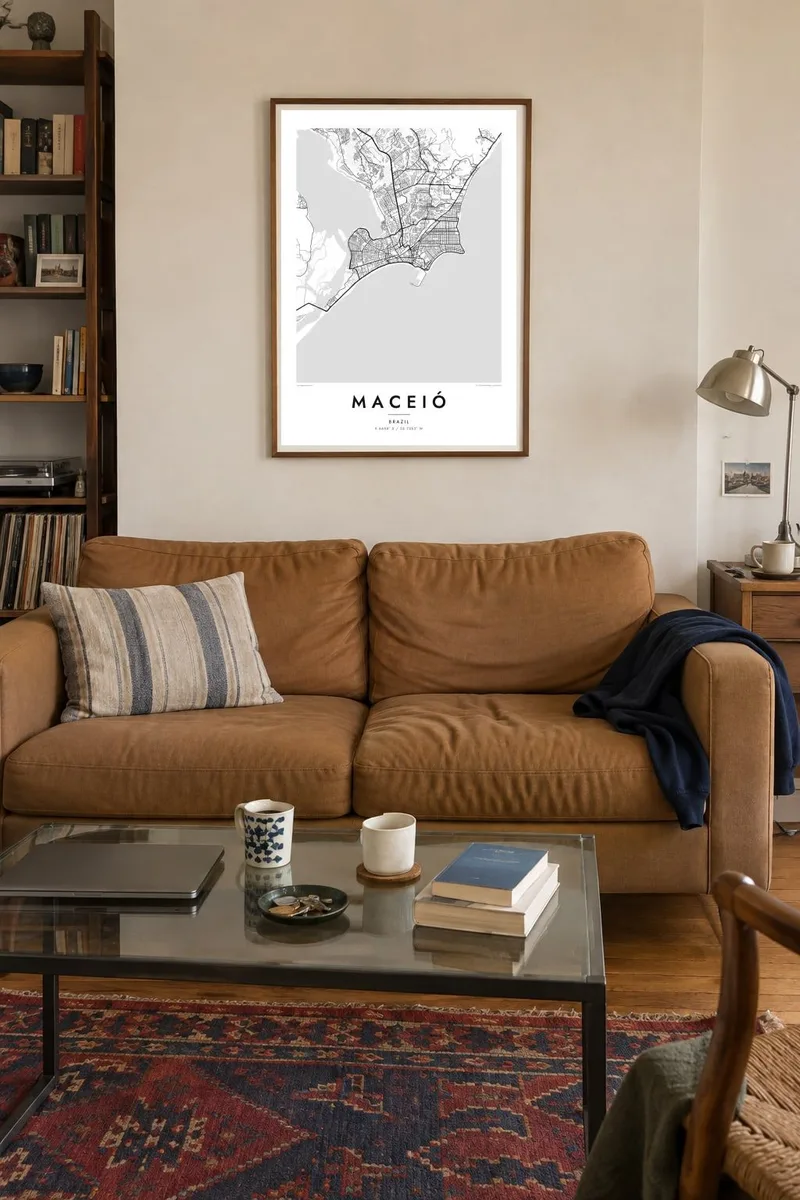
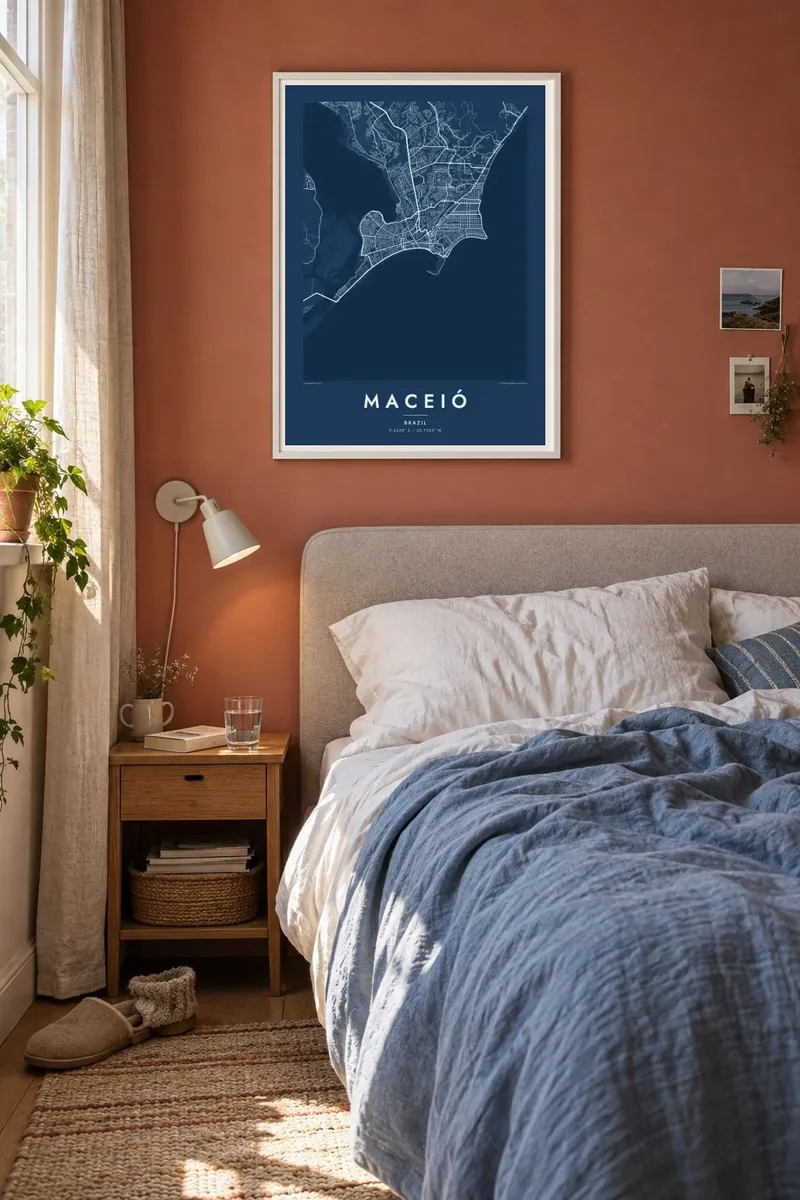
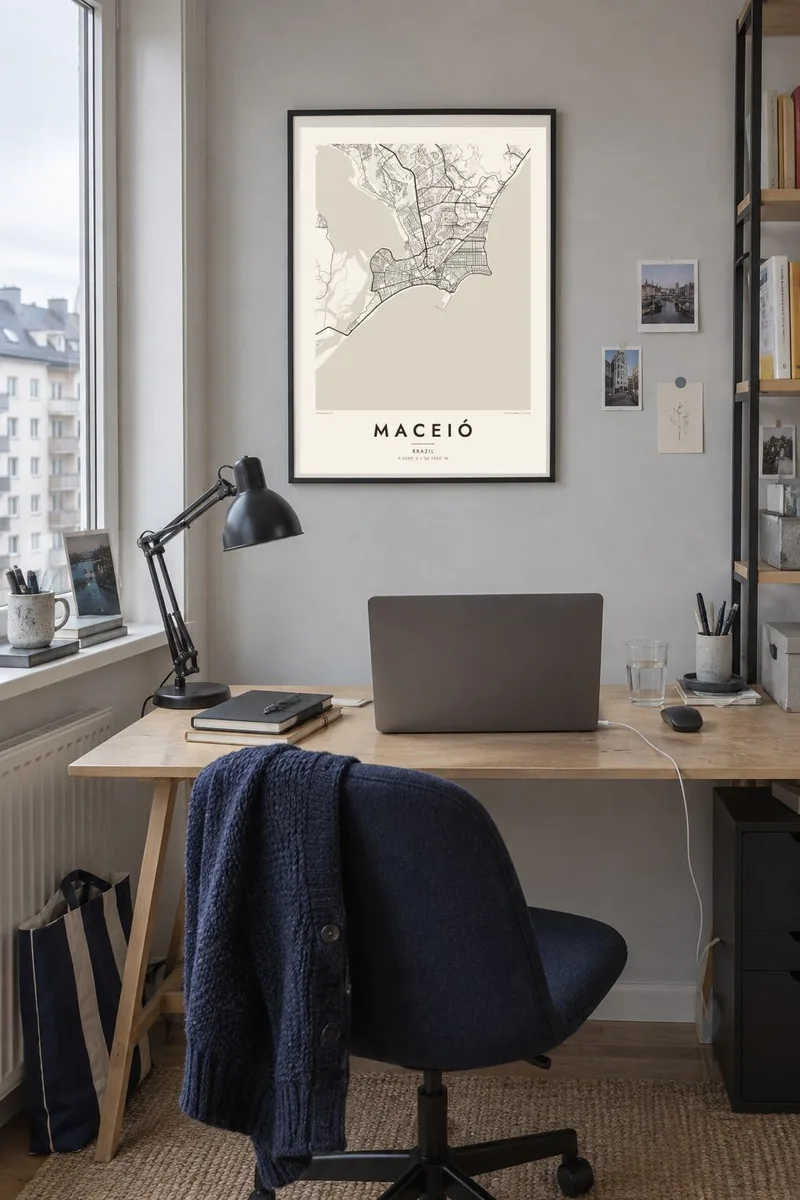
Add your own title, subtitle and coordinates, perhaps a beach name or a holiday date, and choose Classic black & white, Noir, Paper, Blueprint or Sand. Download HD files in six sizes for $9, or order a matte print with an optional wooden frame.
Talaage e poster Maceió| Lahi he lolomi | Maama | Tau faila |
|---|---|---|
| 30 × 40 cm11.8 × 15.7″ | 3,543 × 4,724 px | PNG · PDF |
| 29.7 × 42 cm (A3)11.7 × 16.5″ | 3,508 × 4,961 px | PNG · PDF |
| 42 × 59.4 cm (A2)16.5 × 23.4″ | 4,961 × 7,016 px | PNG · PDF |
| 45.7 × 61 cm18 × 24″ | 5,400 × 7,200 px | PNG · PDF |
| 50 × 70 cm19.7 × 27.6″ | 5,906 × 8,268 px | PNG · PDF |
| 61 × 91.4 cm24 × 36″ | 7,200 × 10,800 px | PNG · PDF |
Ke fakatatai, ko e fakatino noa kua 900 px e laulahi, fai fakamailoga mo e mo e tau mata komipiuta ni. Ko e tau faila HD kua ato hoko ke he 8× e maama ke he tau faahi takitaha mo e lolomi mitaki he lahi katoa he fakatino.
Fifili e taha puhala i luga he kupega, ti fifili e Poster Lolomi — e lahi mo e, kaeke ke manako ai koe, taha poloka — po ke Tau Faila HD Fakaeletonika. Ko e fakaotiaga totogi ko e taha gahua ni, ti ko e kupega he hau a talaaga ka fakafou fakahaga i mua he fakaotiaga e totogi.
Kua lolomi ai ke he pepa mitaki 200 gsm matte he taha he tau lahi ono, mai he 30 × 40 cm ke hoko ke he 24 × 36″. Kamata e tau poster lolomi mai he $39, kua putoia ai e utaaga.
E. Fifili e poloka akau malolō ke he lanu uli, tea, akau oki mooli, po ke akau pouli. Kua fakalataha mo e sioga malolō nakai malepe ti kua mautali ke tautau. Kamata e tau poster poloka mai he $99, kua putoia ai e utaaga.
Nakai totogi e fakafano ke he motu 60+. Ko e fakatino taha kua lolomi he fenoga lolomi ha mautolu kua tata mo e tau motu 30+, kua hoko mai he tau aho gahua 3–7. Maeke ia koe ke kikite e tuaga mo e fakamuitua he lalo he Haku Tau Fakatonu. Ke he falu motu kua 2–5 e tau tapu, ti ka nakai fakafano a mautolu ki ai, to fakaha he api tupe ia ki mua he totogi.
Fakafano mai e taha ata ki a mautolu he loto he 14 e tau aho tali mai he hokoaga, ti to lolomi foki e mautolu nakai totogi po ke liu atu e totogi ki a koe.
E. He editor i luga he kupega nei, hikihiki e matakupu, e matakupu lalo mo e laini coordinates ke he taha mena kua manako a koe ki ai, ti fifili e puhala mo e lahi. Ko e tau talaaga lolomi, poloka mo e fakaeletonika oti kua fakaaoga tonu e hau a fakatino.
Ma e $9 ka moua e koe e tau faila PNG 300 DPI mo e PDF kua mautali ke lolomi he tau lahi ono oti, nakai fai fakamailoga vai, ke lolomi i fe mena. Nakai maopoopo agaia? Utu hifo fakamua e kitiaaga nakai totogi ne fai fakamailoga vai.
Tata mai
