Hillside neighbourhoods
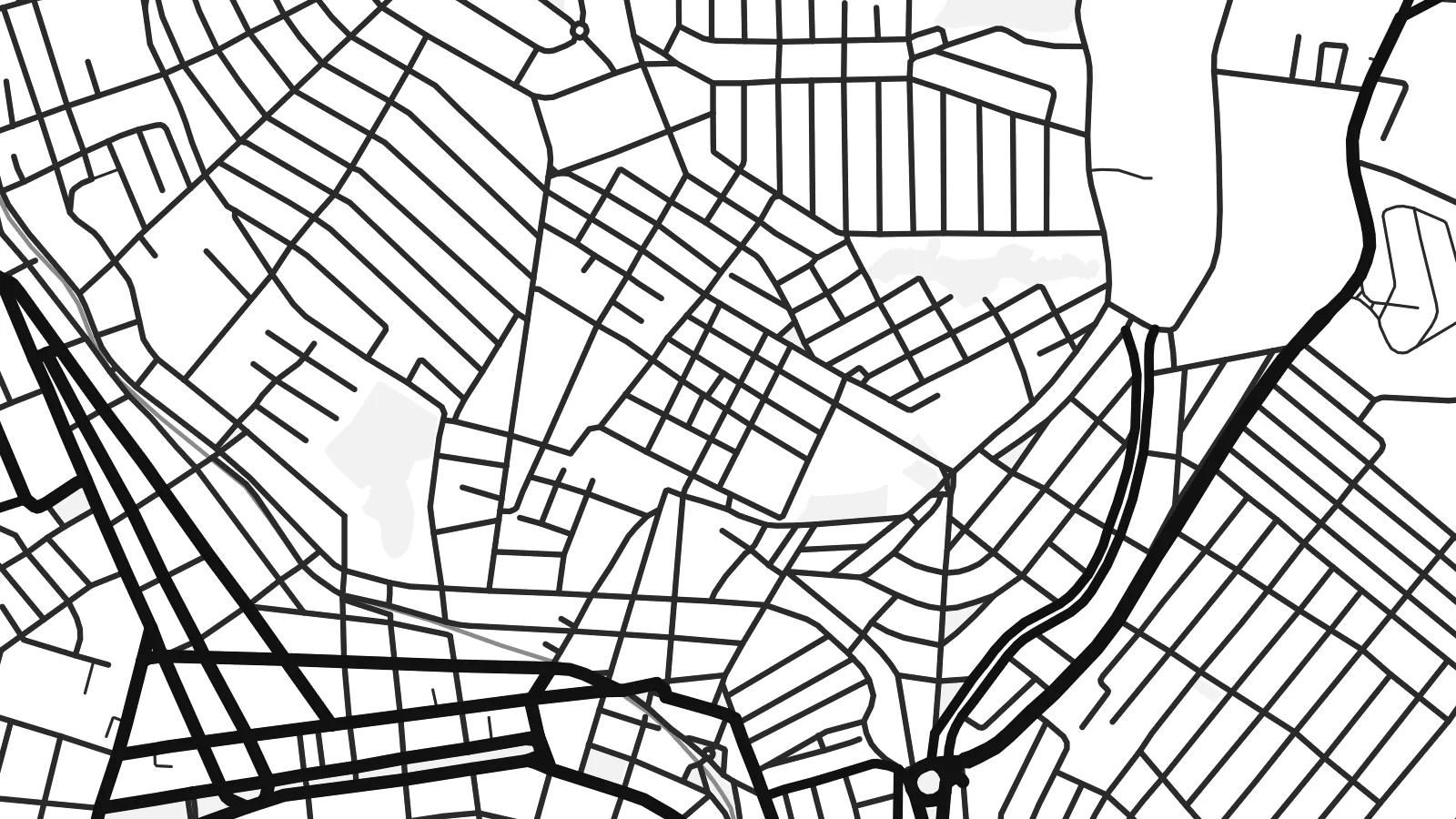
Beyond the centre, residential streets curve along slopes and ridges. Their winding lines give the map a soft, flowing texture that follows the gentle terrain.
Fakatino mape mukamuka · Brazil
21.5514° S / 45.4303° W
A hilly coffee-country city in southern Minas Gerais, its streets winding over gentle slopes and valleys.


Taha e taone, lima e onoonoaga
Tapaki e taha puhala ke kitia ai ki luga he puipui. Kua tatai e totogi he tau puhala oti — pete he lolomi, poloka, po ke faila HD.
 Tau pikselo mooli · faila lolomi 24 × 36″
Maama mitaki ke lolomi
Ko e 100% e fahi mooli mai he faila lolomi. Ko e tau poster oti — pete kua lolomi, poloka, po ke utu hifo — kua taute ke he ha mautolu a tau tokoluga (server) ke he 300 DPI, hokotia ke he 7,200 × 10,800 piksela, ke maeke ai e tau ala ikiiki tote ke maaliali fakamitaki he lolomi 24 × 36″.
He Pā


Ko e mape
Varginha lies in the south of Minas Gerais, in rolling country covered with coffee farms. The city is built over a series of low hills, and from above its streets reflect that terrain. Older blocks around the centre follow a rough grid, while newer neighbourhoods curve along hillsides and valley floors. Highways skirt the edges, and farmland and small streams surround the urban area.
The city is one of Brazil's important coffee centres, with warehouses and trading businesses serving the plantations of the region. It is also known far beyond Brazil for an alleged UFO sighting in 1996, a story that became part of local identity, complete with themed monuments and a playful civic pride about its extraterrestrial reputation.
A Varginha map poster shows a city in conversation with its landscape. A tighter centre sits among looser, curving neighbourhoods, and highways and streams trace their own paths through the surrounding hills. It produces an organic, softly textured composition, especially attractive in warmer styles, that suits both coffee lovers and people who simply have fond memories of the city.
Beyond the centre, residential streets curve along slopes and ridges. Their winding lines give the map a soft, flowing texture that follows the gentle terrain.
The older core is laid out in a fairly regular pattern of blocks. It is a compact, clearly structured area in the middle of the more irregular outer districts.
Around the city, roads and tracks run out into farmland and plantations. They fade gradually into open space and give the town a clear silhouette.
Taute ke ha hau
Lafi e aho, taha higoa po ke taha kupu haau, hiki e fakatino, lahi po ke tuaga.
Ko e kitiaaga nakai totogi kua tote e maaliali mo e fakamailoga vai. Ko e tau lolomi mo e tau faila HD kua taute ke he 300 DPI, hokotia ke he 7,200 × 10,800 px, nakai fai fakamailoga vai.
Ko e ha Varginha
Varginha is a city of coffee, hills and one well-known story. Whether you grew up there or simply remember it fondly, a map of its streets is a thoughtful way to keep it close.
Personalise the title, subtitle and coordinates line, with a family name, a bairro or a date, and choose from Classic black and white, Noir, Paper, Blueprint or Sand. Paper gives it a quiet, natural look.
Talaage e poster Varginha| Lahi he lolomi | Maama | Tau faila |
|---|---|---|
| 30 × 40 cm11.8 × 15.7″ | 3,543 × 4,724 px | PNG · PDF |
| 29.7 × 42 cm (A3)11.7 × 16.5″ | 3,508 × 4,961 px | PNG · PDF |
| 42 × 59.4 cm (A2)16.5 × 23.4″ | 4,961 × 7,016 px | PNG · PDF |
| 45.7 × 61 cm18 × 24″ | 5,400 × 7,200 px | PNG · PDF |
| 50 × 70 cm19.7 × 27.6″ | 5,906 × 8,268 px | PNG · PDF |
| 61 × 91.4 cm24 × 36″ | 7,200 × 10,800 px | PNG · PDF |
Ke fakatatai, ko e fakatino noa kua 900 px e laulahi, fai fakamailoga mo e mo e tau mata komipiuta ni. Ko e tau faila HD kua ato hoko ke he 8× e maama ke he tau faahi takitaha mo e lolomi mitaki he lahi katoa he fakatino.
Fifili e taha puhala i luga he kupega, ti fifili e Poster Lolomi — e lahi mo e, kaeke ke manako ai koe, taha poloka — po ke Tau Faila HD Fakaeletonika. Ko e fakaotiaga totogi ko e taha gahua ni, ti ko e kupega he hau a talaaga ka fakafou fakahaga i mua he fakaotiaga e totogi.
Kua lolomi ai ke he pepa mitaki 200 gsm matte he taha he tau lahi ono, mai he 30 × 40 cm ke hoko ke he 24 × 36″. Kamata e tau poster lolomi mai he $39, kua putoia ai e utaaga.
E. Fifili e poloka akau malolō ke he lanu uli, tea, akau oki mooli, po ke akau pouli. Kua fakalataha mo e sioga malolō nakai malepe ti kua mautali ke tautau. Kamata e tau poster poloka mai he $99, kua putoia ai e utaaga.
Nakai totogi e fakafano ke he motu 60+. Ko e fakatino taha kua lolomi he fenoga lolomi ha mautolu kua tata mo e tau motu 30+, kua hoko mai he tau aho gahua 3–7. Maeke ia koe ke kikite e tuaga mo e fakamuitua he lalo he Haku Tau Fakatonu. Ke he falu motu kua 2–5 e tau tapu, ti ka nakai fakafano a mautolu ki ai, to fakaha he api tupe ia ki mua he totogi.
Fakafano mai e taha ata ki a mautolu he loto he 14 e tau aho tali mai he hokoaga, ti to lolomi foki e mautolu nakai totogi po ke liu atu e totogi ki a koe.
E. He editor i luga he kupega nei, hikihiki e matakupu, e matakupu lalo mo e laini coordinates ke he taha mena kua manako a koe ki ai, ti fifili e puhala mo e lahi. Ko e tau talaaga lolomi, poloka mo e fakaeletonika oti kua fakaaoga tonu e hau a fakatino.
Ma e $9 ka moua e koe e tau faila PNG 300 DPI mo e PDF kua mautali ke lolomi he tau lahi ono oti, nakai fai fakamailoga vai, ke lolomi i fe mena. Nakai maopoopo agaia? Utu hifo fakamua e kitiaaga nakai totogi ne fai fakamailoga vai.
