Park an der Ilm
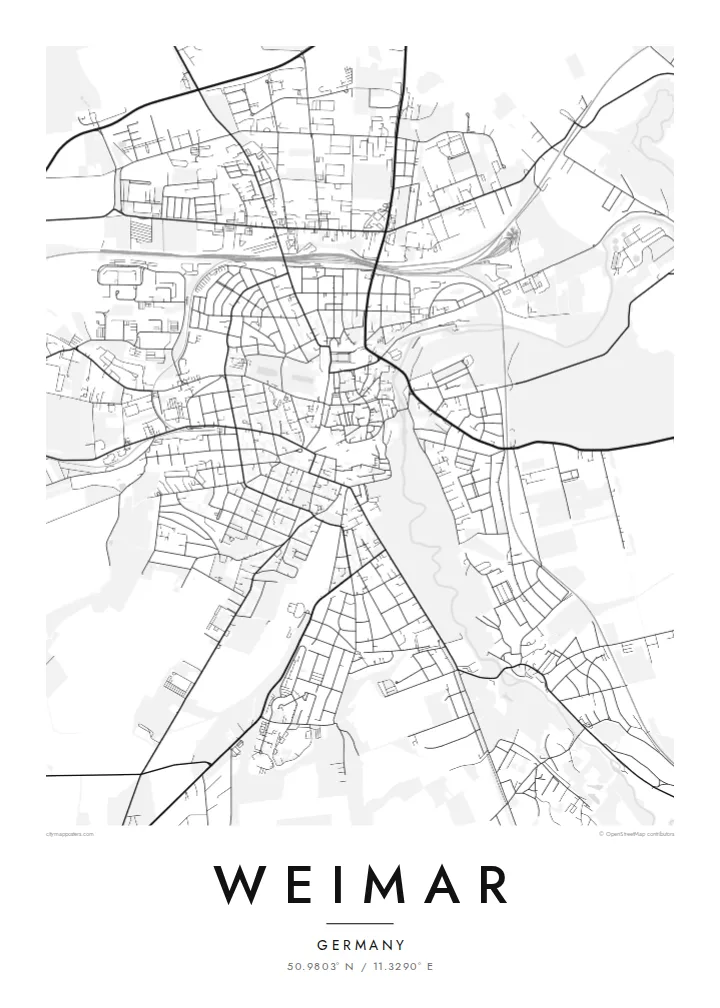
A landscaped park follows the river for a long stretch beside the old town, its winding paths and open meadows drawn as soft lines next to the denser streets.
Fakatino mape mukamuka · Germany
50.9803° N / 11.3290° E
A small Thuringian city on the Ilm, where a riverside park runs beside the compact old centre of German classicism.


Taha e taone, lima e onoonoaga
Tapaki e taha puhala ke kitia ai ki luga he puipui. Kua tatai e totogi he tau puhala oti — pete he lolomi, poloka, po ke faila HD.
 Tau pikselo mooli · faila lolomi 24 × 36″
Maama mitaki ke lolomi
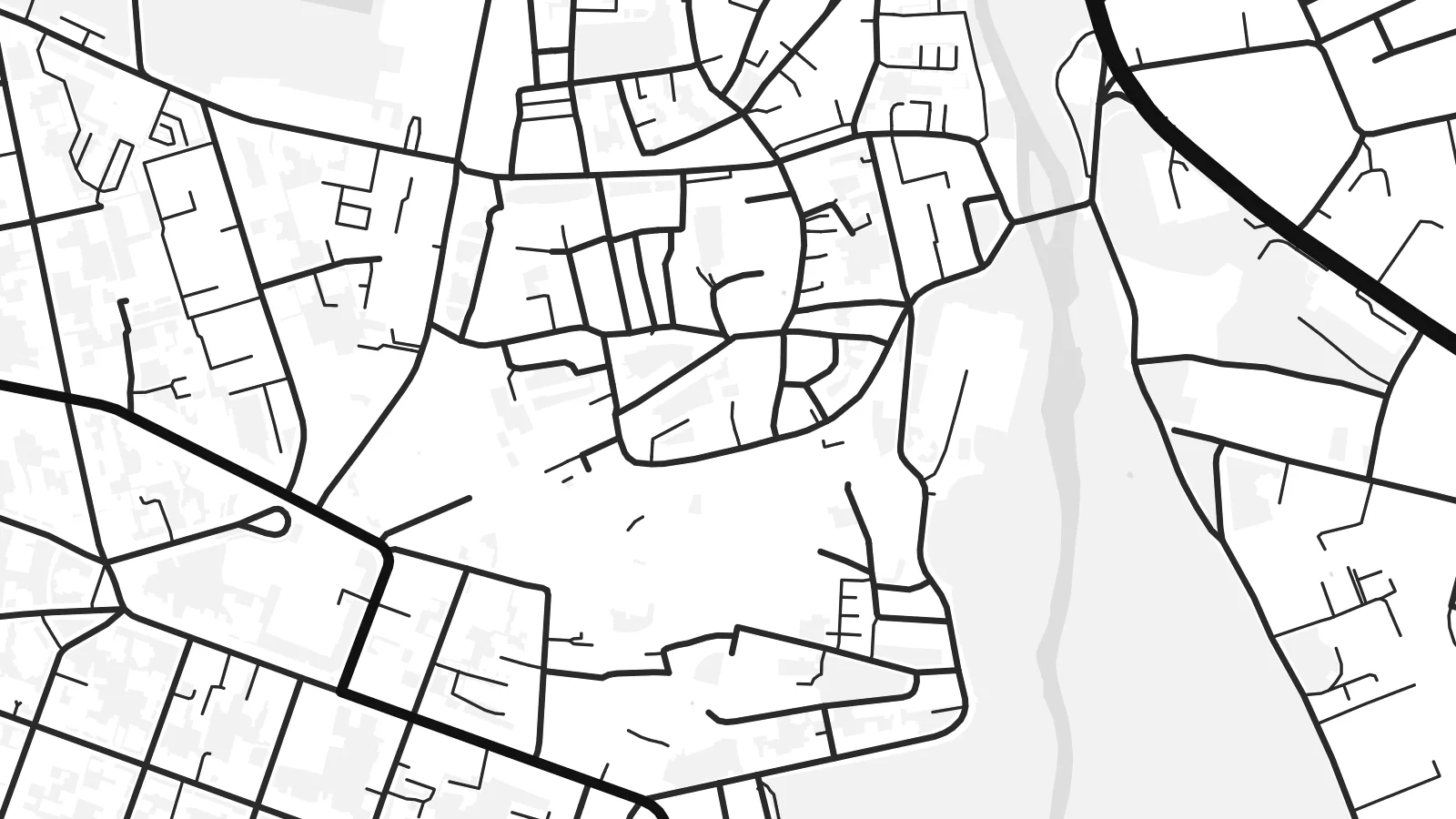
Ko e 100% e fahi mooli mai he faila lolomi. Ko e tau poster oti — pete kua lolomi, poloka, po ke utu hifo — kua taute ke he ha mautolu a tau tokoluga (server) ke he 300 DPI, hokotia ke he 7,200 × 10,800 piksela, ke maeke ai e tau ala ikiiki tote ke maaliali fakamitaki he lolomi 24 × 36″.
He Pā


Ko e mape
Weimar lies in the valley of the Ilm in Thuringia, and from above its most distinctive feature is the long green ribbon of the Park an der Ilm, stretching along the river on the eastern side of the old town. The historic centre is compact and irregular, with squares, palace grounds and narrow streets packed within a short walk, while later districts climb the surrounding slopes.
Few towns of its size carry as much cultural weight. Goethe and Schiller lived and worked here, the Bauhaus was founded in Weimar in 1919, and the national assembly that drafted the constitution of the Weimar Republic met here the same year. Classical Weimar and the Bauhaus sites are both part of UNESCO World Heritage listings.
A Weimar map poster makes that density readable: the tight lanes around the market square, the grounds of the city palace, the curving paths of the park and the river beneath them. To the north-west rises the Ettersberg, site of the Buchenwald memorial, a reminder of darker history. The result is a quiet, detailed and deeply layered print.
A landscaped park follows the river for a long stretch beside the old town, its winding paths and open meadows drawn as soft lines next to the denser streets.
Around the market and Theaterplatz, streets form a compact, irregular web, the setting of the houses, theatres and libraries tied to Weimar's classical era.
The wooded ridge north-west of the city appears as a broad, quiet space on the map, the location of the Buchenwald memorial and a sobering part of Weimar's story.
Taute ke ha hau
Lafi e aho, taha higoa po ke taha kupu haau, hiki e fakatino, lahi po ke tuaga.
Ko e kitiaaga nakai totogi kua tote e maaliali mo e fakamailoga vai. Ko e tau lolomi mo e tau faila HD kua taute ke he 300 DPI, hokotia ke he 7,200 × 10,800 px, nakai fai fakamailoga vai.
Ko e ha Weimar
Weimar draws students, musicians, architects and readers of German literature, and many people leave with a strong attachment to its streets. A map of the town makes a thoughtful keepsake of a study year at the Bauhaus-Universität or of a memorable visit.
Set your own title, subtitle and coordinates, and choose between Classic black & white, Noir, Paper, Blueprint and Sand. Download HD files for $9, preview a free watermarked version first, or order a matte print with an optional wooden frame.
Talaage e poster Weimar| Lahi he lolomi | Maama | Tau faila |
|---|---|---|
| 30 × 40 cm11.8 × 15.7″ | 3,543 × 4,724 px | PNG · PDF |
| 29.7 × 42 cm (A3)11.7 × 16.5″ | 3,508 × 4,961 px | PNG · PDF |
| 42 × 59.4 cm (A2)16.5 × 23.4″ | 4,961 × 7,016 px | PNG · PDF |
| 45.7 × 61 cm18 × 24″ | 5,400 × 7,200 px | PNG · PDF |
| 50 × 70 cm19.7 × 27.6″ | 5,906 × 8,268 px | PNG · PDF |
| 61 × 91.4 cm24 × 36″ | 7,200 × 10,800 px | PNG · PDF |
Ke fakatatai, ko e fakatino noa kua 900 px e laulahi, fai fakamailoga mo e mo e tau mata komipiuta ni. Ko e tau faila HD kua ato hoko ke he 8× e maama ke he tau faahi takitaha mo e lolomi mitaki he lahi katoa he fakatino.
Fifili e taha puhala i luga he kupega, ti fifili e Poster Lolomi — e lahi mo e, kaeke ke manako ai koe, taha poloka — po ke Tau Faila HD Fakaeletonika. Ko e fakaotiaga totogi ko e taha gahua ni, ti ko e kupega he hau a talaaga ka fakafou fakahaga i mua he fakaotiaga e totogi.
Kua lolomi ai ke he pepa mitaki 200 gsm matte he taha he tau lahi ono, mai he 30 × 40 cm ke hoko ke he 24 × 36″. Kamata e tau poster lolomi mai he $39, kua putoia ai e utaaga.
E. Fifili e poloka akau malolō ke he lanu uli, tea, akau oki mooli, po ke akau pouli. Kua fakalataha mo e sioga malolō nakai malepe ti kua mautali ke tautau. Kamata e tau poster poloka mai he $99, kua putoia ai e utaaga.
Ko e uta ke he lalolagi oti ha fai totogi. Ko e tā e poster taha he tupe ofi mahaki he falu kapitiga tā ha mautolu he motu 30+, ti kua hoko mai he tokai 3–7 e aho gahua. Maeke ia koe ke kikite e tutūaga mo e hukui he lalo ke he Tau Fakatonuaga haku. Falu motu kua fai 2–5 e faahi, ti ka nakai uta ni a mautolu ki ai, ka talahau atu he nofoaga i mua he totogi.
Fakafano mai e taha ata ki a mautolu he loto he 14 e tau aho tali mai he hokoaga, ti to lolomi foki e mautolu nakai totogi po ke liu atu e totogi ki a koe.
E. He editor i luga he kupega nei, hikihiki e matakupu, e matakupu lalo mo e laini coordinates ke he taha mena kua manako a koe ki ai, ti fifili e puhala mo e lahi. Ko e tau talaaga lolomi, poloka mo e fakaeletonika oti kua fakaaoga tonu e hau a fakatino.
Ma e $9 ka moua e koe e tau faila PNG 300 DPI mo e PDF kua mautali ke lolomi he tau lahi ono oti, nakai fai fakamailoga vai, ke lolomi i fe mena. Nakai maopoopo agaia? Utu hifo fakamua e kitiaaga nakai totogi ne fai fakamailoga vai.
