Railway to Warsaw
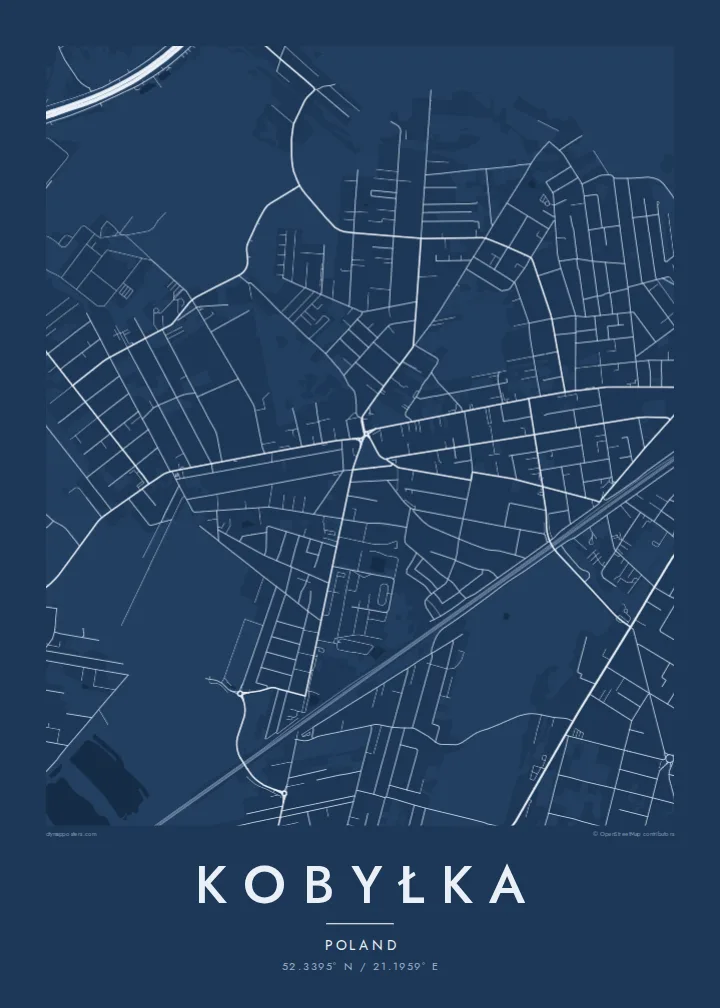
The line toward the capital cuts through the town, the backbone around which Kobyłka grew as a commuter settlement and the most legible feature at any scale.
Ipositeri y'ikarita yoroheje · PL
52.3395° N / 21.1959° E
A green suburb northeast of Warsaw, where a railway line and long residential streets cut through pine woodland.



Umujyi umwe, imiterere itanu
Kanda uburyo bumwe kugira ngo ubibone ku rukuta. Buri buryo bufite igiciro kimwe — cyacapwe, gishyizwemo cadre cyangwa mu madosiye HD.
 Pikiseli nyakuri · Dosiye yo gucapa ya 24 × 36″
Bisobanutse neza iyo bicapwe
Iki ni igice cya 100% cy'idosiye nyayo yo gucapa. Buri poster — yacapwe, ishyizwemo cadre cyangwa yakuwe kuri interineti — ikorwa kuri seriveri zacu ku 300 DPI, kugeza kuri pikiseli 7,200 × 10,800, bityo n'imihanda mito cyane igumana ubwiza ku gucapa kwa 24 × 36″.
Ku rukuta


Ikarita
Kobyłka lies just beyond the northeastern edge of Warsaw in Wołomin County, and from above it looks like a town grown out of forest clearings. Long residential streets run between plots of detached houses, many still framed by pines, while patches of woodland remain inside and around the town. The pattern is loose rather than dense, typical of the commuter settlements that formed along railway lines leaving the capital.
The railway is the clearest structural line, crossing the town and linking it to Warsaw. The historic centre is marked by the baroque Church of the Holy Trinity, an eighteenth-century building designed by Guido Antonio Longhi and regarded as one of the finest of its period in Mazovia. Around it, the older road pattern gives way to later housing that spread steadily outward into the forest.
A Kobyłka map poster works through contrast: the fine mesh of suburban streets set against the open texture of woodland, with the rail line drawn as a firm stroke across it. It captures the in-between character of the place, clearly tied to Warsaw yet shaped by trees and sandy ground, and it reads well even at the smaller print sizes.
The line toward the capital cuts through the town, the backbone around which Kobyłka grew as a commuter settlement and the most legible feature at any scale.
The baroque church anchors the old centre, a small point on the map that marks where the historic village stood before suburban streets spread outward.
Pine woodland wraps around and into the built area, leaving soft blank spaces between neighbourhoods that give the poster its airy, uneven rhythm.
Yigire iyawe
Ongeraho itariki, izina cyangwa interuro yawe, uhindure imiterere, ingano cyangwa icyerekezo.
Urugero rw'ubuntu rufite ubwiza buke kandi rufite ikimenyetso cy'amazi. Poster zacapwe n'amadosiye ya HD bikorwa ku 300 DPI, kugeza kuri 7,200 × 10,800 px, nta kimenyetso cy'amazi.
Kuki Kobyłka
Kobyłka suits anyone who has commuted from it, grown up among its pines, or settled there for a quieter life near Warsaw. The mix of streets and forest makes an understated print for a living room or a first family home.
Personalise the title and subtitle, perhaps with a street name or a moving-in date, and adjust the coordinates line. Five styles are available; Blueprint suits the technical feel of the rail line, while Noir makes the forest gaps read as light.
Tumiza poster ya Kobyłka| Ingano yo gucapa | Ubwiza bw'ifoto | Amadosiye |
|---|---|---|
| 30 × 40 cm11.8 × 15.7″ | 3,543 × 4,724 px | PNG · PDF |
| 29.7 × 42 cm (A3)11.7 × 16.5″ | 3,508 × 4,961 px | PNG · PDF |
| 42 × 59.4 cm (A2)16.5 × 23.4″ | 4,961 × 7,016 px | PNG · PDF |
| 45.7 × 61 cm18 × 24″ | 5,400 × 7,200 px | PNG · PDF |
| 50 × 70 cm19.7 × 27.6″ | 5,906 × 8,268 px | PNG · PDF |
| 61 × 91.4 cm24 × 36″ | 7,200 × 10,800 px | PNG · PDF |
Ugereranyije, igerageza ry'ubuntu rifite ubugari bwa 900 px, ririho ikirango kandi ryagenewe kurebwa kuri ecran. Amadosiye ya HD afite ubwiza bugera kuri 8× kuri buri ruhande kandi acapwa neza ku ngano yuzuye y'ipositeri.
Hitamo uburyo hejuru y'urupapuro, hanyuma uhitemo Poster Yacapwe — ingano n'niba ubishaka, cadre — cyangwa Amadosiye ya Digital HD. Kwishyura bikorwa mu ntambwe imwe, kandi urupapuro rw'ikurikirana ry'ibyo watumije ruvugururwa vuba nyuma yo kwishyura.
Icapwa ku rupapuro rwa mbere rwa 200 gsm rutagaragaza umucyo, mu ngano imwe muri esheshatu, kuva kuri 30 × 40 cm kugeza kuri 24 × 36″. Poster zacapwe zitangirira kuri $39, harimo no kohereza.
Yego. Hitamo cadre y'igiti gikomeye mu ibara ry'umukara, umweru, oak isanzwe cyangwa igiti cyijimye. Iza n'ikirahure kidacika kandi yiteguye kumanikwa. Poster zifite cadre zitangirira kuri $99, harimo no kohereza.
Kohereza ni ubuntu mu bihugu 60+. Buri cyapa gicapirwa n'umufatanyabikorwa wacu wa hafi mu bihugu 30+ dukorana mu gucapa, kandi gisanzwe kigera mu minsi y'akazi 3–7. Ushobora gukurikirana uko giteye n'aho kigeze muri «Ibyo naguze». Ibihugu bimwe bifata ibyumweru 2–5, kandi aho tutarahagera, urubuga rukubwira mbere y'uko wishyura.
Twoherereze ifoto mu minsi 14 ikurikira igihe cyo kuyakira, kandi tuzayicapa bundi bushya ku buntu cyangwa tukagusubiza amafaranga.
Yego. Muri editor iri kuri uru rupapuro, hindura umutwe, ikirongo cy'inyongera n'umurongo w'ibipimo ukagira icyo ushaka, hanyuma ugahitamo uburyo n'ingano. Amatumizo yacapwe, afite cadre n'aya digital yose akoresha ishushanyo ryawe nk'uko ryifashe.
Ku $9 ubona amadosiye ya PNG ya 300 DPI n'aya PDF yiteguye gucapwa mu ngano zose esheshatu, nta kimenyetso cy'amazi, ushobora gucapa aho ariho hose. Ntucyemeje? Banza umanure urugero rw'ubuntu rufite ikimenyetso cy'amazi.
Hafi aho
