Field patterns
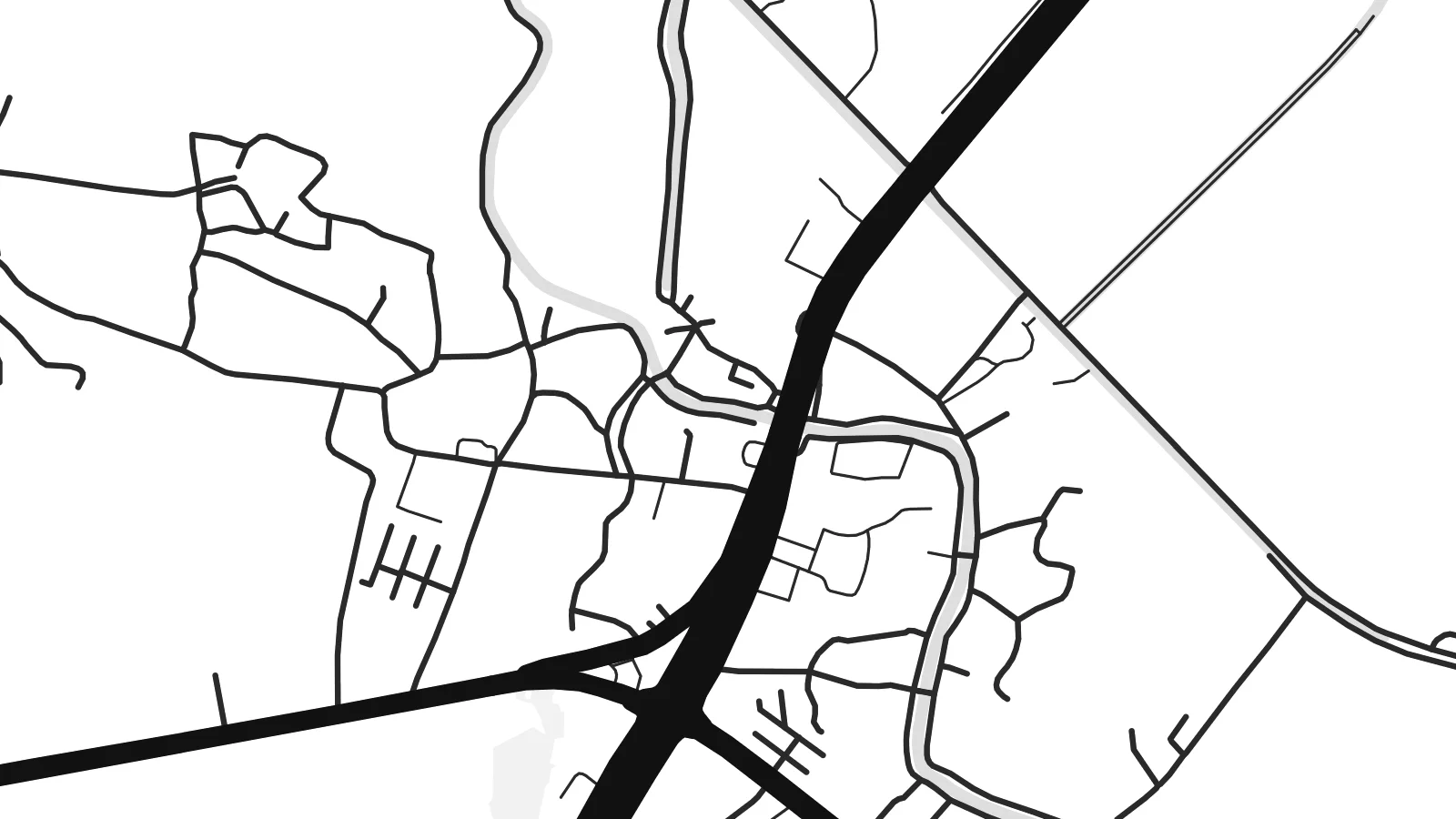
The land around town is divided into regular plots edged by small canals and tracks, giving the outer parts of the map a fine, repeating texture.
Posta faʻafanua faigofie · Thailand
13.7106° N / 99.8962° E
A small town on Thailand's western central plain, shaped by straight roads, farm canals and a patchwork of rectangular fields.

Tasi le aai, lagona e lima
Tapi se sitaili e vaai ai i luga o le puipui. E tutusa uma le tau o sitaili — pe lolomiina, faapipiiina, pe avea ma faila HD.
 Pika Moni · Faila Lolomi 24 × 36″
Manino mo le lolomi
O se vaega atoa (100%) lenei mai le faila lolomi moni. O posita uma — pe lolomiina, faapipiiina pe download mai — e faia i luga o a matou server i le 300 DPI, e oo atu i le 7,200 × 10,800 pika, ina ia manino pea auala laiti i luga o se lolomiga 24 × 36″.
I luga o le puipui


Le faʻafanua
Ban I Chang lies in the lowlands west of Bangkok, in country where the land is flat and water is managed carefully. From above, the landscape is a mosaic of rectangular plots, drainage channels and farm tracks, and the town is a modest concentration of streets where roads meet and houses cluster more closely together.
This is not a place with a famous skyline or a monumental centre, and the map does not pretend otherwise. What it offers instead is a clear picture of how rural central Thailand is organised: long roads running out towards neighbouring towns, lines of houses following them, and small canals marking field boundaries between them.
A Ban I Chang map poster keeps that quiet order intact. The roads form the main lines, the waterways add finer strokes, and the gaps between them are open land. It is an understated print, best suited to someone who knows the place well and recognises the turns and junctions that matter in daily life.
The land around town is divided into regular plots edged by small canals and tracks, giving the outer parts of the map a fine, repeating texture.
Ban I Chang forms where local roads converge, and the densest streets gather around those meeting points before thinning into ribbons of houses along each route.
With no hills to bend the streets, lines run long and straight across the plain, a simplicity that works especially well in a clean black-and-white print.
Fai mo oe
Faʻaopoopo se aso, se igoa po o sau lava upu, sui le sitaili, lapoʻa po o le itu.
O le preview e leai se totogi e maualalo le resolution ma iai se watermark. O lolomi ma faila HD e faia i le 300 DPI, e oo atu i le 7,200 × 10,800 px, e aunoa ma se watermark.
Aisea Ban I Chang
A map of a small town tends to mean the most to the people who come from it. For anyone with roots in Ban I Chang, this is a simple way to keep the roads, canals and neighbourhoods of home close by, wherever they now live.
The title, subtitle and coordinates line can all be personalised, and there are five styles to choose from: Classic black & white, Noir, Paper, Blueprint and Sand. A family name or a meaningful date in the subtitle makes the print more personal.
Faatau le posita Ban I Chang| Lapoʻa lolomi | Manino | Faila |
|---|---|---|
| 30 × 40 cm11.8 × 15.7″ | 3,543 × 4,724 px | PNG · PDF |
| 29.7 × 42 cm (A3)11.7 × 16.5″ | 3,508 × 4,961 px | PNG · PDF |
| 42 × 59.4 cm (A2)16.5 × 23.4″ | 4,961 × 7,016 px | PNG · PDF |
| 45.7 × 61 cm18 × 24″ | 5,400 × 7,200 px | PNG · PDF |
| 50 × 70 cm19.7 × 27.6″ | 5,906 × 8,268 px | PNG · PDF |
| 61 × 91.4 cm24 × 36″ | 7,200 × 10,800 px | PNG · PDF |
Ae faʻatusatusa, o le faʻataʻitaʻiga e leai se totogi e 900 px le lautele, e iai le faʻailoga vai ma e mo mata. O faila HD e oʻo atu i le 8× le manino i itu taʻitasi ma e lolomi manino i le lapoʻa atoa o le posta.
Filifili se sitaili i le pito i luga o le itulau, ona filifili lea o le Posita Lolomi — se lapopoa ma, afai e te fiafia, se faavaa — po o Faila HD Numera. E na o le tasi laasaga o le Checkout, ma o le a fesuia'i lou itulau o oka i le taimi lava e mae'a ai le totogi.
E lolomiina i luga o pepa matte maualuga le tulaga e 200 gsm, i se tasi o lapopoa e ono, mai le 30 × 40 cm i le 24 × 36″. E amata le tau o posita lolomi mai le $39, aofia ai le auina atu.
Ioe. Filifili se faavaa laau malosi i le lanu uliuli, sina, oak masani, po o le laau pogisa. E aofia ai se tioata e le gau ma ua saunia e tautau i luga. E amata le tau o posita faavaa mai le $99, aofia ai le auina atu.
E leai se totogi o le auina atu i atunuu e 60+. O pepa ata taʻitasi e lolomiina e le tasi o matou paaga lolomi e latalata mai i atunuu e 30+, ma e masani ona taunuu i le 3–7 aso faigaluega. E mafai ona e mulimulitaia le tulaga ma le sailiga i lalo o My Orders. O nisi atunuu e 2–5 vaiaso, ma i nofoaga e lei matou auina atu iai, e taʻu atu e le saite ia te oe a o lei totogi.
Auina mai se ata i totonu o le 14 aso talu ona taunuu, ma o le a matou toe lolomiina e leai se totogi po o le toe faafoi atu lau tupe.
Ioe. I totonu o le editor i lenei itulau, suia le ulutala, le ulutala laititi ma le laina o coordinates i soo se mea e te fiafia i ai, ma filifili se sitaili ma le lapopoa. O oka lolomi, faavaa ma numera e faaaoga uma lava lau mamanu.
Mo le $9 e te maua ai faila PNG 300 DPI ma PDF ua saunia mo le lolomi i lapopoa uma e ono, e aunoa ma se watermark, e mafai ona lolomi i soo se mea. Le mautinoa lava? Download muamua se preview e leai se totogi ma le watermark.
