The Tiber bends
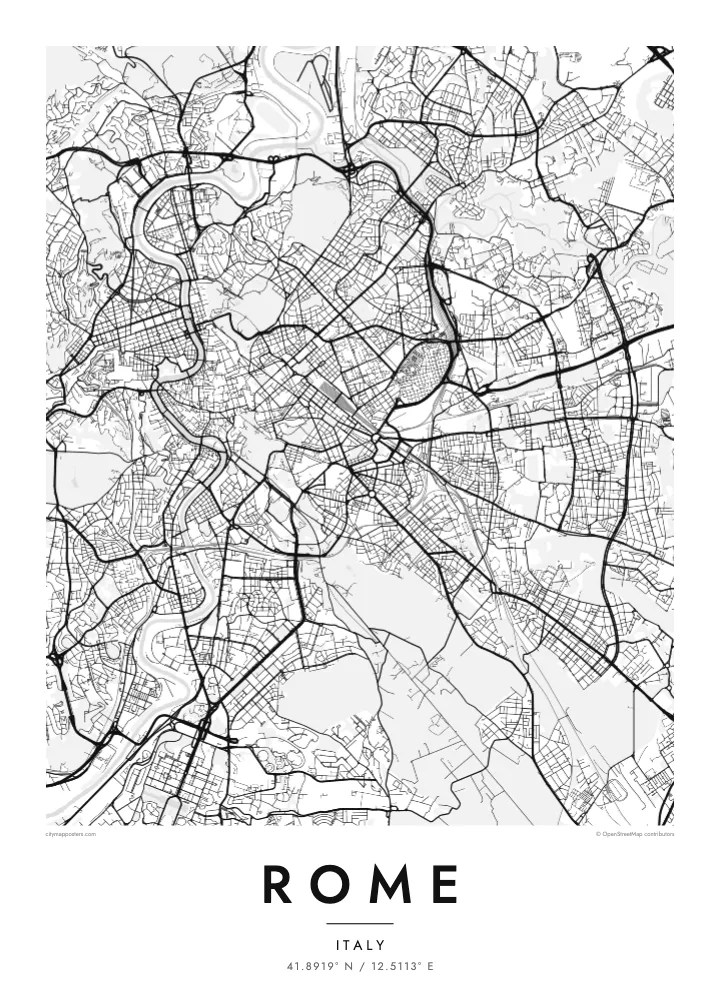
The river crosses the city in a series of S-shaped curves, spanned by bridges from Roman to modern times, with Tiber Island sitting in the current like a stone boat.
Posta faʻafanua faigofie · Italy
41.8919° N / 12.5113° E
A river bending in slow S-curves past seven hills, with ancient roads fanning out from the centre toward every horizon.
Tasi le aai, lagona e lima
Tapi se sitaili e vaai ai i luga o le puipui. E tutusa uma le tau o sitaili — pe lolomiina, faapipiiina, pe avea ma faila HD.
 Pika Moni · Faila Lolomi 24 × 36″
Manino mo le lolomi
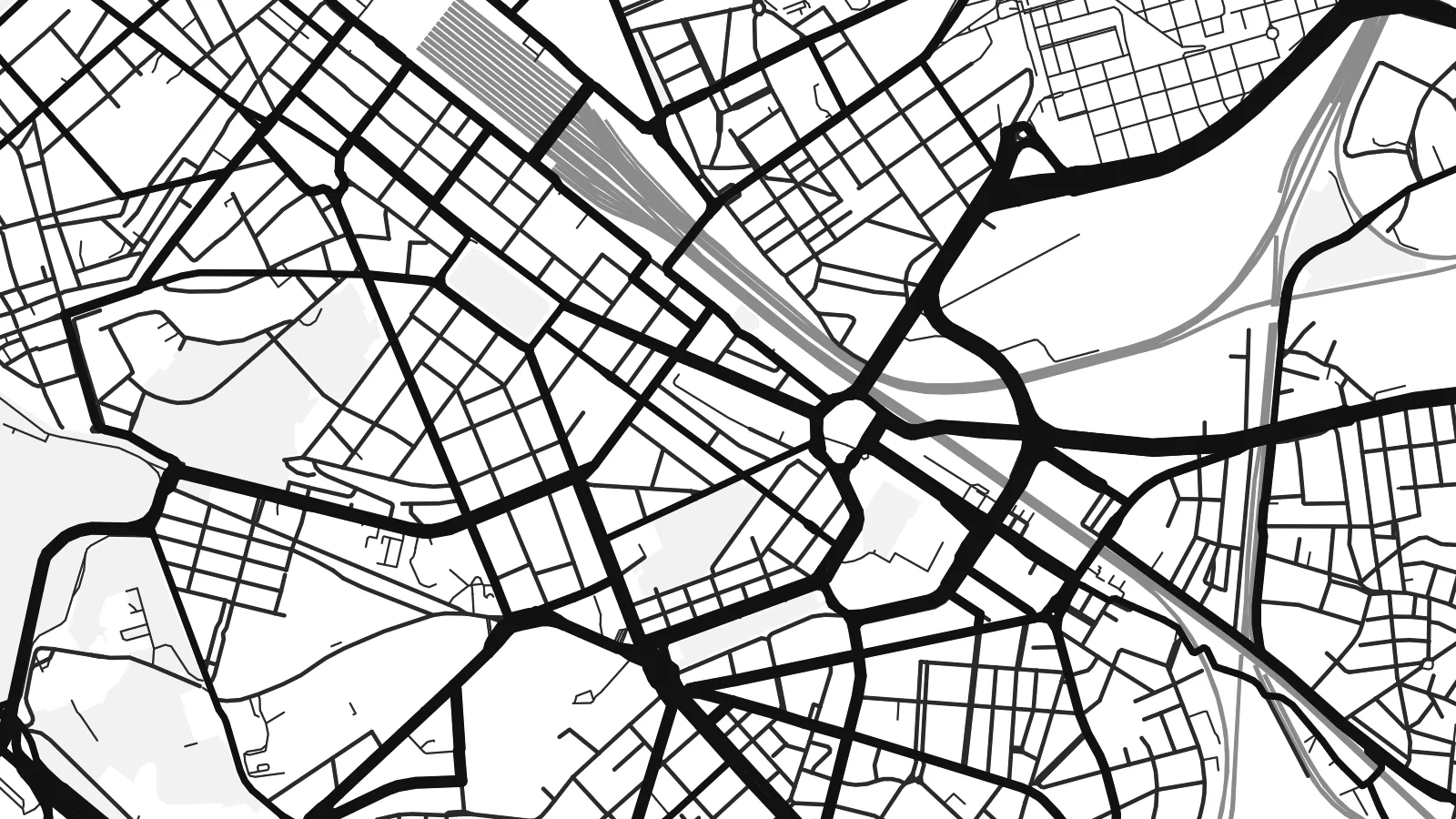
O se vaega atoa (100%) lenei mai le faila lolomi moni. O posita uma — pe lolomiina, faapipiiina pe download mai — e faia i luga o a matou server i le 300 DPI, e oo atu i le 7,200 × 10,800 pika, ina ia manino pea auala laiti i luga o se lolomiga 24 × 36″.
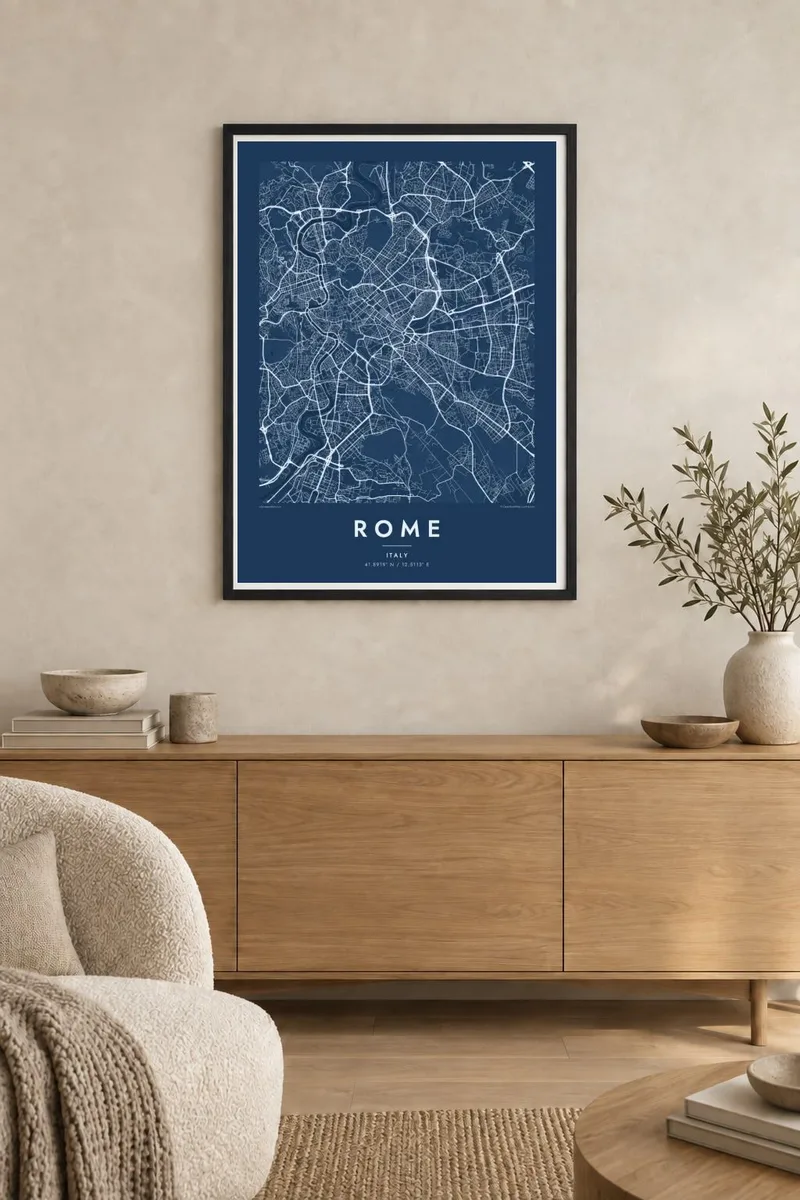
I luga o le puipui


Le faʻafanua
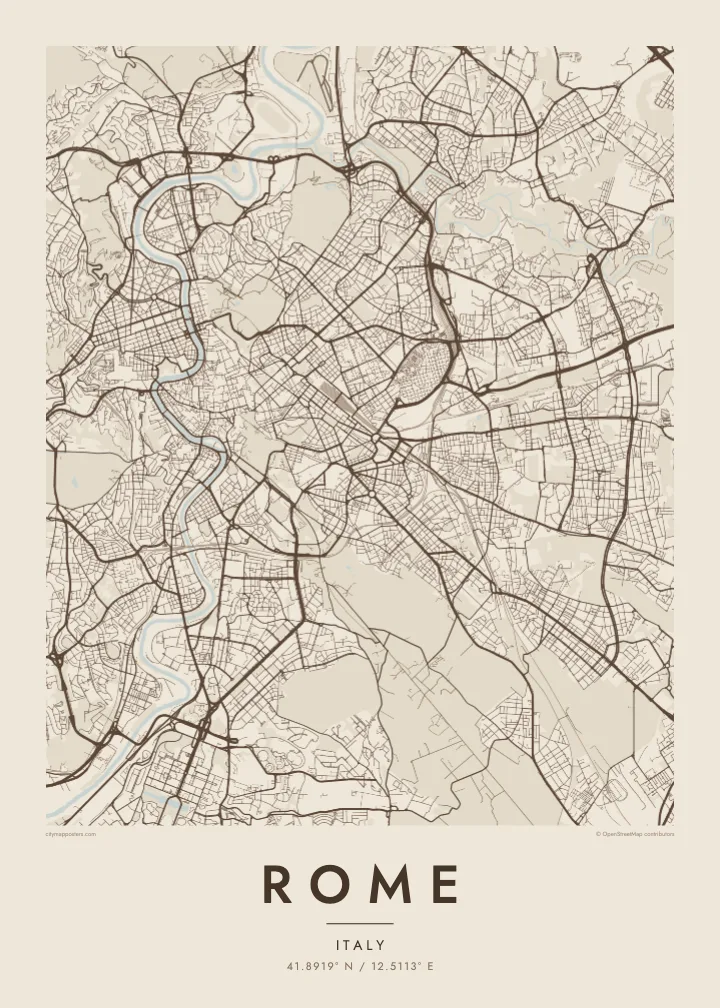
Rome grew from the hills beside the Tiber, and its street map still follows the landscape rather than a plan. The river loops through the city in a series of broad bends, curling around the Campo Marzio, where the Pantheon and Piazza Navona sit in a dense mesh of narrow streets. Just downstream, Tiber Island divides the current at one of the oldest crossing points of the river.
Traces of the ancient city remain legible from above. The Aurelian Walls still enclose much of the historic centre, the long open oval of the Circus Maximus lies between the Palatine and the Aventine, and the Colosseum marks an unmistakable ellipse. Across the river, Vatican City forms its own walled state, the smallest in the world, with St Peter's Square opening toward the Tiber.
Later popes and planners added straight lines to the tangle. From Piazza del Popolo, three streets fan south in a trident, with Via del Corso running straight to Piazza Venezia. Beyond the walls, the Grande Raccordo Anulare rings the city, and consular roads such as the Via Appia head outward. A Rome map poster shows every layer at once, from antiquity to the ring road.
The river crosses the city in a series of S-shaped curves, spanned by bridges from Roman to modern times, with Tiber Island sitting in the current like a stone boat.
Via di Ripetta, Via del Corso and Via del Babuino leave the northern gate of the old city in three straight lines, a Renaissance and Baroque gesture that still organises the centre.
The world's smallest independent state sits inside its own walls on the west bank of the Tiber, with the keyhole shape of St Peter's Square clearly visible even at poster scale.
Fai mo oe
Faʻaopoopo se aso, se igoa po o sau lava upu, sui le sitaili, lapoʻa po o le itu.
O le preview e leai se totogi e maualalo le resolution ma iai se watermark. O lolomi ma faila HD e faia i le 300 DPI, e oo atu i le 7,200 × 10,800 px, e aunoa ma se watermark.
Aisea Rome
Rome is a city people return to, often for reasons they cannot quite explain. Its map suits a honeymoon, a semester spent studying art, a family link to a particular quarter, or simply the memory of walking from one piazza to the next until the light turned gold.
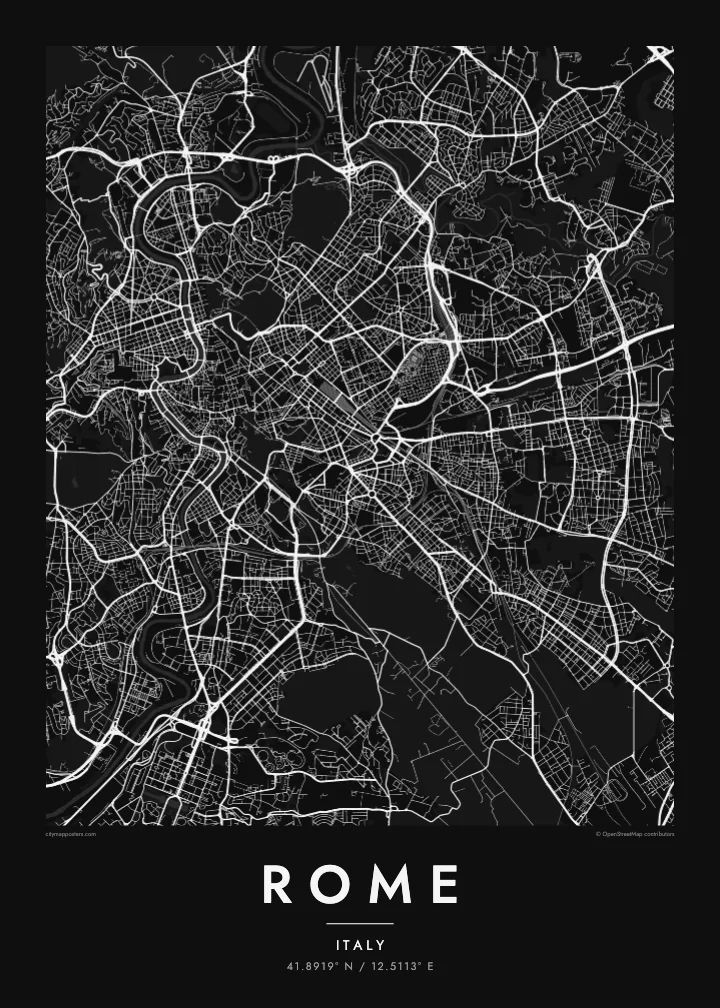
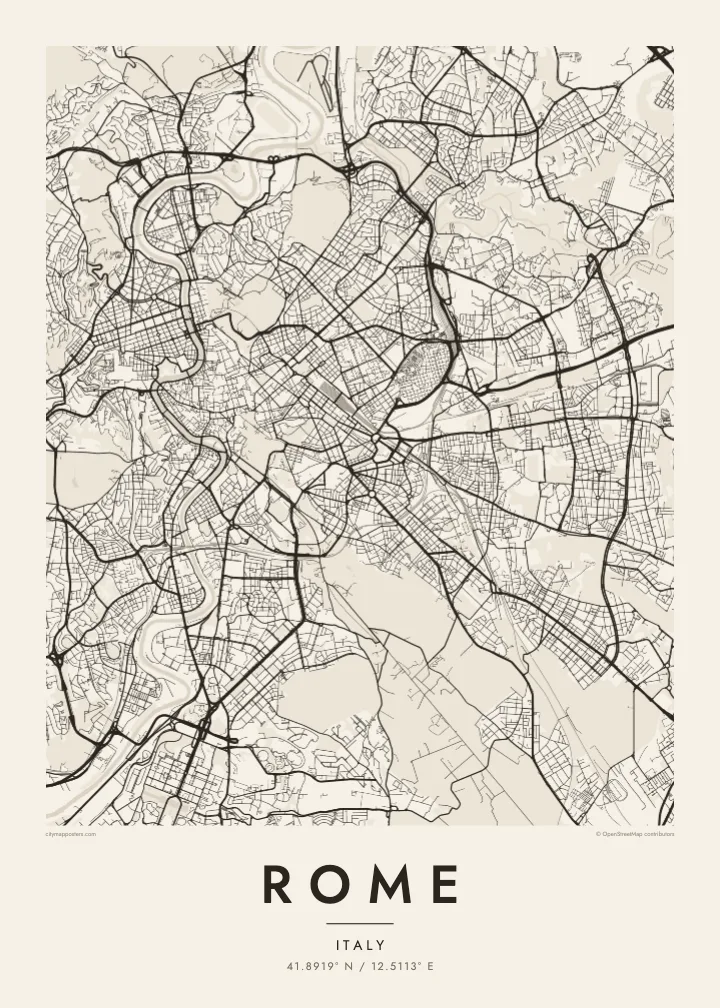
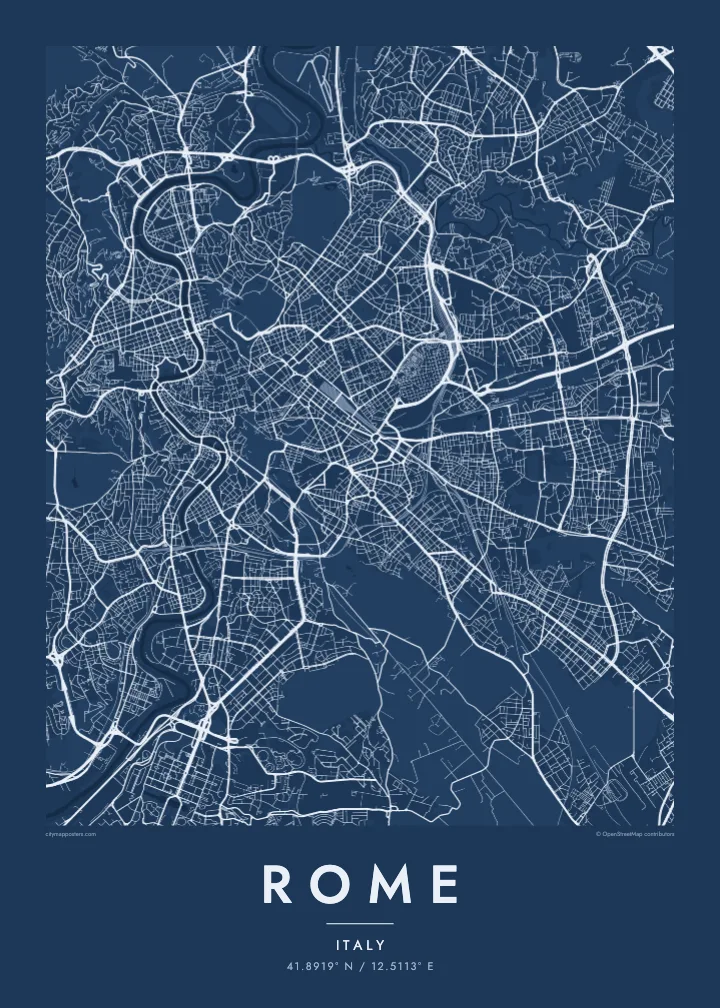
Give the poster a title and date of your own, such as a neighbourhood, a name or the year of the trip, and choose from five styles: Classic black & white, Noir, Paper, Blueprint or Sand. Paper and Sand suit the warm stone of the city especially well.
Faatau le posita Rome| Lapoʻa lolomi | Manino | Faila |
|---|---|---|
| 30 × 40 cm (11.8 × 15.7″) | 3,543 × 4,724 px | PNG · PDF |
| 29.7 × 42 cm (A3, 11.7 × 16.5″) | 3,508 × 4,961 px | PNG · PDF |
| 42 × 59.4 cm (A2, 16.5 × 23.4″) | 4,961 × 7,016 px | PNG · PDF |
| 45.7 × 61 cm (18 × 24″) | 5,400 × 7,200 px | PNG · PDF |
| 50 × 70 cm (19.7 × 27.6″) | 5,906 × 8,268 px | PNG · PDF |
| 61 × 91.4 cm (24 × 36″) | 7,200 × 10,800 px | PNG · PDF |
Ae faʻatusatusa, o le faʻataʻitaʻiga e leai se totogi e 900 px le lautele, e iai le faʻailoga vai ma e mo mata. O faila HD e oʻo atu i le 8× le manino i itu taʻitasi ma e lolomi manino i le lapoʻa atoa o le posta.
Filifili se sitaili i le pito i luga o le itulau, ona filifili lea o le Posita Lolomi — se lapopoa ma, afai e te fiafia, se faavaa — po o Faila HD Numera. E na o le tasi laasaga o le Checkout, ma o le a fesuia'i lou itulau o oka i le taimi lava e mae'a ai le totogi.
E lolomiina i luga o pepa matte maualuga le tulaga e 200 gsm, i se tasi o lapopoa e ono, mai le 30 × 40 cm i le 24 × 36″. E amata le tau o posita lolomi mai le $39, aofia ai le auina atu.
Ioe. Filifili se faavaa laau malosi i le lanu uliuli, sina, oak masani, po o le laau pogisa. E aofia ai se tioata e le gau ma ua saunia e tautau i luga. E amata le tau o posita faavaa mai le $99, aofia ai le auina atu.
E leai se totogi mo le uta i le lalolagi atoa. O poster ta'itasi e lolomi e le paaga lolomi e latalata mai i matou i atunuu e 30+, ma e masani ona taunuu i aso faigaluega e 3–7. E mafai ona e mulimuli i le tulaga ma le tracking i le "Aʻu Oka". O nisi atunuu e 2–5 vaiaso, ma i atunuu matou te lei tuuina atu ai, e taʻu atu e le saite iā te oe ae e te leʻi totogiina.
Auina mai se ata i totonu o le 14 aso talu ona taunuu, ma o le a matou toe lolomiina e leai se totogi po o le toe faafoi atu lau tupe.
Ioe. I totonu o le editor i lenei itulau, suia le ulutala, le ulutala laititi ma le laina o coordinates i soo se mea e te fiafia i ai, ma filifili se sitaili ma le lapopoa. O oka lolomi, faavaa ma numera e faaaoga uma lava lau mamanu.
Mo le $9 e te maua ai faila PNG 300 DPI ma PDF ua saunia mo le lolomi i lapopoa uma e ono, e aunoa ma se watermark, e mafai ona lolomi i soo se mea. Le mautinoa lava? Download muamua se preview e leai se totogi ma le watermark.
