Castle hill
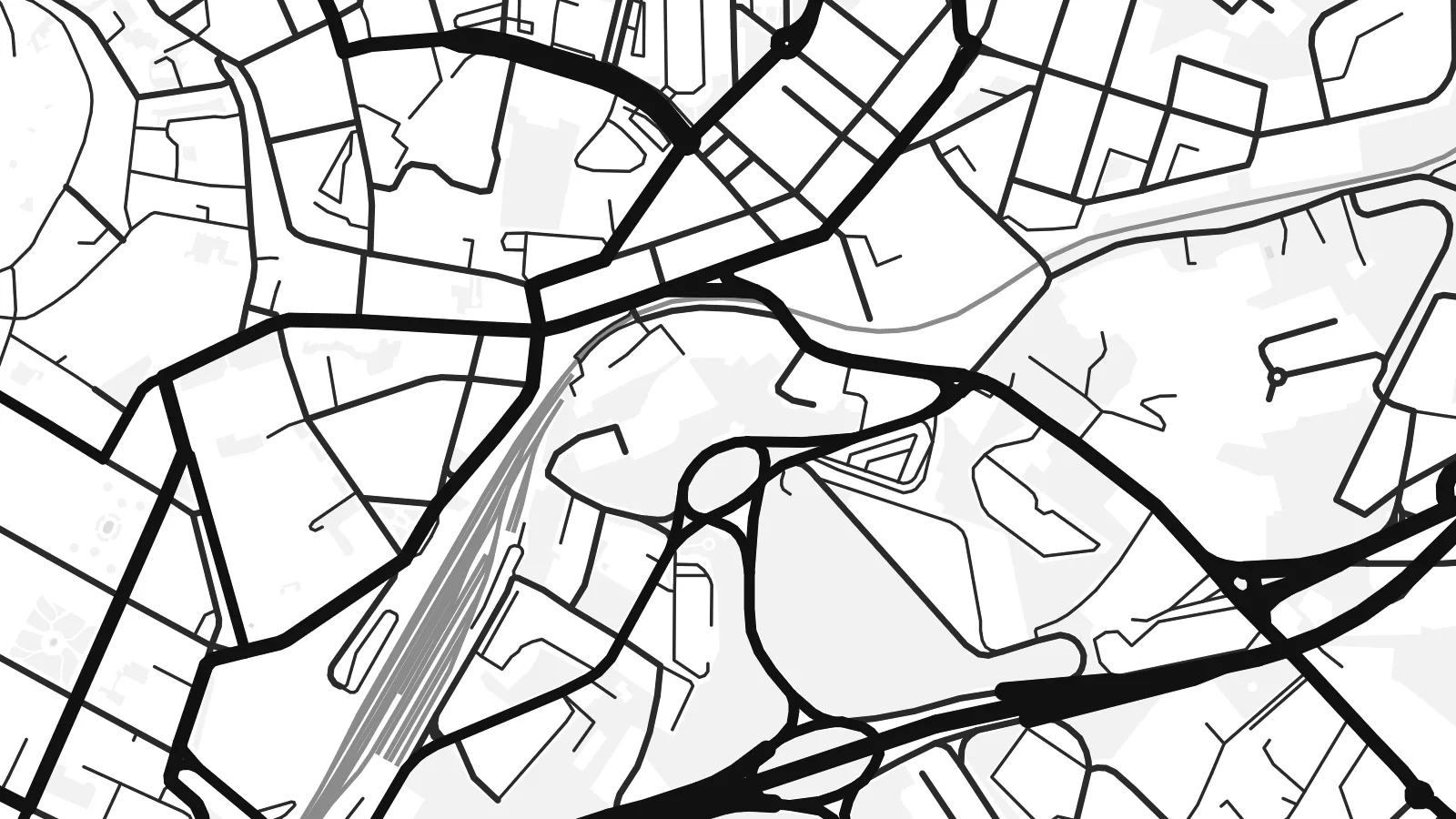
The Castello Monforte crowns the hill above the old town. Around it, the streets form tight loops and stairways, a dense pattern that reads almost like a fingerprint on the map.
Posta faʻafanua faigofie · Italy
41.5595° N / 14.6674° E
A hilltop capital where a medieval core coils around a castle above an orderly nineteenth-century grid.


Tasi le aai, lagona e lima
Tapi se sitaili e vaai ai i luga o le puipui. E tutusa uma le tau o sitaili — pe lolomiina, faapipiiina, pe avea ma faila HD.
 Pika Moni · Faila Lolomi 24 × 36″
Manino mo le lolomi
O se vaega atoa (100%) lenei mai le faila lolomi moni. O posita uma — pe lolomiina, faapipiiina pe download mai — e faia i luga o a matou server i le 300 DPI, e oo atu i le 7,200 × 10,800 pika, ina ia manino pea auala laiti i luga o se lolomiga 24 × 36″.
I luga o le puipui


Le faʻafanua
Campobasso is the capital of Molise, set on a hill in the Apennine interior of southern Italy. Seen from above, the town splits clearly in two. The medieval quarter wraps around the upper slopes, its lanes following the contours up to the Castello Monforte at the summit, while the later town spreads below across gentler ground in a far more regular pattern.
That lower district, laid out in the nineteenth century and often called the Borgo Murattiano, gives a Campobasso map poster its most striking contrast: straight streets and rectangular blocks meeting the curling paths of the old town above. Beyond them, postwar neighbourhoods and bypass roads extend over the hills, with open countryside close by in every direction.
The city is known for its Corpus Domini procession of the Misteri, tableaux designed in the eighteenth century by Paolo Saverio Di Zinno, in which costumed figures seem to float above the crowd as they are carried through the streets. On paper, those same streets become a quiet study of how an Italian hill town grew downhill over several centuries.
The Castello Monforte crowns the hill above the old town. Around it, the streets form tight loops and stairways, a dense pattern that reads almost like a fingerprint on the map.
Below the old quarter, the nineteenth-century town was planned as a grid of straight streets and squares. Its regular blocks give the poster a calm, geometric centre of gravity.
Campobasso sits among the rolling hills of inland Molise. Roads leave the city along ridges and valleys, curving away in long lines that frame the compact urban core.
Fai mo oe
Faʻaopoopo se aso, se igoa po o sau lava upu, sui le sitaili, lapoʻa po o le itu.
O le preview e leai se totogi e maualalo le resolution ma iai se watermark. O lolomi ma faila HD e faia i le 300 DPI, e oo atu i le 7,200 × 10,800 px, e aunoa ma se watermark.
Aisea Campobasso
For people from Molise, or anyone who has walked from the upper town down into the newer streets, Campobasso on the wall is a map of a familiar climb. The mix of medieval curves and planned grid makes a poster that rewards a closer look.
Write your own title, add a subtitle such as a family name or year, and keep or change the coordinates. Choose Classic black & white, Noir, Paper, Blueprint or Sand, then download 300 DPI PNG and PDF files for $9 or order a printed poster.
Faatau le posita Campobasso| Lapoʻa lolomi | Manino | Faila |
|---|---|---|
| 30 × 40 cm (11.8 × 15.7″) | 3,543 × 4,724 px | PNG · PDF |
| 29.7 × 42 cm (A3, 11.7 × 16.5″) | 3,508 × 4,961 px | PNG · PDF |
| 42 × 59.4 cm (A2, 16.5 × 23.4″) | 4,961 × 7,016 px | PNG · PDF |
| 45.7 × 61 cm (18 × 24″) | 5,400 × 7,200 px | PNG · PDF |
| 50 × 70 cm (19.7 × 27.6″) | 5,906 × 8,268 px | PNG · PDF |
| 61 × 91.4 cm (24 × 36″) | 7,200 × 10,800 px | PNG · PDF |
Ae faʻatusatusa, o le faʻataʻitaʻiga e leai se totogi e 900 px le lautele, e iai le faʻailoga vai ma e mo mata. O faila HD e oʻo atu i le 8× le manino i itu taʻitasi ma e lolomi manino i le lapoʻa atoa o le posta.
Filifili se sitaili i le pito i luga o le itulau, ona filifili lea o le Posita Lolomi — se lapopoa ma, afai e te fiafia, se faavaa — po o Faila HD Numera. E na o le tasi laasaga o le Checkout, ma o le a fesuia'i lou itulau o oka i le taimi lava e mae'a ai le totogi.
E lolomiina i luga o pepa matte maualuga le tulaga e 200 gsm, i se tasi o lapopoa e ono, mai le 30 × 40 cm i le 24 × 36″. E amata le tau o posita lolomi mai le $39, aofia ai le auina atu.
Ioe. Filifili se faavaa laau malosi i le lanu uliuli, sina, oak masani, po o le laau pogisa. E aofia ai se tioata e le gau ma ua saunia e tautau i luga. E amata le tau o posita faavaa mai le $99, aofia ai le auina atu.
E leai se totogi mo le uta i le lalolagi atoa. O poster ta'itasi e lolomi e le paaga lolomi e latalata mai i matou i atunuu e 30+, ma e masani ona taunuu i aso faigaluega e 3–7. E mafai ona e mulimuli i le tulaga ma le tracking i le "Aʻu Oka". O nisi atunuu e 2–5 vaiaso, ma i atunuu matou te lei tuuina atu ai, e taʻu atu e le saite iā te oe ae e te leʻi totogiina.
Auina mai se ata i totonu o le 14 aso talu ona taunuu, ma o le a matou toe lolomiina e leai se totogi po o le toe faafoi atu lau tupe.
Ioe. I totonu o le editor i lenei itulau, suia le ulutala, le ulutala laititi ma le laina o coordinates i soo se mea e te fiafia i ai, ma filifili se sitaili ma le lapopoa. O oka lolomi, faavaa ma numera e faaaoga uma lava lau mamanu.
Mo le $9 e te maua ai faila PNG 300 DPI ma PDF ua saunia mo le lolomi i lapopoa uma e ono, e aunoa ma se watermark, e mafai ona lolomi i soo se mea. Le mautinoa lava? Download muamua se preview e leai se totogi ma le watermark.
