The Iapó River
The river loops past the town in a series of soft bends. Its curve gives the map a natural boundary and a flowing counterpoint to the straight central streets.
Posta faʻafanua faigofie · Brazil
24.7893° S / 50.0123° W
An old tropeiro town on the Iapó River, its historic centre set among the open plateau fields of the Campos Gerais


Tasi le aai, lagona e lima
Tapi se sitaili e vaai ai i luga o le puipui. E tutusa uma le tau o sitaili — pe lolomiina, faapipiiina, pe avea ma faila HD.
 Pika Moni · Faila Lolomi 24 × 36″
Manino mo le lolomi
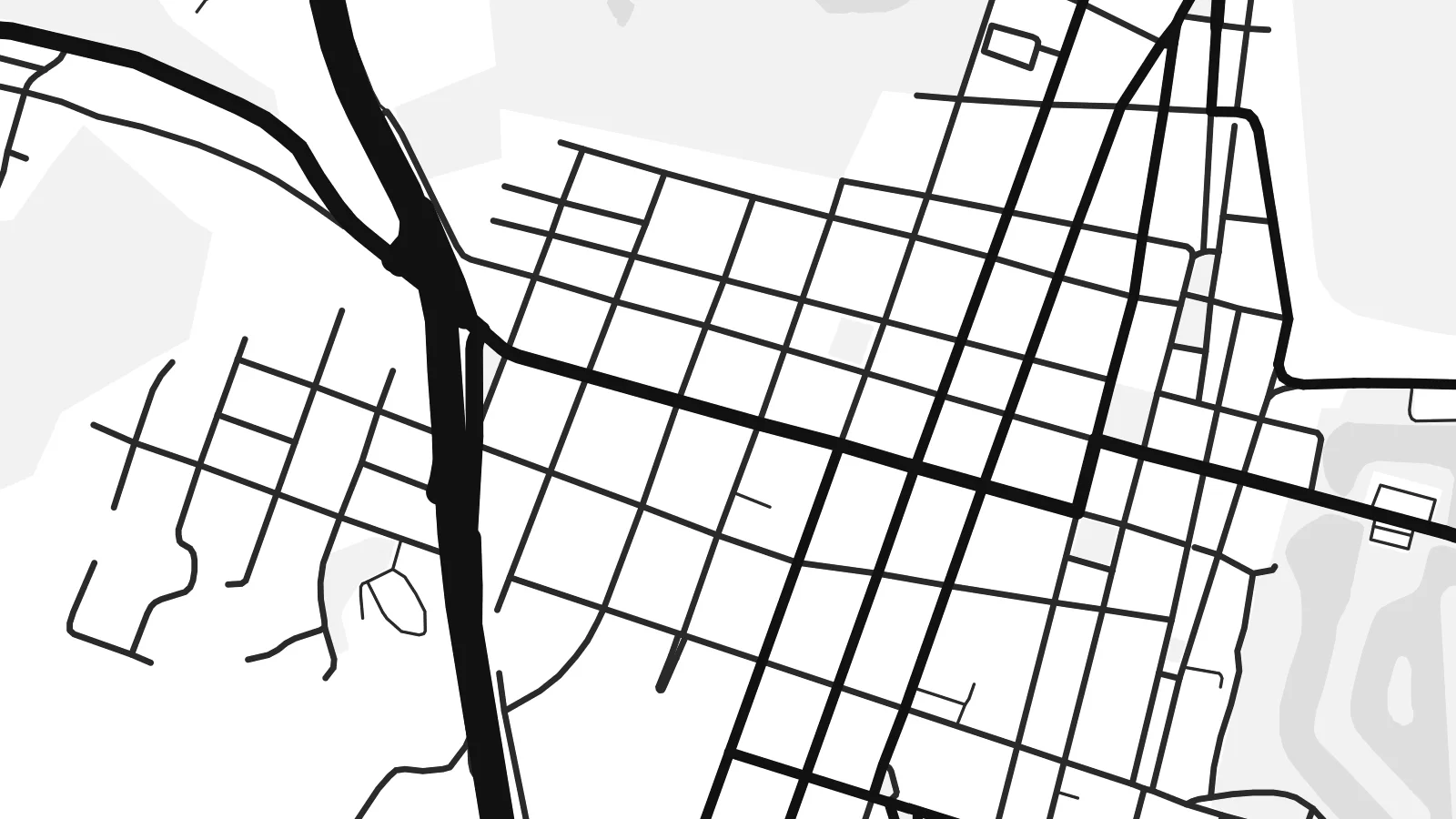
O se vaega atoa (100%) lenei mai le faila lolomi moni. O posita uma — pe lolomiina, faapipiiina pe download mai — e faia i luga o a matou server i le 300 DPI, e oo atu i le 7,200 × 10,800 pika, ina ia manino pea auala laiti i luga o se lolomiga 24 × 36″.
I luga o le puipui


Le faʻafanua
Castro is one of the oldest towns in Paraná. It grew in the eighteenth century as a stopping place on the cattle-drovers' route that linked the southern plains with the markets of São Paulo. The Iapó River passes along the town, and the historic core sits on the ground above it. On a map, this origin shows in a compact central grid, with roads leaving toward the surrounding countryside.
Around the town lies the Campos Gerais, a high, open plateau of grassland, farms and scattered woods. That openness gives the map generous margins, where rural roads and field boundaries replace dense streets. Castro is known today as a major dairy region, a tradition closely tied to the Dutch immigrant colony of Castrolanda, founded nearby in the mid-twentieth century.
Newer neighbourhoods have spread out from the centre along the main roads, and the river's winding course gives them an irregular edge on one side. A Castro map poster brings together the orderly old centre, the curving Iapó and the looser streets beyond, making a composition that feels both historic and clearly linked to its farmland.
The river loops past the town in a series of soft bends. Its curve gives the map a natural boundary and a flowing counterpoint to the straight central streets.
The oldest blocks form a small, regular grid on the higher ground. It is a reminder of the town's beginnings as a rest stop for cattle drovers.
Beyond the built area, long rural roads cross the open Campos Gerais. In a minimalist style they read as spare lines across wide, quiet space.
Fai mo oe
Faʻaopoopo se aso, se igoa po o sau lava upu, sui le sitaili, lapoʻa po o le itu.
O le preview e leai se totogi e maualalo le resolution ma iai se watermark. O lolomi ma faila HD e faia i le 300 DPI, e oo atu i le 7,200 × 10,800 px, e aunoa ma se watermark.
Aisea Castro
The poster suits anyone from Castro or Castrolanda, and families whose history runs through the farms of the Campos Gerais. A custom title and subtitle can name a farm, a family or a year of arrival, while the coordinates line pins the exact place.
Sand suits the rural character with warm tones, and Paper gives a gentle, almanac-like finish. The $9 digital files come in six print sizes as 300 DPI PNG and print-ready PDF. You can also order a matte printed poster, with an optional wooden frame, for delivery.
Faatau le posita Castro| Lapoʻa lolomi | Manino | Faila |
|---|---|---|
| 30 × 40 cm (11.8 × 15.7″) | 3,543 × 4,724 px | PNG · PDF |
| 29.7 × 42 cm (A3, 11.7 × 16.5″) | 3,508 × 4,961 px | PNG · PDF |
| 42 × 59.4 cm (A2, 16.5 × 23.4″) | 4,961 × 7,016 px | PNG · PDF |
| 45.7 × 61 cm (18 × 24″) | 5,400 × 7,200 px | PNG · PDF |
| 50 × 70 cm (19.7 × 27.6″) | 5,906 × 8,268 px | PNG · PDF |
| 61 × 91.4 cm (24 × 36″) | 7,200 × 10,800 px | PNG · PDF |
Ae faʻatusatusa, o le faʻataʻitaʻiga e leai se totogi e 900 px le lautele, e iai le faʻailoga vai ma e mo mata. O faila HD e oʻo atu i le 8× le manino i itu taʻitasi ma e lolomi manino i le lapoʻa atoa o le posta.
Filifili se sitaili i le pito i luga o le itulau, ona filifili lea o le Posita Lolomi — se lapopoa ma, afai e te fiafia, se faavaa — po o Faila HD Numera. E na o le tasi laasaga o le Checkout, ma o le a fesuia'i lou itulau o oka i le taimi lava e mae'a ai le totogi.
E lolomiina i luga o pepa matte maualuga le tulaga e 200 gsm, i se tasi o lapopoa e ono, mai le 30 × 40 cm i le 24 × 36″. E amata le tau o posita lolomi mai le $39, aofia ai le auina atu.
Ioe. Filifili se faavaa laau malosi i le lanu uliuli, sina, oak masani, po o le laau pogisa. E aofia ai se tioata e le gau ma ua saunia e tautau i luga. E amata le tau o posita faavaa mai le $99, aofia ai le auina atu.
E leai se totogi mo le uta i le lalolagi atoa. O poster ta'itasi e lolomi e le paaga lolomi e latalata mai i matou i atunuu e 30+, ma e masani ona taunuu i aso faigaluega e 3–7. E mafai ona e mulimuli i le tulaga ma le tracking i le "Aʻu Oka". O nisi atunuu e 2–5 vaiaso, ma i atunuu matou te lei tuuina atu ai, e taʻu atu e le saite iā te oe ae e te leʻi totogiina.
Auina mai se ata i totonu o le 14 aso talu ona taunuu, ma o le a matou toe lolomiina e leai se totogi po o le toe faafoi atu lau tupe.
Ioe. I totonu o le editor i lenei itulau, suia le ulutala, le ulutala laititi ma le laina o coordinates i soo se mea e te fiafia i ai, ma filifili se sitaili ma le lapopoa. O oka lolomi, faavaa ma numera e faaaoga uma lava lau mamanu.
Mo le $9 e te maua ai faila PNG 300 DPI ma PDF ua saunia mo le lolomi i lapopoa uma e ono, e aunoa ma se watermark, e mafai ona lolomi i soo se mea. Le mautinoa lava? Download muamua se preview e leai se totogi ma le watermark.
