Town on the grid
Esperanza's streets are laid out in a largely regular pattern of blocks. The level ground keeps the lines straight, giving the poster an ordered, easy-to-read centre.
Posta faʻafanua faigofie · Dominican Republic
19.5847° N / 70.9849° W
A farming town in the Cibao Valley, its streets set in a grid on level ground among irrigated fields.


Tasi le aai, lagona e lima
Tapi se sitaili e vaai ai i luga o le puipui. E tutusa uma le tau o sitaili — pe lolomiina, faapipiiina, pe avea ma faila HD.
 Pika Moni · Faila Lolomi 24 × 36″
Manino mo le lolomi
O se vaega atoa (100%) lenei mai le faila lolomi moni. O posita uma — pe lolomiina, faapipiiina pe download mai — e faia i luga o a matou server i le 300 DPI, e oo atu i le 7,200 × 10,800 pika, ina ia manino pea auala laiti i luga o se lolomiga 24 × 36″.
I luga o le puipui
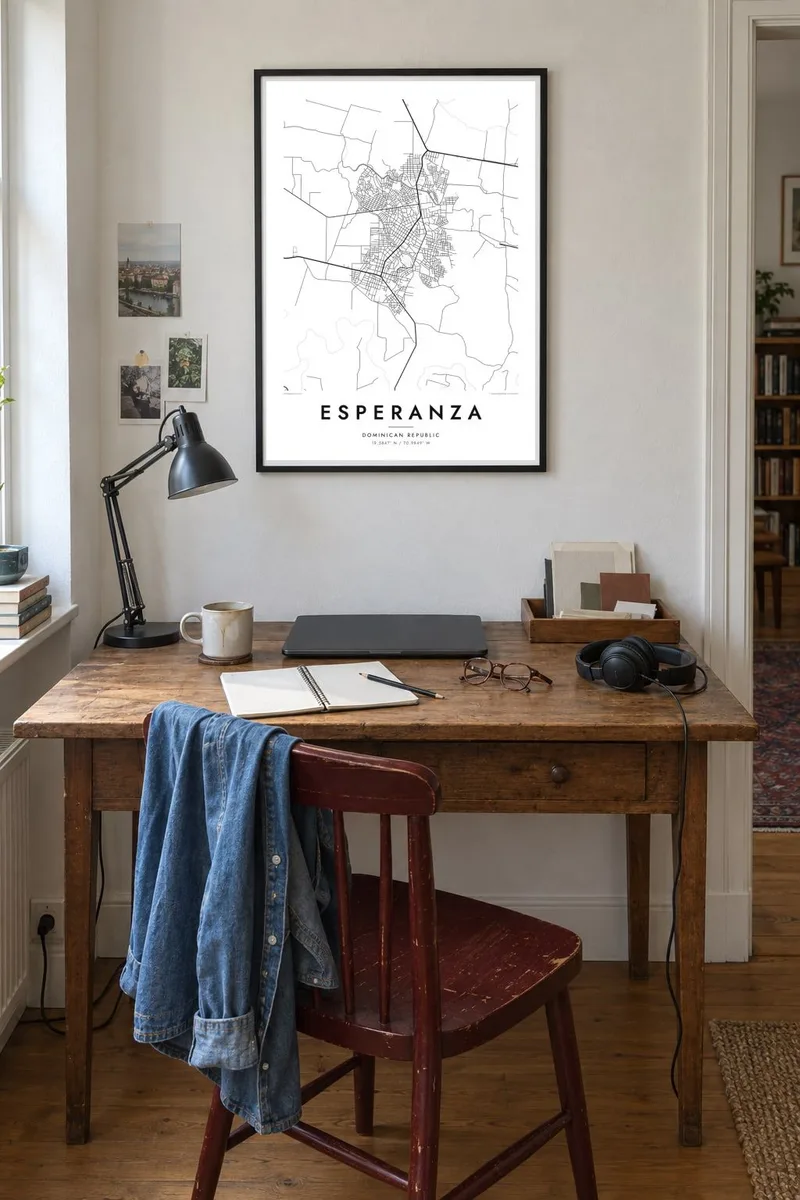

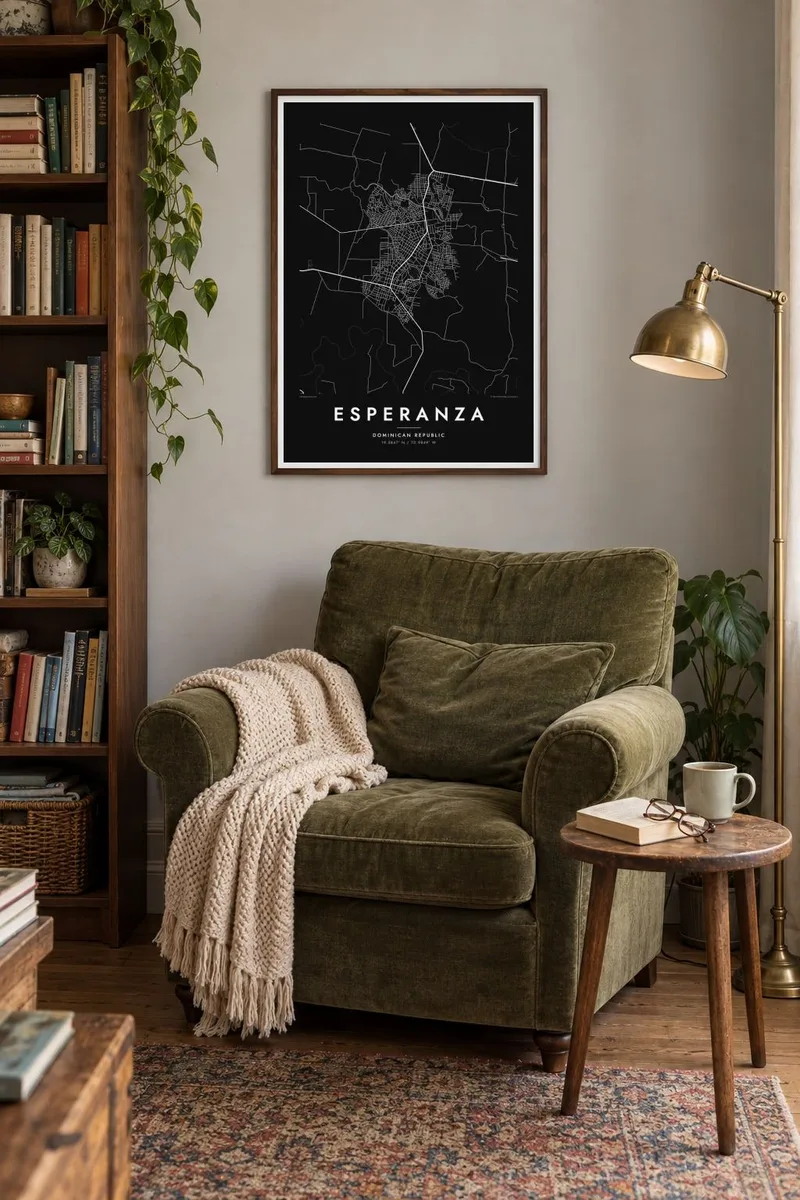
Le faʻafanua
Esperanza sits in Valverde Province in the northwest of the Dominican Republic, in the broad Cibao Valley. The ground here is flat, and the town has spread over it in a fairly regular pattern of blocks. Main roads connect it to Mao and to Santiago, and from above they read as long, steady lines leading out across the valley floor.
The valley around Esperanza is agricultural country, watered by the Yaque del Norte river system and its irrigation channels. Rice and bananas are among the crops grown in this part of Valverde, and on a map the farmland appears as open space crossed by straight canals and field roads. That rural pattern frames the town on every side.
An Esperanza map poster captures a place shaped by the land around it. The grid of the town is clear and orderly, and the lines running out into the fields show how closely the community is tied to the valley. It makes a simple, honest print for anyone who calls Esperanza home or has family in the Cibao.
Esperanza's streets are laid out in a largely regular pattern of blocks. The level ground keeps the lines straight, giving the poster an ordered, easy-to-read centre.
Main roads leave town toward neighbouring places in Valverde and beyond. On the map they stretch out in long, clean strokes that emphasise how flat and open the Cibao is here.
Around the town, canals and field tracks cut straight lines through open land. These marks of rice and banana farming form a quiet geometric border around the streets.
Fai mo oe
Faʻaopoopo se aso, se igoa po o sau lava upu, sui le sitaili, lapoʻa po o le itu.
O le preview e leai se totogi e maualalo le resolution ma iai se watermark. O lolomi ma faila HD e faia i le 300 DPI, e oo atu i le 7,200 × 10,800 px, e aunoa ma se watermark.
Aisea Esperanza
Esperanza belongs on the wall of people who grew up there, who left for Santiago, Santo Domingo or abroad, and who want to keep the shape of home close. The plain grid and surrounding fields make an image that feels grounded.
Personalise the title, subtitle and coordinates line with a family name or a meaningful year. Pick from Classic black & white, Noir, Paper, Blueprint or Sand, and choose either instant HD files or a printed poster with an optional wooden frame.
Faatau le posita Esperanza| Lapoʻa lolomi | Manino | Faila |
|---|---|---|
| 30 × 40 cm11.8 × 15.7″ | 3,543 × 4,724 px | PNG · PDF |
| 29.7 × 42 cm (A3)11.7 × 16.5″ | 3,508 × 4,961 px | PNG · PDF |
| 42 × 59.4 cm (A2)16.5 × 23.4″ | 4,961 × 7,016 px | PNG · PDF |
| 45.7 × 61 cm18 × 24″ | 5,400 × 7,200 px | PNG · PDF |
| 50 × 70 cm19.7 × 27.6″ | 5,906 × 8,268 px | PNG · PDF |
| 61 × 91.4 cm24 × 36″ | 7,200 × 10,800 px | PNG · PDF |
Ae faʻatusatusa, o le faʻataʻitaʻiga e leai se totogi e 900 px le lautele, e iai le faʻailoga vai ma e mo mata. O faila HD e oʻo atu i le 8× le manino i itu taʻitasi ma e lolomi manino i le lapoʻa atoa o le posta.
Filifili se sitaili i le pito i luga o le itulau, ona filifili lea o le Posita Lolomi — se lapopoa ma, afai e te fiafia, se faavaa — po o Faila HD Numera. E na o le tasi laasaga o le Checkout, ma o le a fesuia'i lou itulau o oka i le taimi lava e mae'a ai le totogi.
E lolomiina i luga o pepa matte maualuga le tulaga e 200 gsm, i se tasi o lapopoa e ono, mai le 30 × 40 cm i le 24 × 36″. E amata le tau o posita lolomi mai le $39, aofia ai le auina atu.
Ioe. Filifili se faavaa laau malosi i le lanu uliuli, sina, oak masani, po o le laau pogisa. E aofia ai se tioata e le gau ma ua saunia e tautau i luga. E amata le tau o posita faavaa mai le $99, aofia ai le auina atu.
E leai se totogi o le auina atu i atunuu e 60+. O pepa ata taʻitasi e lolomiina e le tasi o matou paaga lolomi e latalata mai i atunuu e 30+, ma e masani ona taunuu i le 3–7 aso faigaluega. E mafai ona e mulimulitaia le tulaga ma le sailiga i lalo o My Orders. O nisi atunuu e 2–5 vaiaso, ma i nofoaga e lei matou auina atu iai, e taʻu atu e le saite ia te oe a o lei totogi.
Auina mai se ata i totonu o le 14 aso talu ona taunuu, ma o le a matou toe lolomiina e leai se totogi po o le toe faafoi atu lau tupe.
Ioe. I totonu o le editor i lenei itulau, suia le ulutala, le ulutala laititi ma le laina o coordinates i soo se mea e te fiafia i ai, ma filifili se sitaili ma le lapopoa. O oka lolomi, faavaa ma numera e faaaoga uma lava lau mamanu.
Mo le $9 e te maua ai faila PNG 300 DPI ma PDF ua saunia mo le lolomi i lapopoa uma e ono, e aunoa ma se watermark, e mafai ona lolomi i soo se mea. Le mautinoa lava? Download muamua se preview e leai se totogi ma le watermark.
Latalata ane
