Seaport and free zone
The harbour's breakwaters and long quays stand out on an otherwise smooth coastline. The rectangular plots of warehouses and industrial yards surround them.
Posta faʻafanua faigofie · Libya
32.3753° N / 15.0925° E
A flat Mediterranean port city in western Libya, its grid spreading inland from the coast toward salt flats and open ground.


Tasi le aai, lagona e lima
Tapi se sitaili e vaai ai i luga o le puipui. E tutusa uma le tau o sitaili — pe lolomiina, faapipiiina, pe avea ma faila HD.
 Pika Moni · Faila Lolomi 24 × 36″
Manino mo le lolomi
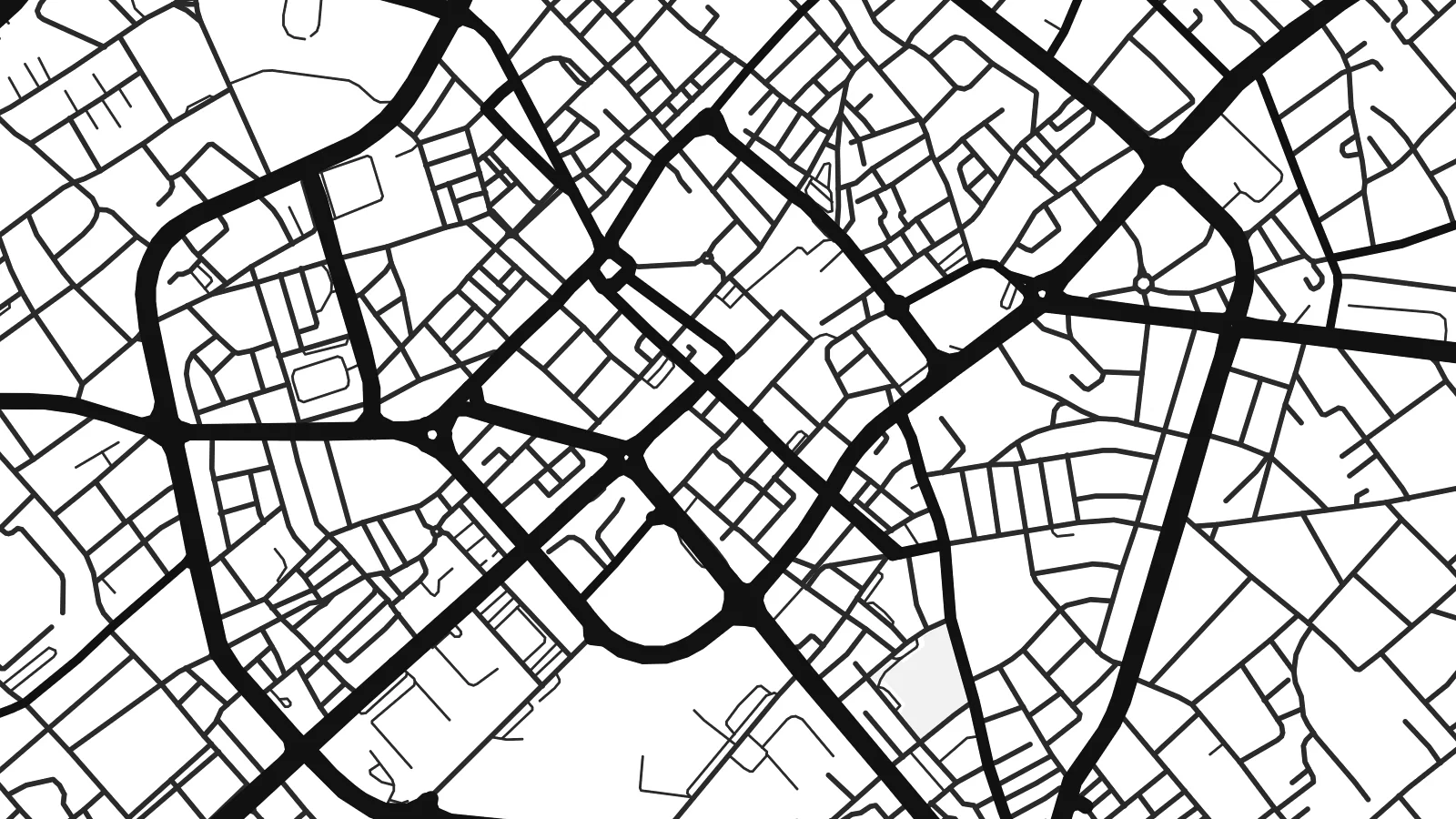
O se vaega atoa (100%) lenei mai le faila lolomi moni. O posita uma — pe lolomiina, faapipiiina pe download mai — e faia i luga o a matou server i le 300 DPI, e oo atu i le 7,200 × 10,800 pika, ina ia manino pea auala laiti i luga o se lolomiga 24 × 36″.
I luga o le puipui


Le faʻafanua
Misratah, often written Misrata, lies on the Libyan coast east of Tripoli, near where the shoreline turns south toward the Gulf of Sidra. It is one of the country's largest cities. On a map it appears as a broad, low-lying urban area, with long straight roads running inland from the sea and a coastal highway linking it to the rest of Libya.
The city has long been a commercial centre. Its seaport and the free zone beside it handle a significant share of Libya's trade. A large steelworks near the coast adds a broad industrial footprint of long sheds and yards. These wide rectangular shapes contrast with the smaller, denser blocks of the older town and the residential districts around it.
Around the centre, older neighbourhoods and gardens give way to planned districts laid out in regular blocks. To the south, the land flattens toward salt flats and desert. A Misratah map poster shows this quiet geometry of coast, grid and open ground in simple lines, with the Mediterranean forming a long, calm edge.
The harbour's breakwaters and long quays stand out on an otherwise smooth coastline. The rectangular plots of warehouses and industrial yards surround them.
The main road along the Libyan coast passes through the city. This long line ties Misratah to Tripoli in the west and to the towns along the Gulf of Sidra.
Newer residential areas have regular blocks and wide streets. This grid contrasts with the denser, more irregular pattern of the older town centre.
Fai mo oe
Faʻaopoopo se aso, se igoa po o sau lava upu, sui le sitaili, lapoʻa po o le itu.
O le preview e leai se totogi e maualalo le resolution ma iai se watermark. O lolomi ma faila HD e faia i le 300 DPI, e oo atu i le 7,200 × 10,800 px, e aunoa ma se watermark.
Aisea Misratah
For people from Misratah, at home or abroad, a map of the city is a quiet way to mark where they belong. Centre the frame on the old town, the port or the street you grew up on, then set the title, subtitle and coordinates to tell your own story.
There are five styles: Classic black and white, Noir, Paper, Blueprint and Sand. Sand suits a coastal desert city well. Start with a free 900 px preview, then download the six-size HD set for $9 or order a printed poster on matte paper.
Faatau le posita Misratah| Lapoʻa lolomi | Manino | Faila |
|---|---|---|
| 30 × 40 cm11.8 × 15.7″ | 3,543 × 4,724 px | PNG · PDF |
| 29.7 × 42 cm (A3)11.7 × 16.5″ | 3,508 × 4,961 px | PNG · PDF |
| 42 × 59.4 cm (A2)16.5 × 23.4″ | 4,961 × 7,016 px | PNG · PDF |
| 45.7 × 61 cm18 × 24″ | 5,400 × 7,200 px | PNG · PDF |
| 50 × 70 cm19.7 × 27.6″ | 5,906 × 8,268 px | PNG · PDF |
| 61 × 91.4 cm24 × 36″ | 7,200 × 10,800 px | PNG · PDF |
Ae faʻatusatusa, o le faʻataʻitaʻiga e leai se totogi e 900 px le lautele, e iai le faʻailoga vai ma e mo mata. O faila HD e oʻo atu i le 8× le manino i itu taʻitasi ma e lolomi manino i le lapoʻa atoa o le posta.
Filifili se sitaili i le pito i luga o le itulau, ona filifili lea o le Posita Lolomi — se lapopoa ma, afai e te fiafia, se faavaa — po o Faila HD Numera. E na o le tasi laasaga o le Checkout, ma o le a fesuia'i lou itulau o oka i le taimi lava e mae'a ai le totogi.
E lolomiina i luga o pepa matte maualuga le tulaga e 200 gsm, i se tasi o lapopoa e ono, mai le 30 × 40 cm i le 24 × 36″. E amata le tau o posita lolomi mai le $39, aofia ai le auina atu.
Ioe. Filifili se faavaa laau malosi i le lanu uliuli, sina, oak masani, po o le laau pogisa. E aofia ai se tioata e le gau ma ua saunia e tautau i luga. E amata le tau o posita faavaa mai le $99, aofia ai le auina atu.
E leai se totogi o le auina atu i atunuu e 60+. O pepa ata taʻitasi e lolomiina e le tasi o matou paaga lolomi e latalata mai i atunuu e 30+, ma e masani ona taunuu i le 3–7 aso faigaluega. E mafai ona e mulimulitaia le tulaga ma le sailiga i lalo o My Orders. O nisi atunuu e 2–5 vaiaso, ma i nofoaga e lei matou auina atu iai, e taʻu atu e le saite ia te oe a o lei totogi.
Auina mai se ata i totonu o le 14 aso talu ona taunuu, ma o le a matou toe lolomiina e leai se totogi po o le toe faafoi atu lau tupe.
Ioe. I totonu o le editor i lenei itulau, suia le ulutala, le ulutala laititi ma le laina o coordinates i soo se mea e te fiafia i ai, ma filifili se sitaili ma le lapopoa. O oka lolomi, faavaa ma numera e faaaoga uma lava lau mamanu.
Mo le $9 e te maua ai faila PNG 300 DPI ma PDF ua saunia mo le lolomi i lapopoa uma e ono, e aunoa ma se watermark, e mafai ona lolomi i soo se mea. Le mautinoa lava? Download muamua se preview e leai se totogi ma le watermark.
Latalata ane
