Scattered districts
Neighbourhoods appear as separate clusters rather than one continuous city, each one originally built around a mine and linked by roads over the hills.
Posta faʻafanua faigofie · Russia
53.9152° N / 86.7189° E
A coal city spread loosely across the hills of Kuzbass, its districts separated by mines, valleys and the winding Aba River.


Tasi le aai, lagona e lima
Tapi se sitaili e vaai ai i luga o le puipui. E tutusa uma le tau o sitaili — pe lolomiina, faapipiiina, pe avea ma faila HD.
 Pika Moni · Faila Lolomi 24 × 36″
Manino mo le lolomi
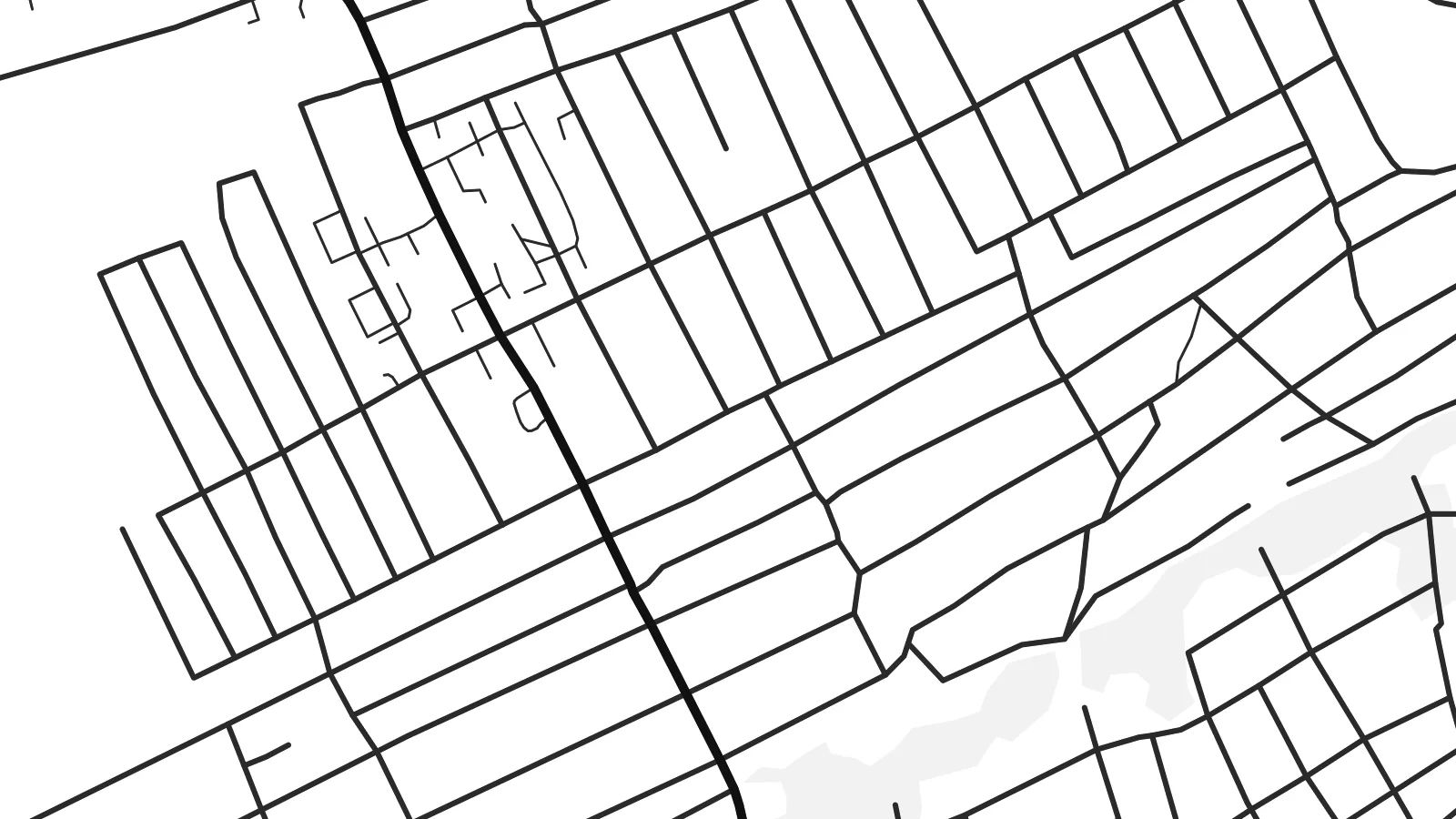
O se vaega atoa (100%) lenei mai le faila lolomi moni. O posita uma — pe lolomiina, faapipiiina pe download mai — e faia i luga o a matou server i le 300 DPI, e oo atu i le 7,200 × 10,800 pika, ina ia manino pea auala laiti i luga o se lolomiga 24 × 36″.
I luga o le puipui


Le faʻafanua
Prokop’yevsk is one of the main coal-mining cities of the Kuznetsk Basin in southern Siberia. It does not have a compact centre. Instead, it spreads widely over hilly terrain, with separate districts that grew around individual mines and were later joined together. The small Aba River winds through the city, and railway lines and roads wrap around the slopes to connect the scattered neighbourhoods.
For most of the twentieth century, coal defined the city, with mines located almost everywhere within its boundaries. On the map, this history appears as gaps and irregular spaces between residential districts, former mining sites, spoil heaps and industrial railways. Many districts still have Soviet-era apartment blocks alongside streets of private wooden houses.
A Prokop’yevsk map poster captures this unusual structure: clusters of streets separated by empty land, curving roads following the hills, the thin line of the Aba and the railway tracks linking everything together. It is an honest portrait of an industrial city whose shape was determined by what lay beneath its surface.
Neighbourhoods appear as separate clusters rather than one continuous city, each one originally built around a mine and linked by roads over the hills.
A small river winds through the city in a series of bends, its valley providing one of the few natural lines in a heavily industrial landscape.
Railway lines curve between districts and former mining sites, forming long arcs that help to hold the widely spread city together on the map.
Fai mo oe
Faʻaopoopo se aso, se igoa po o sau lava upu, sui le sitaili, lapoʻa po o le itu.
O le preview e leai se totogi e maualalo le resolution ma iai se watermark. O lolomi ma faila HD e faia i le 300 DPI, e oo atu i le 7,200 × 10,800 px, e aunoa ma se watermark.
Aisea Prokop’yevsk
For people from Kuzbass, Prokop’yevsk is bound up with family history, shifts in the mines and a particular kind of hillside neighbourhood. A map of its scattered districts is a respectful way to remember where one comes from.
The title, subtitle and coordinates can be customised, including in Cyrillic, with a district, a year or a name. Choose from five styles and download high-resolution files, ready to print at any of six sizes.
Faatau le posita Prokop’yevsk| Lapoʻa lolomi | Manino | Faila |
|---|---|---|
| 30 × 40 cm (11.8 × 15.7″) | 3,543 × 4,724 px | PNG · PDF |
| 29.7 × 42 cm (A3, 11.7 × 16.5″) | 3,508 × 4,961 px | PNG · PDF |
| 42 × 59.4 cm (A2, 16.5 × 23.4″) | 4,961 × 7,016 px | PNG · PDF |
| 45.7 × 61 cm (18 × 24″) | 5,400 × 7,200 px | PNG · PDF |
| 50 × 70 cm (19.7 × 27.6″) | 5,906 × 8,268 px | PNG · PDF |
| 61 × 91.4 cm (24 × 36″) | 7,200 × 10,800 px | PNG · PDF |
Ae faʻatusatusa, o le faʻataʻitaʻiga e leai se totogi e 900 px le lautele, e iai le faʻailoga vai ma e mo mata. O faila HD e oʻo atu i le 8× le manino i itu taʻitasi ma e lolomi manino i le lapoʻa atoa o le posta.
Filifili se sitaili i le pito i luga o le itulau, ona filifili lea o le Posita Lolomi — se lapopoa ma, afai e te fiafia, se faavaa — po o Faila HD Numera. E na o le tasi laasaga o le Checkout, ma o le a fesuia'i lou itulau o oka i le taimi lava e mae'a ai le totogi.
E lolomiina i luga o pepa matte maualuga le tulaga e 200 gsm, i se tasi o lapopoa e ono, mai le 30 × 40 cm i le 24 × 36″. E amata le tau o posita lolomi mai le $39, aofia ai le auina atu.
Ioe. Filifili se faavaa laau malosi i le lanu uliuli, sina, oak masani, po o le laau pogisa. E aofia ai se tioata e le gau ma ua saunia e tautau i luga. E amata le tau o posita faavaa mai le $99, aofia ai le auina atu.
E leai se totogi mo le uta i le lalolagi atoa. O poster ta'itasi e lolomi e le paaga lolomi e latalata mai i matou i atunuu e 30+, ma e masani ona taunuu i aso faigaluega e 3–7. E mafai ona e mulimuli i le tulaga ma le tracking i le "Aʻu Oka". O nisi atunuu e 2–5 vaiaso, ma i atunuu matou te lei tuuina atu ai, e taʻu atu e le saite iā te oe ae e te leʻi totogiina.
Auina mai se ata i totonu o le 14 aso talu ona taunuu, ma o le a matou toe lolomiina e leai se totogi po o le toe faafoi atu lau tupe.
Ioe. I totonu o le editor i lenei itulau, suia le ulutala, le ulutala laititi ma le laina o coordinates i soo se mea e te fiafia i ai, ma filifili se sitaili ma le lapopoa. O oka lolomi, faavaa ma numera e faaaoga uma lava lau mamanu.
Mo le $9 e te maua ai faila PNG 300 DPI ma PDF ua saunia mo le lolomi i lapopoa uma e ono, e aunoa ma se watermark, e mafai ona lolomi i soo se mea. Le mautinoa lava? Download muamua se preview e leai se totogi ma le watermark.
Latalata ane
