Jalan Cheras spine
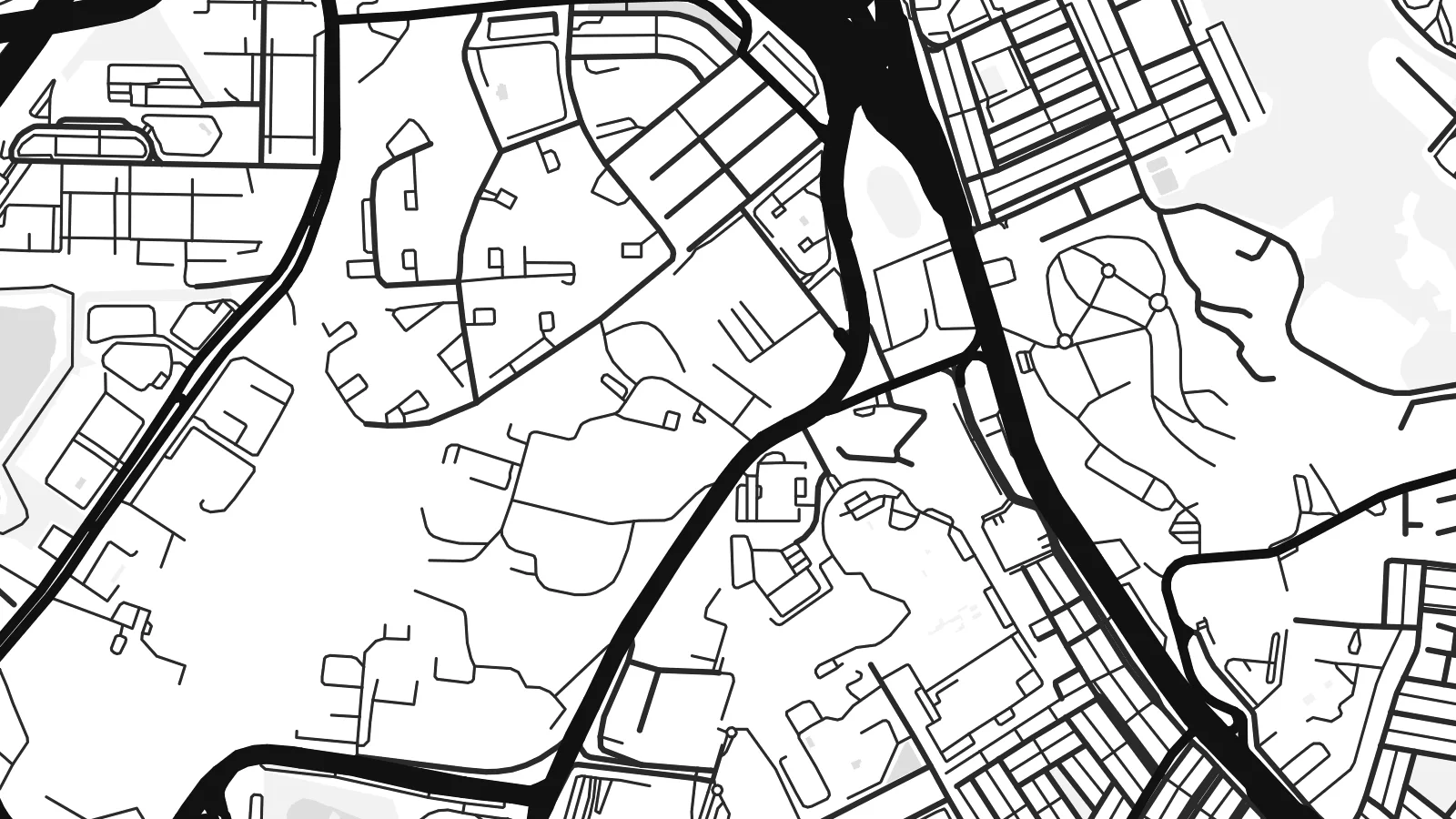
The main road runs south-east from the city with an elevated rail line above it, giving the map a strong diagonal that everything else hangs from.
Fakatino mape mukamuka · Malaysia
3.1080° N / 101.7260° E
A long residential corridor running south-east from Kuala Lumpur, following Jalan Cheras and its elevated rail line towards the hills.


Taha e taone, lima e onoonoaga
Tapaki e taha puhala ke kitia ai ki luga he puipui. Kua tatai e totogi he tau puhala oti — pete he lolomi, poloka, po ke faila HD.
 Tau pikselo mooli · faila lolomi 24 × 36″
Maama mitaki ke lolomi
Ko e 100% e fahi mooli mai he faila lolomi. Ko e tau poster oti — pete kua lolomi, poloka, po ke utu hifo — kua taute ke he ha mautolu a tau tokoluga (server) ke he 300 DPI, hokotia ke he 7,200 × 10,800 piksela, ke maeke ai e tau ala ikiiki tote ke maaliali fakamitaki he lolomi 24 × 36″.
He Pā


Ko e mape
Cheras stretches south-east from central Kuala Lumpur across the border into Selangor, and on a map it reads as a corridor rather than a compact town. Jalan Cheras forms the backbone, with an elevated MRT line running above it. Housing estates branch off on either side in loops, terraces and short grid sections of their own.
Each taman, or housing estate, has its own small pattern: rows of terraced houses, a few curving access roads, and a market or school at the centre. Expressways and ring roads cut across the area in wide arcs, linking these neighbourhoods to the rest of the Klang Valley. To the east the land rises into wooded hills, and the streets thin out against them.
A Cheras map poster suits anyone who has lived in one of these estates and knows exactly which turning leads home. The drawing captures the density of the neighbourhoods, the long line of the main road and the green edge beyond. It is a portrait of everyday Kuala Lumpur suburbia, rarely described in guidebooks but deeply familiar to the people who live there.
The main road runs south-east from the city with an elevated rail line above it, giving the map a strong diagonal that everything else hangs from.
Dozens of taman estates, each with its own terraces and loops, create a patchwork of small, distinct street patterns that fill the space around the main road.
Beyond the last estates, higher wooded ground brings the dense lines to a halt, leaving open white space at the poster's edge.
Taute ke ha hau
Lafi e aho, taha higoa po ke taha kupu haau, hiki e fakatino, lahi po ke tuaga.
Ko e kitiaaga nakai totogi kua tote e maaliali mo e fakamailoga vai. Ko e tau lolomi mo e tau faila HD kua taute ke he 300 DPI, hokotia ke he 7,200 × 10,800 px, nakai fai fakamailoga vai.
Ko e ha Cheras
For people who grew up in Cheras or bought their first home here, a map of the neighbourhood is more personal than a skyline. Title it with the estate name, add the date you got the keys, or set the coordinates to your own street.
Pick from five styles: Classic black & white, Noir, Paper, Blueprint and Sand. The $9 digital files cover six print sizes as 300 DPI PNG and print-ready PDF, and printed posters on matte paper can be ordered with an optional wooden frame.
Talaage e poster Cheras| Lahi he lolomi | Maama | Tau faila |
|---|---|---|
| 30 × 40 cm11.8 × 15.7″ | 3,543 × 4,724 px | PNG · PDF |
| 29.7 × 42 cm (A3)11.7 × 16.5″ | 3,508 × 4,961 px | PNG · PDF |
| 42 × 59.4 cm (A2)16.5 × 23.4″ | 4,961 × 7,016 px | PNG · PDF |
| 45.7 × 61 cm18 × 24″ | 5,400 × 7,200 px | PNG · PDF |
| 50 × 70 cm19.7 × 27.6″ | 5,906 × 8,268 px | PNG · PDF |
| 61 × 91.4 cm24 × 36″ | 7,200 × 10,800 px | PNG · PDF |
Ke fakatatai, ko e fakatino noa kua 900 px e laulahi, fai fakamailoga mo e mo e tau mata komipiuta ni. Ko e tau faila HD kua ato hoko ke he 8× e maama ke he tau faahi takitaha mo e lolomi mitaki he lahi katoa he fakatino.
Fifili e taha puhala i luga he kupega, ti fifili e Poster Lolomi — e lahi mo e, kaeke ke manako ai koe, taha poloka — po ke Tau Faila HD Fakaeletonika. Ko e fakaotiaga totogi ko e taha gahua ni, ti ko e kupega he hau a talaaga ka fakafou fakahaga i mua he fakaotiaga e totogi.
Kua lolomi ai ke he pepa mitaki 200 gsm matte he taha he tau lahi ono, mai he 30 × 40 cm ke hoko ke he 24 × 36″. Kamata e tau poster lolomi mai he $39, kua putoia ai e utaaga.
E. Fifili e poloka akau malolō ke he lanu uli, tea, akau oki mooli, po ke akau pouli. Kua fakalataha mo e sioga malolō nakai malepe ti kua mautali ke tautau. Kamata e tau poster poloka mai he $99, kua putoia ai e utaaga.
Nakai totogi e fakafano ke he motu 60+. Ko e fakatino taha kua lolomi he fenoga lolomi ha mautolu kua tata mo e tau motu 30+, kua hoko mai he tau aho gahua 3–7. Maeke ia koe ke kikite e tuaga mo e fakamuitua he lalo he Haku Tau Fakatonu. Ke he falu motu kua 2–5 e tau tapu, ti ka nakai fakafano a mautolu ki ai, to fakaha he api tupe ia ki mua he totogi.
Fakafano mai e taha ata ki a mautolu he loto he 14 e tau aho tali mai he hokoaga, ti to lolomi foki e mautolu nakai totogi po ke liu atu e totogi ki a koe.
E. He editor i luga he kupega nei, hikihiki e matakupu, e matakupu lalo mo e laini coordinates ke he taha mena kua manako a koe ki ai, ti fifili e puhala mo e lahi. Ko e tau talaaga lolomi, poloka mo e fakaeletonika oti kua fakaaoga tonu e hau a fakatino.
Ma e $9 ka moua e koe e tau faila PNG 300 DPI mo e PDF kua mautali ke lolomi he tau lahi ono oti, nakai fai fakamailoga vai, ke lolomi i fe mena. Nakai maopoopo agaia? Utu hifo fakamua e kitiaaga nakai totogi ne fai fakamailoga vai.
