Company-town plan
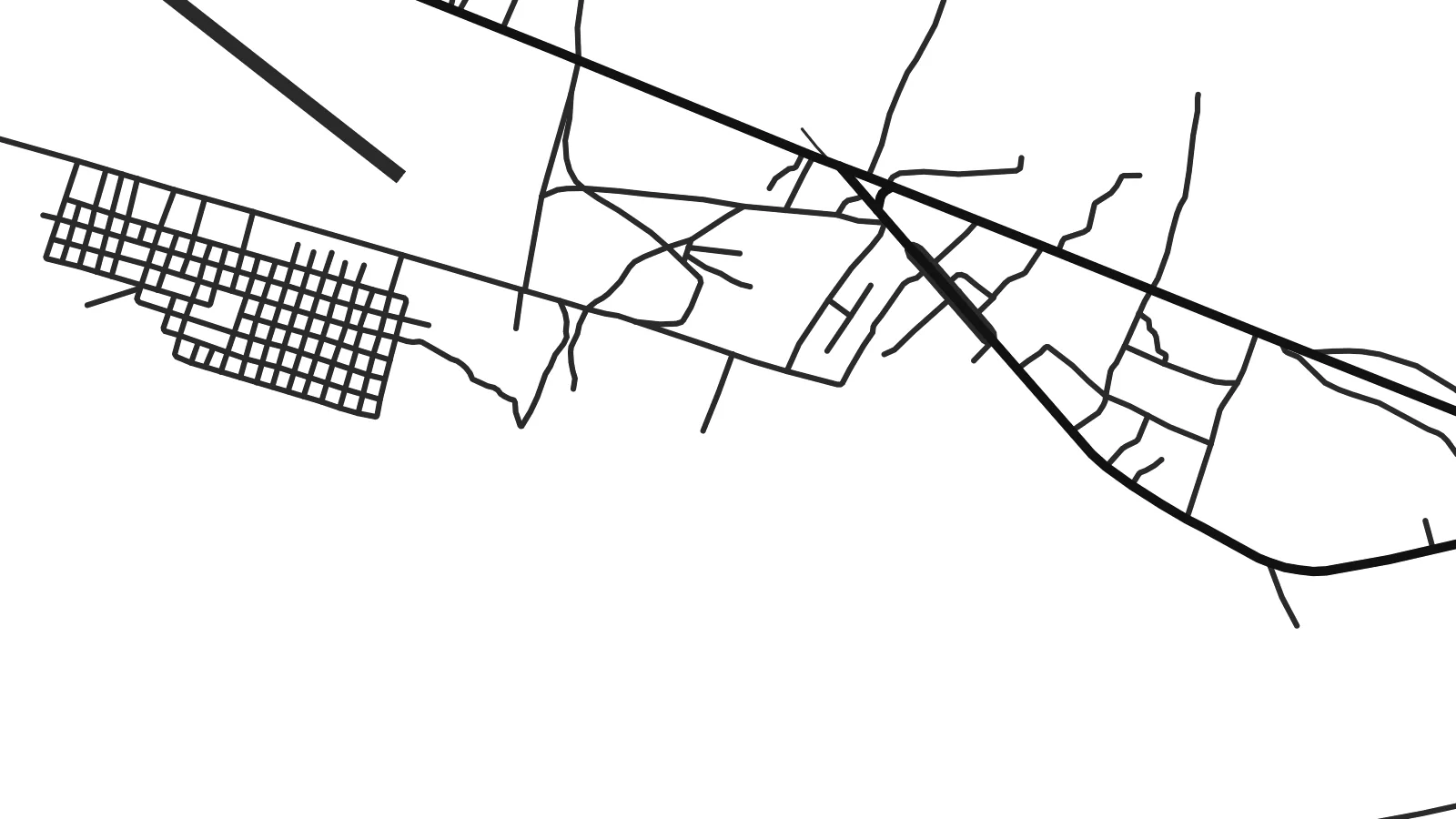
The older centre follows a deliberate layout of wide roads and spacious plots, set out when the town served as the base for diamond mining across the region.
Fakatino mape mukamuka · Angola
7.3664° S / 20.8156° E
A planned mining town in Angola's far northeast, with wide avenues and generous plots cut into green savanna near the Congolese border.


Taha e taone, lima e onoonoaga
Tapaki e taha puhala ke kitia ai ki luga he puipui. Kua tatai e totogi he tau puhala oti — pete he lolomi, poloka, po ke faila HD.
 Tau pikselo mooli · faila lolomi 24 × 36″
Maama mitaki ke lolomi
Ko e 100% e fahi mooli mai he faila lolomi. Ko e tau poster oti — pete kua lolomi, poloka, po ke utu hifo — kua taute ke he ha mautolu a tau tokoluga (server) ke he 300 DPI, hokotia ke he 7,200 × 10,800 piksela, ke maeke ai e tau ala ikiiki tote ke maaliali fakamitaki he lolomi 24 × 36″.
He Pā


Ko e mape
Dundo is the capital of Lunda Norte province, in the far northeast of Angola close to the border with the Democratic Republic of the Congo. It grew in the twentieth century as the headquarters of the diamond company Diamang, and on the map it still resembles a planned company town: broad roads, generous plots and an orderly layout set within green savanna and river valleys.
The town is also known for the Dundo Museum, established by Diamang in the 1930s, which holds an important collection of Chokwe art and ethnography. Beyond the planned centre, newer neighbourhoods have spread outward in less regular patterns, and the map shows the contrast clearly between the ordered original core and the more organic growth that surrounds it.
A Dundo map poster traces a town shaped by a single industry and by the landscape of the Lunda plateau. The lines of its avenues, the softer shapes of rivers and green spaces, and the spreading outer districts make for an open, airy composition. It suits anyone who has lived or worked in Lunda Norte and wants a lasting picture of the place.
The older centre follows a deliberate layout of wide roads and spacious plots, set out when the town served as the base for diamond mining across the region.
Watercourses and their green valleys run through and around the town, adding soft, curving lines to the map and breaking up the built-up area.
Around the planned core, more recent neighbourhoods have grown in irregular patterns, their looser streets showing how the town has expanded beyond its original design.
Taute ke ha hau
Lafi e aho, taha higoa po ke taha kupu haau, hiki e fakatino, lahi po ke tuaga.
Ko e kitiaaga nakai totogi kua tote e maaliali mo e fakamailoga vai. Ko e tau lolomi mo e tau faila HD kua taute ke he 300 DPI, hokotia ke he 7,200 × 10,800 px, nakai fai fakamailoga vai.
Ko e ha Dundo
Dundo holds meaning for families from Lunda Norte and for the many people who have come here to work in mining and trade. A map of its streets is a considered way to remember a posting, a childhood or a home far from the coast.
Change the title, subtitle and coordinates line to suit your story, for example with a year or a neighbourhood. Choose Classic black & white, Noir, Paper, Blueprint or Sand, and order either a $9 set of HD digital files or a printed matte poster.
Talaage e poster Dundo| Lahi he lolomi | Maama | Tau faila |
|---|---|---|
| 30 × 40 cm11.8 × 15.7″ | 3,543 × 4,724 px | PNG · PDF |
| 29.7 × 42 cm (A3)11.7 × 16.5″ | 3,508 × 4,961 px | PNG · PDF |
| 42 × 59.4 cm (A2)16.5 × 23.4″ | 4,961 × 7,016 px | PNG · PDF |
| 45.7 × 61 cm18 × 24″ | 5,400 × 7,200 px | PNG · PDF |
| 50 × 70 cm19.7 × 27.6″ | 5,906 × 8,268 px | PNG · PDF |
| 61 × 91.4 cm24 × 36″ | 7,200 × 10,800 px | PNG · PDF |
Ke fakatatai, ko e fakatino noa kua 900 px e laulahi, fai fakamailoga mo e mo e tau mata komipiuta ni. Ko e tau faila HD kua ato hoko ke he 8× e maama ke he tau faahi takitaha mo e lolomi mitaki he lahi katoa he fakatino.
Fifili e taha puhala i luga he kupega, ti fifili e Poster Lolomi — e lahi mo e, kaeke ke manako ai koe, taha poloka — po ke Tau Faila HD Fakaeletonika. Ko e fakaotiaga totogi ko e taha gahua ni, ti ko e kupega he hau a talaaga ka fakafou fakahaga i mua he fakaotiaga e totogi.
Kua lolomi ai ke he pepa mitaki 200 gsm matte he taha he tau lahi ono, mai he 30 × 40 cm ke hoko ke he 24 × 36″. Kamata e tau poster lolomi mai he $39, kua putoia ai e utaaga.
E. Fifili e poloka akau malolō ke he lanu uli, tea, akau oki mooli, po ke akau pouli. Kua fakalataha mo e sioga malolō nakai malepe ti kua mautali ke tautau. Kamata e tau poster poloka mai he $99, kua putoia ai e utaaga.
Nakai totogi e fakafano ke he motu 60+. Ko e fakatino taha kua lolomi he fenoga lolomi ha mautolu kua tata mo e tau motu 30+, kua hoko mai he tau aho gahua 3–7. Maeke ia koe ke kikite e tuaga mo e fakamuitua he lalo he Haku Tau Fakatonu. Ke he falu motu kua 2–5 e tau tapu, ti ka nakai fakafano a mautolu ki ai, to fakaha he api tupe ia ki mua he totogi.
Fakafano mai e taha ata ki a mautolu he loto he 14 e tau aho tali mai he hokoaga, ti to lolomi foki e mautolu nakai totogi po ke liu atu e totogi ki a koe.
E. He editor i luga he kupega nei, hikihiki e matakupu, e matakupu lalo mo e laini coordinates ke he taha mena kua manako a koe ki ai, ti fifili e puhala mo e lahi. Ko e tau talaaga lolomi, poloka mo e fakaeletonika oti kua fakaaoga tonu e hau a fakatino.
Ma e $9 ka moua e koe e tau faila PNG 300 DPI mo e PDF kua mautali ke lolomi he tau lahi ono oti, nakai fai fakamailoga vai, ke lolomi i fe mena. Nakai maopoopo agaia? Utu hifo fakamua e kitiaaga nakai totogi ne fai fakamailoga vai.
Tata mai
