Converging roads
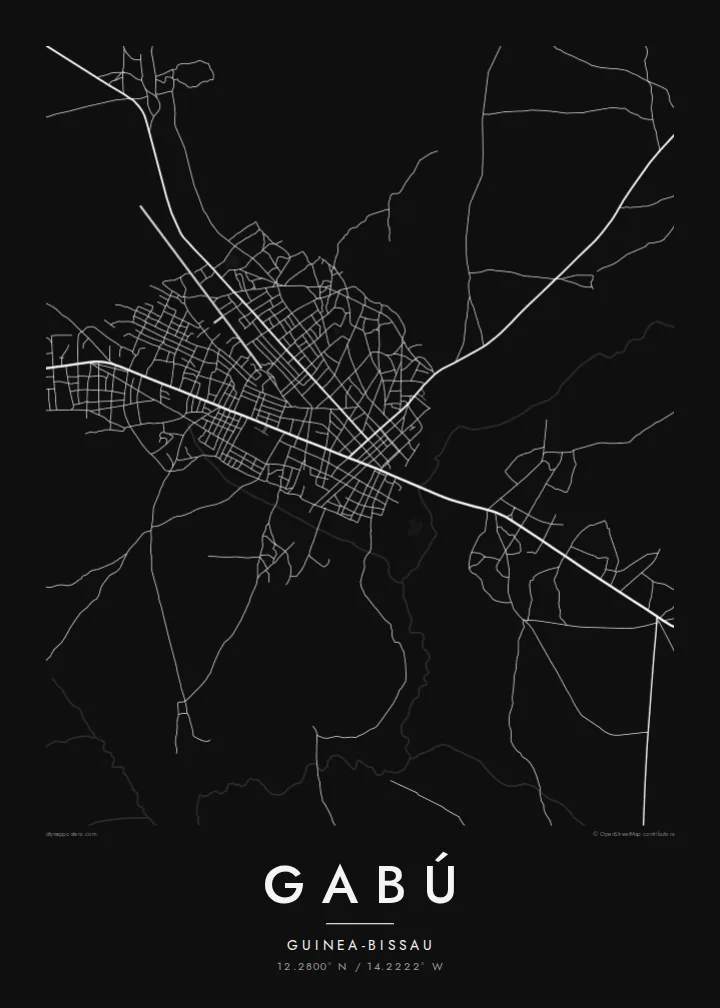
Main routes arrive from several directions and knot together near the centre, giving the map a clear focal point amid the looser pattern of lanes and compounds.
Fakatino mape mukamuka · Guinea-Bissau
12.2800° N / 14.2222° W
A savanna market town where roads from across eastern Guinea-Bissau meet in a loose, low-rise web of streets.



Taha e taone, lima e onoonoaga
Tapaki e taha puhala ke kitia ai ki luga he puipui. Kua tatai e totogi he tau puhala oti — pete he lolomi, poloka, po ke faila HD.
 Tau pikselo mooli · faila lolomi 24 × 36″
Maama mitaki ke lolomi
Ko e 100% e fahi mooli mai he faila lolomi. Ko e tau poster oti — pete kua lolomi, poloka, po ke utu hifo — kua taute ke he ha mautolu a tau tokoluga (server) ke he 300 DPI, hokotia ke he 7,200 × 10,800 piksela, ke maeke ai e tau ala ikiiki tote ke maaliali fakamitaki he lolomi 24 × 36″.
He Pā

Ko e mape
Gabú sits on the open plateau of eastern Guinea-Bissau, far from the Atlantic estuaries that shape most of the country. From above it reads as a spread of low compounds and unpaved lanes gathered around a few firmer roads, with farmland and scattered trees pressing in on every side. The town grows outward rather than upward, so its map is mostly texture.
The name carries weight. Gabú recalls Kaabu, the Mandinka state that ruled much of this region for centuries before colonial borders were drawn, and under Portuguese administration the town was known as Nova Lamego. Today it serves as the capital of its region and a trading stop on the routes toward Guinea and Senegal.
A Gabú map poster reduces all of this to line and space: the denser core, the roads leaving in several directions, the fine grain of residential blocks thinning into countryside. In black and white the unevenness of the street pattern becomes the subject, a record of a place that grew by use rather than by plan.
Main routes arrive from several directions and knot together near the centre, giving the map a clear focal point amid the looser pattern of lanes and compounds.
Residential areas appear as a fine, irregular mesh of short paths and plots, the characteristic texture of a West African market town seen from above.
There is no hard boundary. The built area fades gradually into fields and savanna, so the outer margin of the poster shows streets dissolving into open ground.
Taute ke ha hau
Lafi e aho, taha higoa po ke taha kupu haau, hiki e fakatino, lahi po ke tuaga.
Ko e kitiaaga nakai totogi kua tote e maaliali mo e fakamailoga vai. Ko e tau lolomi mo e tau faila HD kua taute ke he 300 DPI, hokotia ke he 7,200 × 10,800 px, nakai fai fakamailoga vai.
Ko e ha Gabú
For people with family in eastern Guinea-Bissau, or anyone who has worked or travelled here, Gabú is rarely found on a wall. A map poster gives the town the same quiet dignity usually reserved for capitals, and it makes a considered gift.
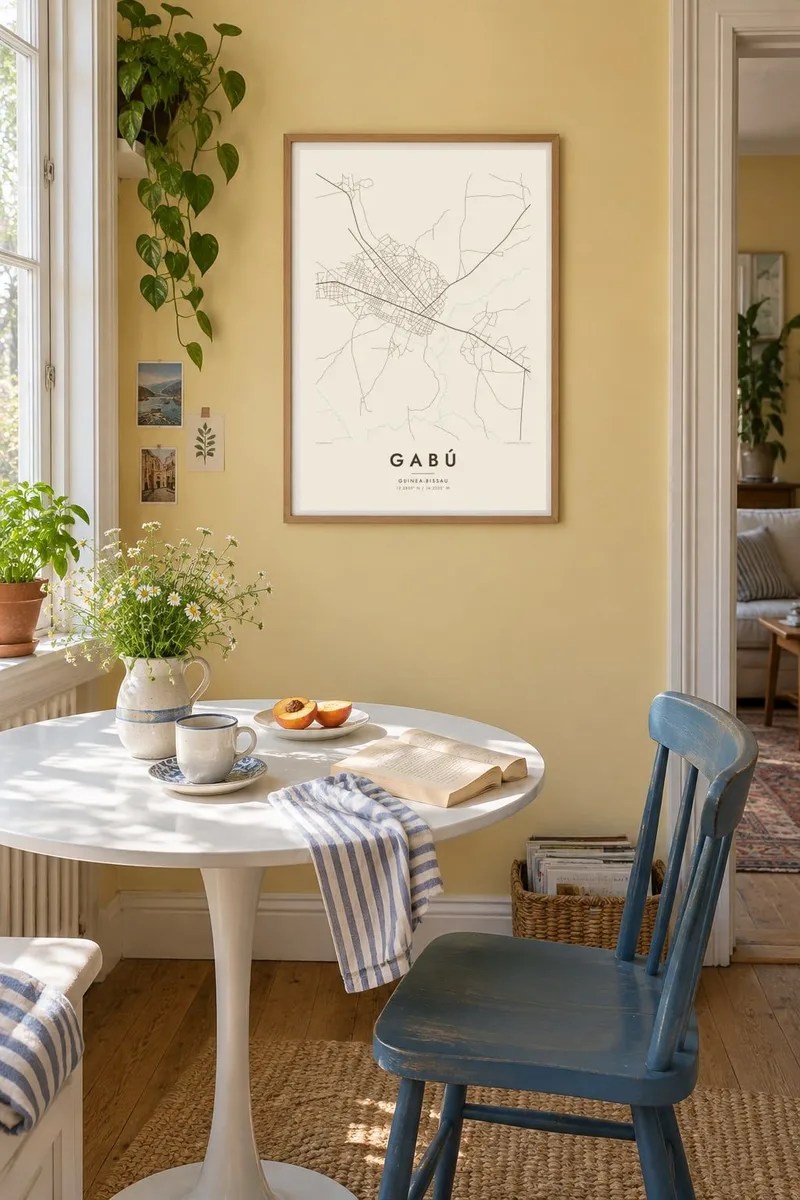
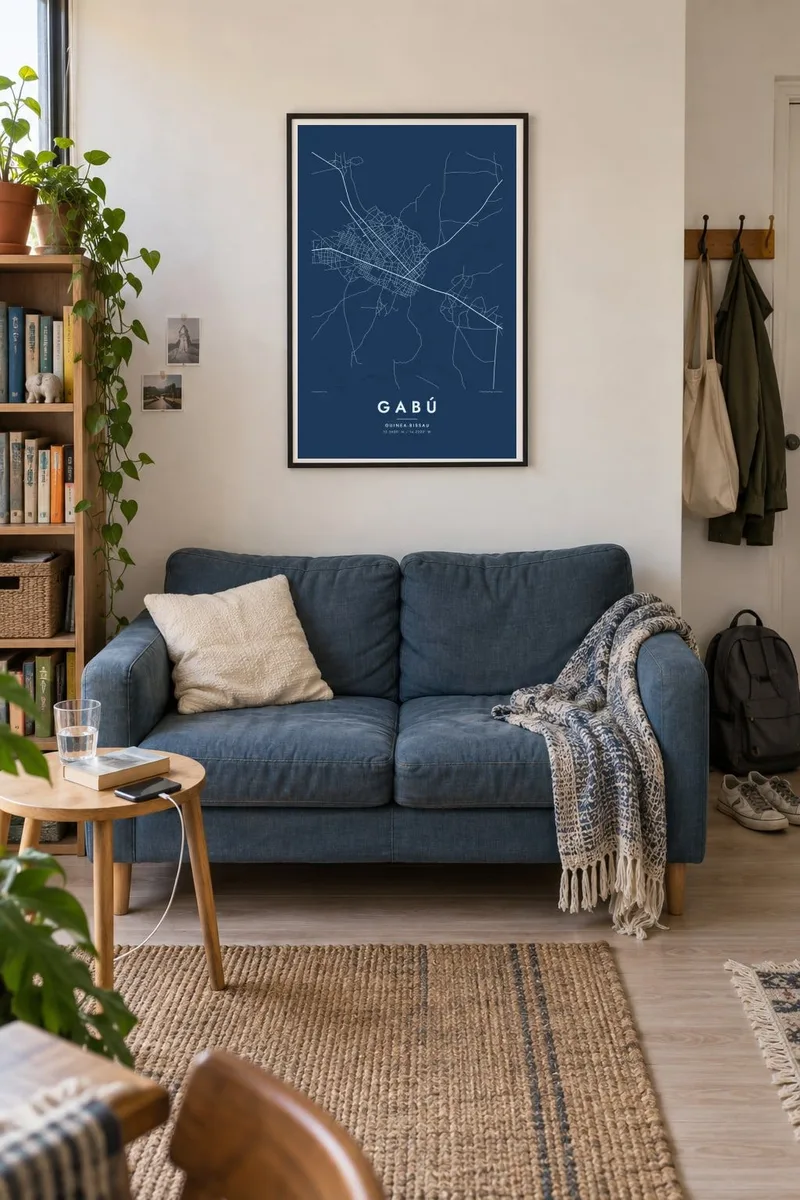
You can set your own title, add a subtitle such as a date or a family name, and keep or edit the coordinates line. Choose from Classic black & white, Noir, Paper, Blueprint or Sand, then download the HD files for $9 or order a print.
Talaage e poster Gabú| Lahi he lolomi | Maama | Tau faila |
|---|---|---|
| 30 × 40 cm11.8 × 15.7″ | 3,543 × 4,724 px | PNG · PDF |
| 29.7 × 42 cm (A3)11.7 × 16.5″ | 3,508 × 4,961 px | PNG · PDF |
| 42 × 59.4 cm (A2)16.5 × 23.4″ | 4,961 × 7,016 px | PNG · PDF |
| 45.7 × 61 cm18 × 24″ | 5,400 × 7,200 px | PNG · PDF |
| 50 × 70 cm19.7 × 27.6″ | 5,906 × 8,268 px | PNG · PDF |
| 61 × 91.4 cm24 × 36″ | 7,200 × 10,800 px | PNG · PDF |
Ke fakatatai, ko e fakatino noa kua 900 px e laulahi, fai fakamailoga mo e mo e tau mata komipiuta ni. Ko e tau faila HD kua ato hoko ke he 8× e maama ke he tau faahi takitaha mo e lolomi mitaki he lahi katoa he fakatino.
Fifili e taha puhala i luga he kupega, ti fifili e Poster Lolomi — e lahi mo e, kaeke ke manako ai koe, taha poloka — po ke Tau Faila HD Fakaeletonika. Ko e fakaotiaga totogi ko e taha gahua ni, ti ko e kupega he hau a talaaga ka fakafou fakahaga i mua he fakaotiaga e totogi.
Kua lolomi ai ke he pepa mitaki 200 gsm matte he taha he tau lahi ono, mai he 30 × 40 cm ke hoko ke he 24 × 36″. Kamata e tau poster lolomi mai he $39, kua putoia ai e utaaga.
E. Fifili e poloka akau malolō ke he lanu uli, tea, akau oki mooli, po ke akau pouli. Kua fakalataha mo e sioga malolō nakai malepe ti kua mautali ke tautau. Kamata e tau poster poloka mai he $99, kua putoia ai e utaaga.
Nakai totogi e fakafano ke he motu 60+. Ko e fakatino taha kua lolomi he fenoga lolomi ha mautolu kua tata mo e tau motu 30+, kua hoko mai he tau aho gahua 3–7. Maeke ia koe ke kikite e tuaga mo e fakamuitua he lalo he Haku Tau Fakatonu. Ke he falu motu kua 2–5 e tau tapu, ti ka nakai fakafano a mautolu ki ai, to fakaha he api tupe ia ki mua he totogi.
Fakafano mai e taha ata ki a mautolu he loto he 14 e tau aho tali mai he hokoaga, ti to lolomi foki e mautolu nakai totogi po ke liu atu e totogi ki a koe.
E. He editor i luga he kupega nei, hikihiki e matakupu, e matakupu lalo mo e laini coordinates ke he taha mena kua manako a koe ki ai, ti fifili e puhala mo e lahi. Ko e tau talaaga lolomi, poloka mo e fakaeletonika oti kua fakaaoga tonu e hau a fakatino.
Ma e $9 ka moua e koe e tau faila PNG 300 DPI mo e PDF kua mautali ke lolomi he tau lahi ono oti, nakai fai fakamailoga vai, ke lolomi i fe mena. Nakai maopoopo agaia? Utu hifo fakamua e kitiaaga nakai totogi ne fai fakamailoga vai.
