Oze River border
The river on the western edge divides Ōtake from Iwakuni. It forms both a natural and a prefectural boundary on the map.
Fakatino mape mukamuka · Japan
34.2075° N / 132.2206° E
A narrow industrial city on the Seto Inland Sea, squeezed between wooded hills and a reclaimed waterfront.


Taha e taone, lima e onoonoaga
Tapaki e taha puhala ke kitia ai ki luga he puipui. Kua tatai e totogi he tau puhala oti — pete he lolomi, poloka, po ke faila HD.
 Tau pikselo mooli · faila lolomi 24 × 36″
Maama mitaki ke lolomi
Ko e 100% e fahi mooli mai he faila lolomi. Ko e tau poster oti — pete kua lolomi, poloka, po ke utu hifo — kua taute ke he ha mautolu a tau tokoluga (server) ke he 300 DPI, hokotia ke he 7,200 × 10,800 piksela, ke maeke ai e tau ala ikiiki tote ke maaliali fakamitaki he lolomi 24 × 36″.
He Pā


Ko e mape
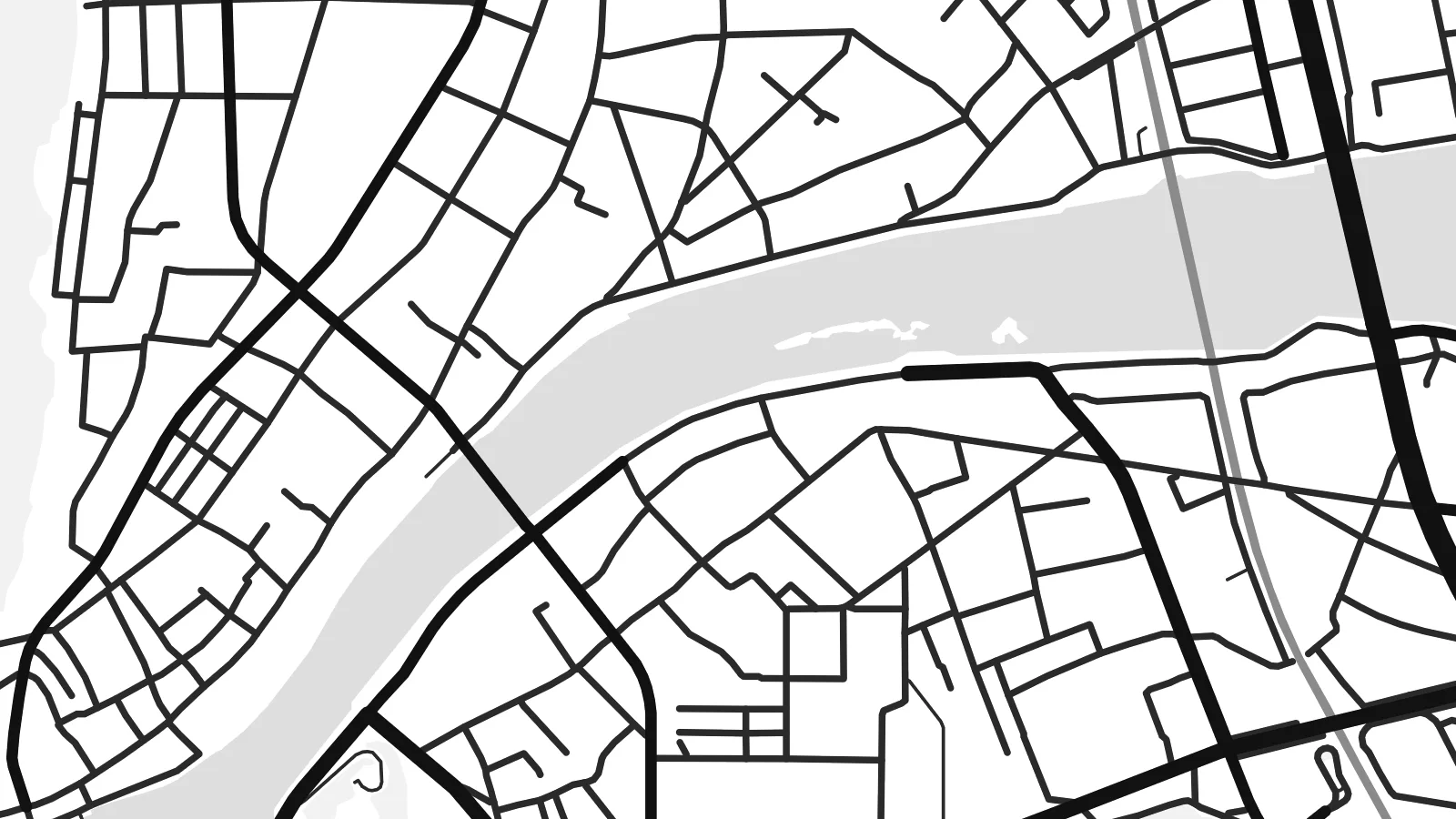
Ōtake is the westernmost city of Hiroshima Prefecture, on the coast of the Seto Inland Sea. On a map it forms a thin strip of settlement between steep forested hills and the sea. The Oze River marks its western edge and the border with Iwakuni in Yamaguchi Prefecture. Rail lines and the coastal road run close to the shore, with residential streets packed in behind them.
Much of the waterfront is reclaimed land occupied by a large petrochemical and industrial complex. Its long rectangular plots and straight quays give the coast a hard geometric edge. Inland, the hills rise quickly, and small valleys hold farms and hamlets. The contrast between the industrial shoreline and the green uplands is the defining feature of the city from above.
An Ōtake map poster is a study in contrasts: large industrial shapes along the water, a fine network of homes and small streets, and wooded slopes above. It suits people who work in the plants, families who have lived here for generations and anyone who knows this stretch of the Inland Sea coast between Hiroshima and Iwakuni.
The river on the western edge divides Ōtake from Iwakuni. It forms both a natural and a prefectural boundary on the map.
Straight quays and large industrial plots occupy land built out into the Inland Sea, forming a hard, geometric waterfront.
Behind the narrow coastal strip, steep hills and small valleys hold scattered farms and settlements in a much looser pattern.
Taute ke ha hau
Lafi e aho, taha higoa po ke taha kupu haau, hiki e fakatino, lahi po ke tuaga.
Ko e kitiaaga nakai totogi kua tote e maaliali mo e fakamailoga vai. Ko e tau lolomi mo e tau faila HD kua taute ke he 300 DPI, hokotia ke he 7,200 × 10,800 px, nakai fai fakamailoga vai.
Ko e ha Ōtake
The map suits people who know the town from work or family, and anyone drawn to the look of coastal industrial Japan. The strong shapes along the water make a bold graphic print, especially in darker styles.
Personalise the title, subtitle and coordinates line with a name, a date or a short dedication. Choose Classic black & white, Noir, Paper, Blueprint or Sand. HD files come in six print sizes, each as a PNG and a PDF.
Talaage e poster Ōtake| Lahi he lolomi | Maama | Tau faila |
|---|---|---|
| 30 × 40 cm11.8 × 15.7″ | 3,543 × 4,724 px | PNG · PDF |
| 29.7 × 42 cm (A3)11.7 × 16.5″ | 3,508 × 4,961 px | PNG · PDF |
| 42 × 59.4 cm (A2)16.5 × 23.4″ | 4,961 × 7,016 px | PNG · PDF |
| 45.7 × 61 cm18 × 24″ | 5,400 × 7,200 px | PNG · PDF |
| 50 × 70 cm19.7 × 27.6″ | 5,906 × 8,268 px | PNG · PDF |
| 61 × 91.4 cm24 × 36″ | 7,200 × 10,800 px | PNG · PDF |
Ke fakatatai, ko e fakatino noa kua 900 px e laulahi, fai fakamailoga mo e mo e tau mata komipiuta ni. Ko e tau faila HD kua ato hoko ke he 8× e maama ke he tau faahi takitaha mo e lolomi mitaki he lahi katoa he fakatino.
Fifili e taha puhala i luga he kupega, ti fifili e Poster Lolomi — e lahi mo e, kaeke ke manako ai koe, taha poloka — po ke Tau Faila HD Fakaeletonika. Ko e fakaotiaga totogi ko e taha gahua ni, ti ko e kupega he hau a talaaga ka fakafou fakahaga i mua he fakaotiaga e totogi.
Kua lolomi ai ke he pepa mitaki 200 gsm matte he taha he tau lahi ono, mai he 30 × 40 cm ke hoko ke he 24 × 36″. Kamata e tau poster lolomi mai he $39, kua putoia ai e utaaga.
E. Fifili e poloka akau malolō ke he lanu uli, tea, akau oki mooli, po ke akau pouli. Kua fakalataha mo e sioga malolō nakai malepe ti kua mautali ke tautau. Kamata e tau poster poloka mai he $99, kua putoia ai e utaaga.
Nakai totogi e fakafano ke he motu 60+. Ko e fakatino taha kua lolomi he fenoga lolomi ha mautolu kua tata mo e tau motu 30+, kua hoko mai he tau aho gahua 3–7. Maeke ia koe ke kikite e tuaga mo e fakamuitua he lalo he Haku Tau Fakatonu. Ke he falu motu kua 2–5 e tau tapu, ti ka nakai fakafano a mautolu ki ai, to fakaha he api tupe ia ki mua he totogi.
Fakafano mai e taha ata ki a mautolu he loto he 14 e tau aho tali mai he hokoaga, ti to lolomi foki e mautolu nakai totogi po ke liu atu e totogi ki a koe.
E. He editor i luga he kupega nei, hikihiki e matakupu, e matakupu lalo mo e laini coordinates ke he taha mena kua manako a koe ki ai, ti fifili e puhala mo e lahi. Ko e tau talaaga lolomi, poloka mo e fakaeletonika oti kua fakaaoga tonu e hau a fakatino.
Ma e $9 ka moua e koe e tau faila PNG 300 DPI mo e PDF kua mautali ke lolomi he tau lahi ono oti, nakai fai fakamailoga vai, ke lolomi i fe mena. Nakai maopoopo agaia? Utu hifo fakamua e kitiaaga nakai totogi ne fai fakamailoga vai.
Tata mai
