Bender Fortress
The Ottoman-era stronghold sits on the riverbank at the northern edge of the centre. Its grounds form a distinctive enclosed shape where the street grid stops.
Posta faʻafanua faigofie · Moldova
46.8316° N / 29.4767° E
A fortress town on the right bank of the Dniester, its grid of low streets facing the bridges east to Tiraspol.


Tasi le aai, lagona e lima
Tapi se sitaili e vaai ai i luga o le puipui. E tutusa uma le tau o sitaili — pe lolomiina, faapipiiina, pe avea ma faila HD.
 Pika Moni · Faila Lolomi 24 × 36″
Manino mo le lolomi
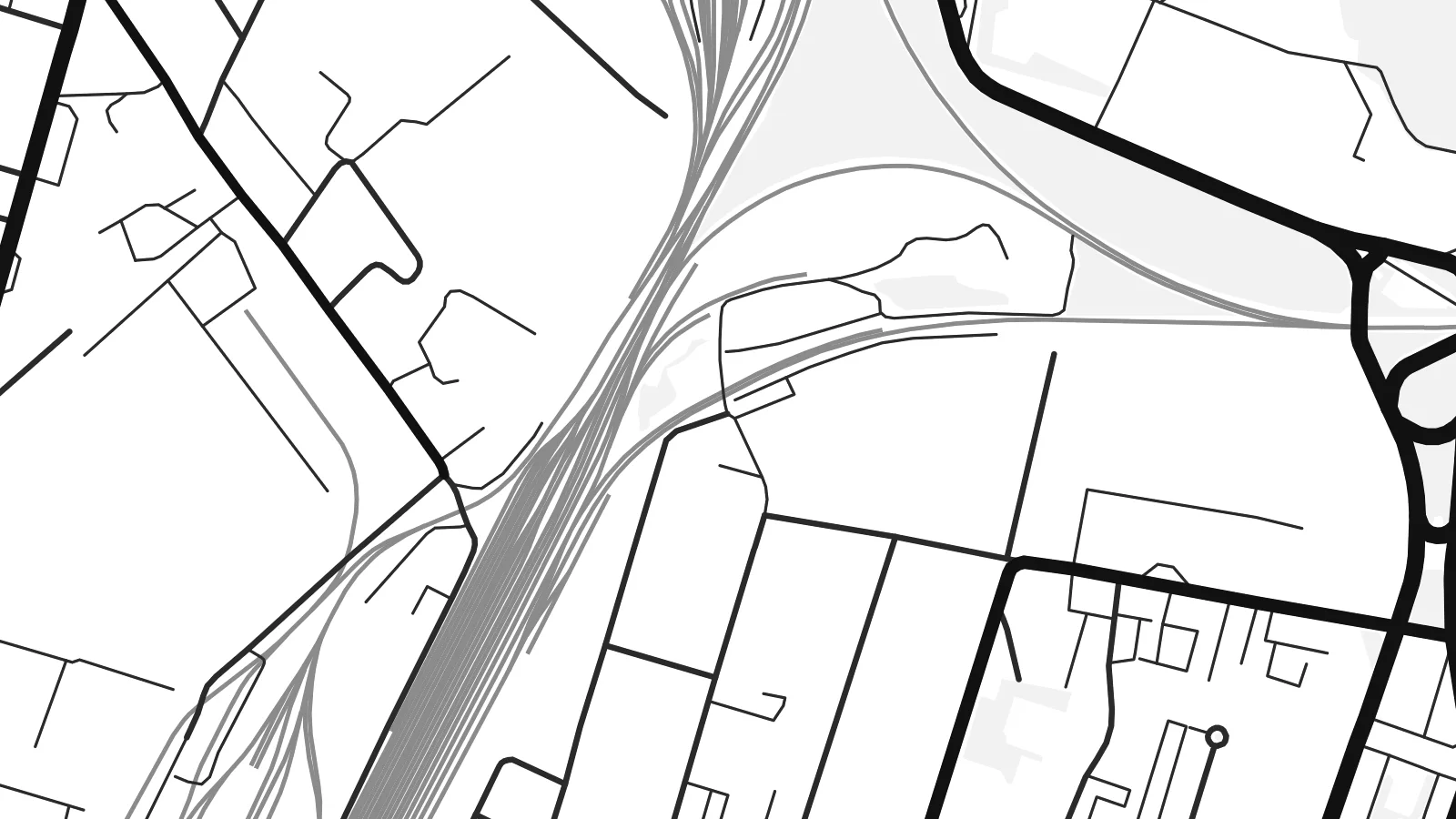
O se vaega atoa (100%) lenei mai le faila lolomi moni. O posita uma — pe lolomiina, faapipiiina pe download mai — e faia i luga o a matou server i le 300 DPI, e oo atu i le 7,200 × 10,800 pika, ina ia manino pea auala laiti i luga o se lolomiga 24 × 36″.
I luga o le puipui


Le faʻafanua
Bender, also known as Tighina, sits on the right bank of the Dniester River in eastern Moldova. On a map the river is its defining edge. It curves along the east side of the city, with the fortress on its bank north of the centre and road and rail bridges crossing toward Tiraspol. Behind the waterfront, the streets form a fairly regular grid of low-rise blocks.
The Bender Fortress was rebuilt by the Ottomans in the sixteenth century and is one of the best-preserved in the region. After his defeat at Poltava in 1709, King Charles XII of Sweden took refuge nearby for several years. Since the early 1990s the city has been administered by the unrecognised Transnistrian authorities, even though it lies on the western bank.
A Bender map poster presents that layered history through clean lines alone: the fortress grounds beside the river, the grid of the old town, the curve of the Dniester and the bridges linking the city with the opposite bank. It suits anyone with family ties to the city or an interest in its complicated past.
The Ottoman-era stronghold sits on the riverbank at the northern edge of the centre. Its grounds form a distinctive enclosed shape where the street grid stops.
Road and rail bridges span the Dniester east of the city. These strong straight lines across the water connect Bender with Tiraspol on the far bank.
Behind the river, the central streets follow a regular grid of long parallel avenues and cross streets. They give the core of the poster a calm, orderly rhythm.
Fai mo oe
Faʻaopoopo se aso, se igoa po o sau lava upu, sui le sitaili, lapoʻa po o le itu.
O le preview e leai se totogi e maualalo le resolution ma iai se watermark. O lolomi ma faila HD e faia i le 300 DPI, e oo atu i le 7,200 × 10,800 px, e aunoa ma se watermark.
Aisea Bender
Many people born in Bender now live in Chișinău, Moscow, Germany or Israel, and a map of the city can be a quiet link to a place that has changed a great deal. The river, the fortress and the familiar streets are clear even without names.
Title it Bender, Tighina or anything else that feels right, add a subtitle, a date and the coordinates, and choose Classic black & white, Noir, Paper, Blueprint or Sand. The HD files cost $9, and a free watermarked preview is available first.
Faatau le posita Bender| Lapoʻa lolomi | Manino | Faila |
|---|---|---|
| 30 × 40 cm (11.8 × 15.7″) | 3,543 × 4,724 px | PNG · PDF |
| 29.7 × 42 cm (A3, 11.7 × 16.5″) | 3,508 × 4,961 px | PNG · PDF |
| 42 × 59.4 cm (A2, 16.5 × 23.4″) | 4,961 × 7,016 px | PNG · PDF |
| 45.7 × 61 cm (18 × 24″) | 5,400 × 7,200 px | PNG · PDF |
| 50 × 70 cm (19.7 × 27.6″) | 5,906 × 8,268 px | PNG · PDF |
| 61 × 91.4 cm (24 × 36″) | 7,200 × 10,800 px | PNG · PDF |
Ae faʻatusatusa, o le faʻataʻitaʻiga e leai se totogi e 900 px le lautele, e iai le faʻailoga vai ma e mo mata. O faila HD e oʻo atu i le 8× le manino i itu taʻitasi ma e lolomi manino i le lapoʻa atoa o le posta.
Filifili se sitaili i le pito i luga o le itulau, ona filifili lea o le Posita Lolomi — se lapopoa ma, afai e te fiafia, se faavaa — po o Faila HD Numera. E na o le tasi laasaga o le Checkout, ma o le a fesuia'i lou itulau o oka i le taimi lava e mae'a ai le totogi.
E lolomiina i luga o pepa matte maualuga le tulaga e 200 gsm, i se tasi o lapopoa e ono, mai le 30 × 40 cm i le 24 × 36″. E amata le tau o posita lolomi mai le {printFrom}, aofia ai le auina atu.
Ioe. Filifili se faavaa laau malosi i le lanu uliuli, sina, oak masani, po o le laau pogisa. E aofia ai se tioata e le gau ma ua saunia e tautau i luga. E amata le tau o posita faavaa mai le {framedFrom}, aofia ai le auina atu.
E leai se totogi mo le uta i le lalolagi atoa. O poster ta'itasi e lolomi e le paaga lolomi e latalata mai i matou i atunuu e 30+, ma e masani ona taunuu i aso faigaluega e 3–7. E mafai ona e mulimuli i le tulaga ma le tracking i le "Aʻu Oka". O nisi atunuu e 2–5 vaiaso, ma i atunuu matou te lei tuuina atu ai, e taʻu atu e le saite iā te oe ae e te leʻi totogiina.
Auina mai se ata i totonu o le 14 aso talu ona taunuu, ma o le a matou toe lolomiina e leai se totogi po o le toe faafoi atu lau tupe.
Ioe. I totonu o le editor i lenei itulau, suia le ulutala, le ulutala laititi ma le laina o coordinates i soo se mea e te fiafia i ai, ma filifili se sitaili ma le lapopoa. O oka lolomi, faavaa ma numera e faaaoga uma lava lau mamanu.
Mo le $9 e te maua ai faila PNG 300 DPI ma PDF ua saunia mo le lolomi i lapopoa uma e ono, e aunoa ma se watermark, e mafai ona lolomi i soo se mea. Le mautinoa lava? Download muamua se preview e leai se totogi ma le watermark.
Latalata ane
