Plaza de Armas grid
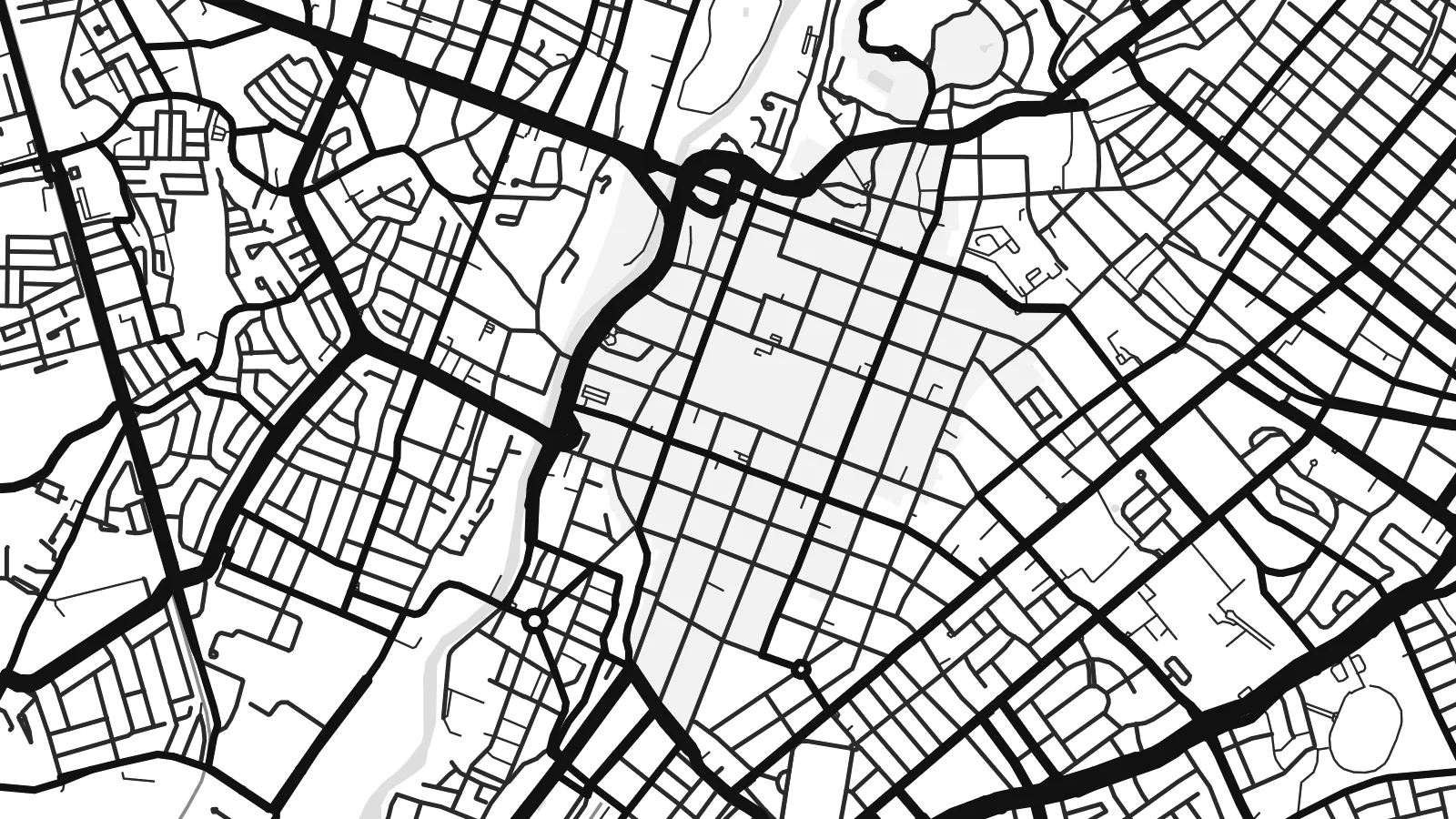
The colonial centre is a neat chessboard of blocks around the main square. It is one of the clearest Spanish plans in the Andes and is built largely of white sillar.
Fakatino mape mukamuka · Peru
16.3990° S / 71.5375° W
A colonial grid of white volcanic stone beside the Chili River, overlooked by the cone of El Misti.


Taha e taone, lima e onoonoaga
Tapaki e taha puhala ke kitia ai ki luga he puipui. Kua tatai e totogi he tau puhala oti — pete he lolomi, poloka, po ke faila HD.
 Tau pikselo mooli · faila lolomi 24 × 36″
Maama mitaki ke lolomi
Ko e 100% e fahi mooli mai he faila lolomi. Ko e tau poster oti — pete kua lolomi, poloka, po ke utu hifo — kua taute ke he ha mautolu a tau tokoluga (server) ke he 300 DPI, hokotia ke he 7,200 × 10,800 piksela, ke maeke ai e tau ala ikiiki tote ke maaliali fakamitaki he lolomi 24 × 36″.
He Pā


Ko e mape
Arequipa lies in a high Andean valley at about 2,300 metres. It is surrounded by volcanoes: El Misti, Chachani and Pichu Pichu. The Chili River runs through the city in a green, farmed ravine, and the historic centre sits on its eastern bank. The terrain climbs toward the mountains on almost every side.
The centre is a precise Spanish grid built around the Plaza de Armas. Its churches and houses are made from sillar, a pale volcanic stone that gives Arequipa its nickname, the White City. The historic centre has been on the UNESCO World Heritage list since 2000. An Arequipa map poster shows the rectangular blocks clearly, especially where they meet the curve of the river.
The Monastery of Santa Catalina fills an entire walled block in the centre and functions almost as a small town of its own. Across the river, Yanahuara offers well-known views of El Misti. Beyond these older areas, the modern city spreads up the lower slopes in less regular patterns, following the dry ravines that run down from the volcanoes.
The colonial centre is a neat chessboard of blocks around the main square. It is one of the clearest Spanish plans in the Andes and is built largely of white sillar.
The river crosses the city in a narrow valley of fields and terraces. Several bridges connect the historic centre with Yanahuara and the western districts.
The monastery covers an entire city block within its own walls. On the map it is a solid rectangle inside the grid.
Taute ke ha hau
Lafi e aho, taha higoa po ke taha kupu haau, hiki e fakatino, lahi po ke tuaga.
Ko e kitiaaga nakai totogi kua tote e maaliali mo e fakamailoga vai. Ko e tau lolomi mo e tau faila HD kua taute ke he 300 DPI, hokotia ke he 7,200 × 10,800 px, nakai fai fakamailoga vai.
Ko e ha Arequipa
Arequipa is a city people keep with them: the white stone, the light and the volcano at the end of the street. A map of its grid and river is a restrained souvenir of a place that feels vivid in memory.
Add a title such as La Ciudad Blanca, a date or the coordinates, and pick Classic black & white, Noir, Paper, Blueprint or Sand. Sand suits the pale stone well. HD files cost $9, with printed options available.
Talaage e poster Arequipa| Lahi he lolomi | Maama | Tau faila |
|---|---|---|
| 30 × 40 cm11.8 × 15.7″ | 3,543 × 4,724 px | PNG · PDF |
| 29.7 × 42 cm (A3)11.7 × 16.5″ | 3,508 × 4,961 px | PNG · PDF |
| 42 × 59.4 cm (A2)16.5 × 23.4″ | 4,961 × 7,016 px | PNG · PDF |
| 45.7 × 61 cm18 × 24″ | 5,400 × 7,200 px | PNG · PDF |
| 50 × 70 cm19.7 × 27.6″ | 5,906 × 8,268 px | PNG · PDF |
| 61 × 91.4 cm24 × 36″ | 7,200 × 10,800 px | PNG · PDF |
Ke fakatatai, ko e fakatino noa kua 900 px e laulahi, fai fakamailoga mo e mo e tau mata komipiuta ni. Ko e tau faila HD kua ato hoko ke he 8× e maama ke he tau faahi takitaha mo e lolomi mitaki he lahi katoa he fakatino.
Fifili e taha puhala i luga he kupega, ti fifili e Poster Lolomi — e lahi mo e, kaeke ke manako ai koe, taha poloka — po ke Tau Faila HD Fakaeletonika. Ko e fakaotiaga totogi ko e taha gahua ni, ti ko e kupega he hau a talaaga ka fakafou fakahaga i mua he fakaotiaga e totogi.
Kua lolomi ai ke he pepa mitaki 200 gsm matte he taha he tau lahi ono, mai he 30 × 40 cm ke hoko ke he 24 × 36″. Kamata e tau poster lolomi mai he $39, kua putoia ai e utaaga.
E. Fifili e poloka akau malolō ke he lanu uli, tea, akau oki mooli, po ke akau pouli. Kua fakalataha mo e sioga malolō nakai malepe ti kua mautali ke tautau. Kamata e tau poster poloka mai he $99, kua putoia ai e utaaga.
Nakai totogi e fakafano ke he motu 60+. Ko e fakatino taha kua lolomi he fenoga lolomi ha mautolu kua tata mo e tau motu 30+, kua hoko mai he tau aho gahua 3–7. Maeke ia koe ke kikite e tuaga mo e fakamuitua he lalo he Haku Tau Fakatonu. Ke he falu motu kua 2–5 e tau tapu, ti ka nakai fakafano a mautolu ki ai, to fakaha he api tupe ia ki mua he totogi.
Fakafano mai e taha ata ki a mautolu he loto he 14 e tau aho tali mai he hokoaga, ti to lolomi foki e mautolu nakai totogi po ke liu atu e totogi ki a koe.
E. He editor i luga he kupega nei, hikihiki e matakupu, e matakupu lalo mo e laini coordinates ke he taha mena kua manako a koe ki ai, ti fifili e puhala mo e lahi. Ko e tau talaaga lolomi, poloka mo e fakaeletonika oti kua fakaaoga tonu e hau a fakatino.
Ma e $9 ka moua e koe e tau faila PNG 300 DPI mo e PDF kua mautali ke lolomi he tau lahi ono oti, nakai fai fakamailoga vai, ke lolomi i fe mena. Nakai maopoopo agaia? Utu hifo fakamua e kitiaaga nakai totogi ne fai fakamailoga vai.
Tata mai
