The Walled City
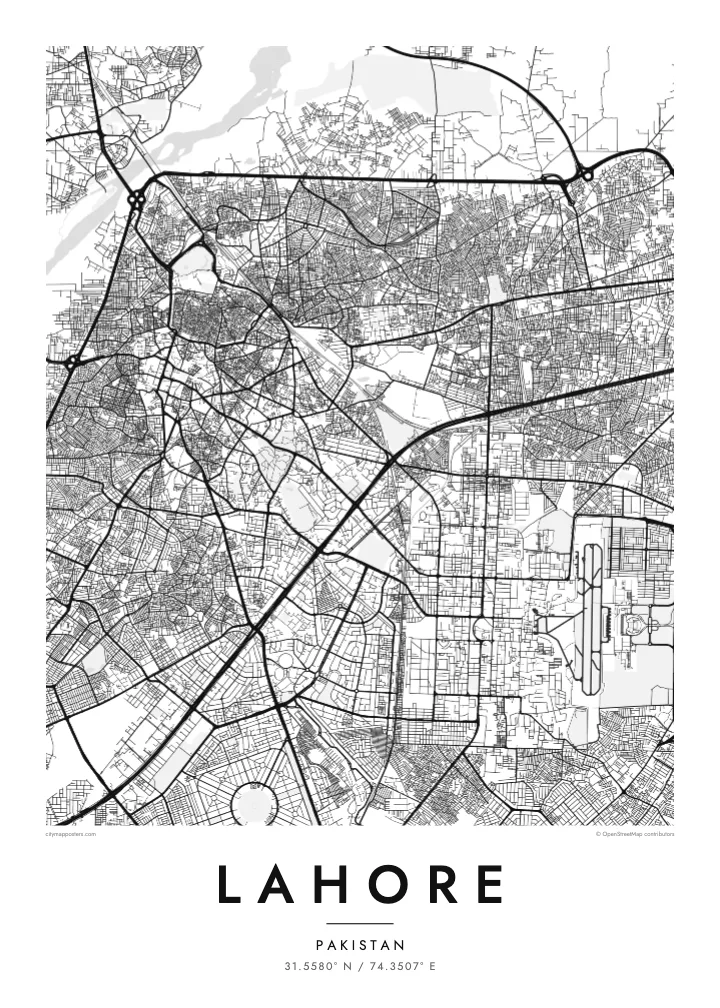
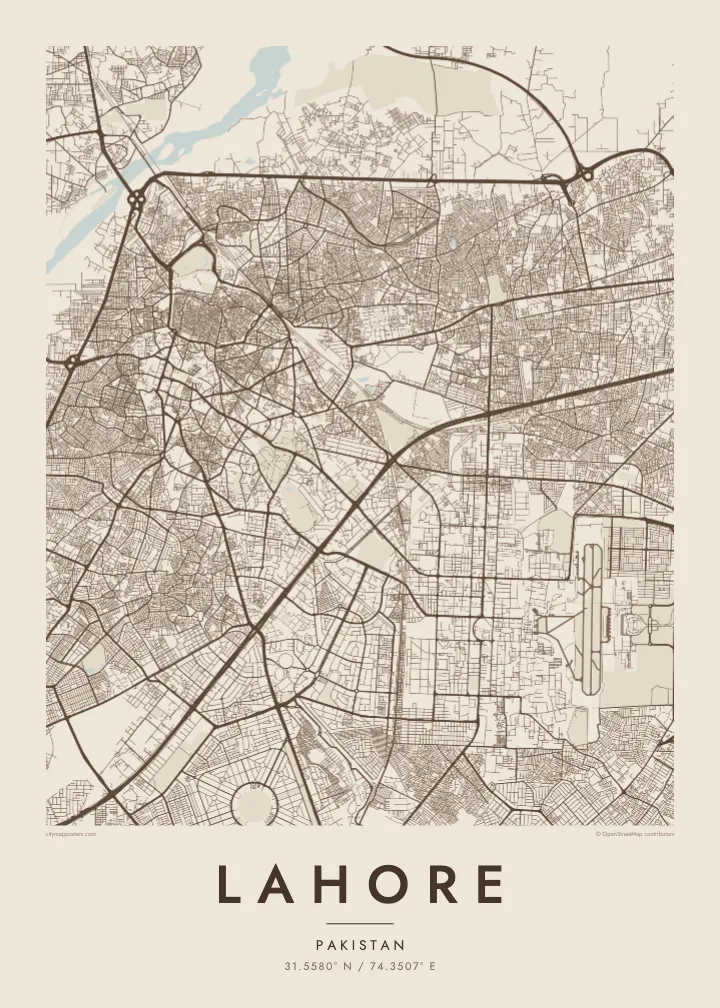
A compact area of narrow lanes and bazaars, still marked by historic gates such as Delhi Gate and Lohari Gate, forming the densest texture anywhere on the map.
Fakatino mape mukamuka · Pakistan
31.5580° N / 74.3507° E
A walled old city near the Ravi, surrounded by colonial avenues, Mughal gardens and a long tree-lined canal
Taha e taone, lima e onoonoaga
Tapaki e taha puhala ke kitia ai ki luga he puipui. Kua tatai e totogi he tau puhala oti — pete he lolomi, poloka, po ke faila HD.
 Tau pikselo mooli · faila lolomi 24 × 36″
Maama mitaki ke lolomi
Ko e 100% e fahi mooli mai he faila lolomi. Ko e tau poster oti — pete kua lolomi, poloka, po ke utu hifo — kua taute ke he ha mautolu a tau tokoluga (server) ke he 300 DPI, hokotia ke he 7,200 × 10,800 piksela, ke maeke ai e tau ala ikiiki tote ke maaliali fakamitaki he lolomi 24 × 36″.
He Pā


Ko e mape
Lahore’s old city sits close to the Ravi River in the north-west, a dense cluster of lanes once enclosed by walls and still entered through historic gates. The Lahore Fort and the Badshahi Mosque occupy its north-western corner, their large rectangular courtyards clearly visible against the tight grain of the streets around them. From this core, the rest of the city spreads south and east in widening layers.
The colonial-era districts brought wide avenues and open spaces, with Mall Road running south-east past government buildings and the Lahore Museum toward the cantonment. The Lahore Canal cuts diagonally across the city, a long line flanked by trees and roads. Further east lie the Shalimar Gardens, a Mughal garden laid out in terraces, and to the south the planned grids of newer housing schemes.
The Lahore Fort and the Shalimar Gardens were inscribed together on the UNESCO World Heritage List in 1981. Nearby, Minar-e-Pakistan in Greater Iqbal Park marks the place where the Lahore Resolution was passed in 1940. A Lahore map poster brings together the Mughal, colonial and modern layers of the city in one clear plan.
A compact area of narrow lanes and bazaars, still marked by historic gates such as Delhi Gate and Lohari Gate, forming the densest texture anywhere on the map.
The canal crosses the city in a long, gentle line, bordered by roads and trees, and gives the plan a continuous thread running from one edge of the frame to the other.
The Fort, the Badshahi Mosque and the Shalimar Gardens appear as large geometric enclosures, their straight walls and terraces standing apart from the organic street pattern around them.
Taute ke ha hau
Lafi e aho, taha higoa po ke taha kupu haau, hiki e fakatino, lahi po ke tuaga.
Ko e kitiaaga nakai totogi kua tote e maaliali mo e fakamailoga vai. Ko e tau lolomi mo e tau faila HD kua taute ke he 300 DPI, hokotia ke he 7,200 × 10,800 px, nakai fai fakamailoga vai.
Ko e ha Lahore
Lahore is a city people speak about with deep attachment, and a map poster lets that feeling sit quietly on a wall. It suits families with roots in the old city, graduates of its colleges and anyone who remembers evenings near the fort.
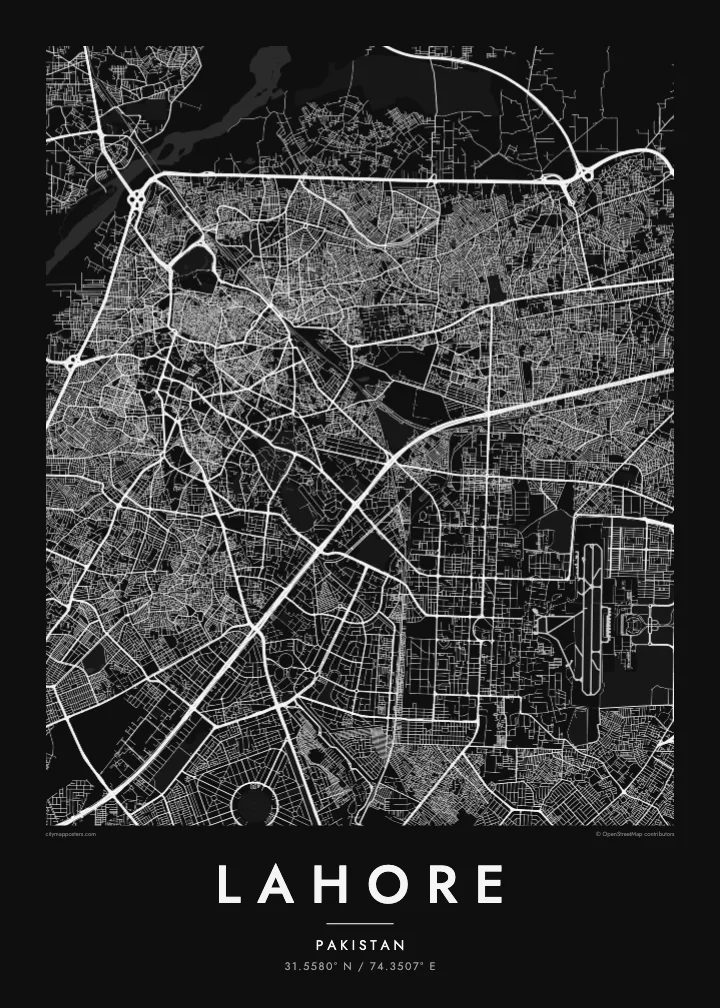
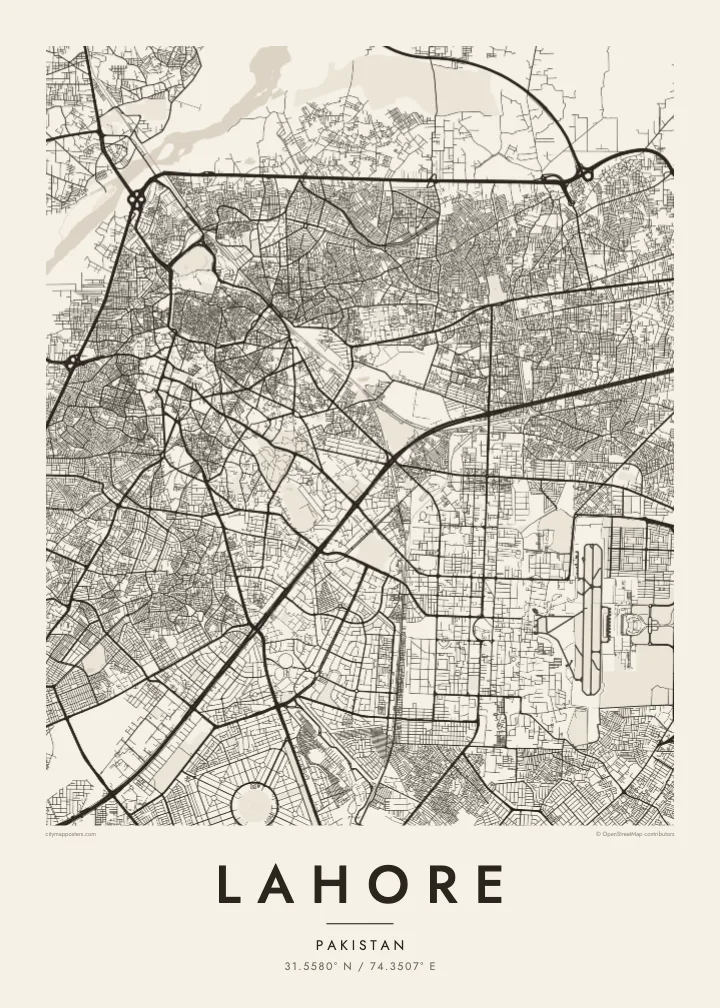
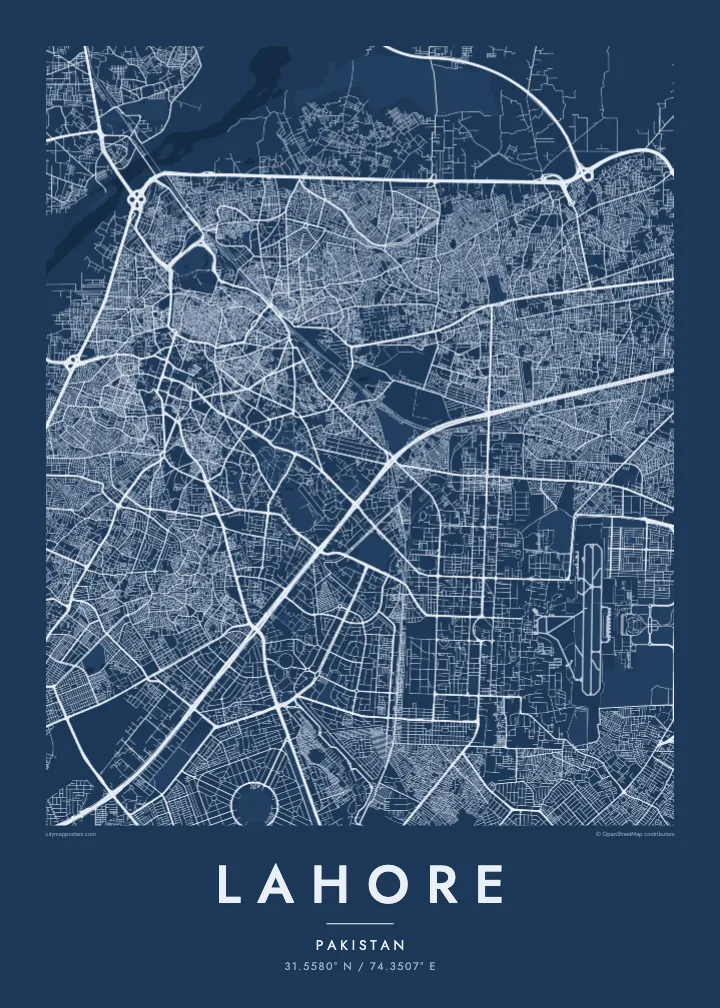
Title it Lahore or the name of a mohalla, add a date or a family name as the subtitle and adjust the coordinates line. Five styles are available, Classic black & white, Noir, Paper, Blueprint and Sand, with prints shipped from partners in more than 30 countries.
Talaage e poster Lahore| Lahi he lolomi | Maama | Tau faila |
|---|---|---|
| 30 × 40 cm11.8 × 15.7″ | 3,543 × 4,724 px | PNG · PDF |
| 29.7 × 42 cm (A3)11.7 × 16.5″ | 3,508 × 4,961 px | PNG · PDF |
| 42 × 59.4 cm (A2)16.5 × 23.4″ | 4,961 × 7,016 px | PNG · PDF |
| 45.7 × 61 cm18 × 24″ | 5,400 × 7,200 px | PNG · PDF |
| 50 × 70 cm19.7 × 27.6″ | 5,906 × 8,268 px | PNG · PDF |
| 61 × 91.4 cm24 × 36″ | 7,200 × 10,800 px | PNG · PDF |
Ke fakatatai, ko e fakatino noa kua 900 px e laulahi, fai fakamailoga mo e mo e tau mata komipiuta ni. Ko e tau faila HD kua ato hoko ke he 8× e maama ke he tau faahi takitaha mo e lolomi mitaki he lahi katoa he fakatino.
Fifili e taha puhala i luga he kupega, ti fifili e Poster Lolomi — e lahi mo e, kaeke ke manako ai koe, taha poloka — po ke Tau Faila HD Fakaeletonika. Ko e fakaotiaga totogi ko e taha gahua ni, ti ko e kupega he hau a talaaga ka fakafou fakahaga i mua he fakaotiaga e totogi.
Kua lolomi ai ke he pepa mitaki 200 gsm matte he taha he tau lahi ono, mai he 30 × 40 cm ke hoko ke he 24 × 36″. Kamata e tau poster lolomi mai he $39, kua putoia ai e utaaga.
E. Fifili e poloka akau malolō ke he lanu uli, tea, akau oki mooli, po ke akau pouli. Kua fakalataha mo e sioga malolō nakai malepe ti kua mautali ke tautau. Kamata e tau poster poloka mai he $99, kua putoia ai e utaaga.
Nakai totogi e fakafano ke he motu 60+. Ko e fakatino taha kua lolomi he fenoga lolomi ha mautolu kua tata mo e tau motu 30+, kua hoko mai he tau aho gahua 3–7. Maeke ia koe ke kikite e tuaga mo e fakamuitua he lalo he Haku Tau Fakatonu. Ke he falu motu kua 2–5 e tau tapu, ti ka nakai fakafano a mautolu ki ai, to fakaha he api tupe ia ki mua he totogi.
Fakafano mai e taha ata ki a mautolu he loto he 14 e tau aho tali mai he hokoaga, ti to lolomi foki e mautolu nakai totogi po ke liu atu e totogi ki a koe.
E. He editor i luga he kupega nei, hikihiki e matakupu, e matakupu lalo mo e laini coordinates ke he taha mena kua manako a koe ki ai, ti fifili e puhala mo e lahi. Ko e tau talaaga lolomi, poloka mo e fakaeletonika oti kua fakaaoga tonu e hau a fakatino.
Ma e $9 ka moua e koe e tau faila PNG 300 DPI mo e PDF kua mautali ke lolomi he tau lahi ono oti, nakai fai fakamailoga vai, ke lolomi i fe mena. Nakai maopoopo agaia? Utu hifo fakamua e kitiaaga nakai totogi ne fai fakamailoga vai.
