Imperial Palace
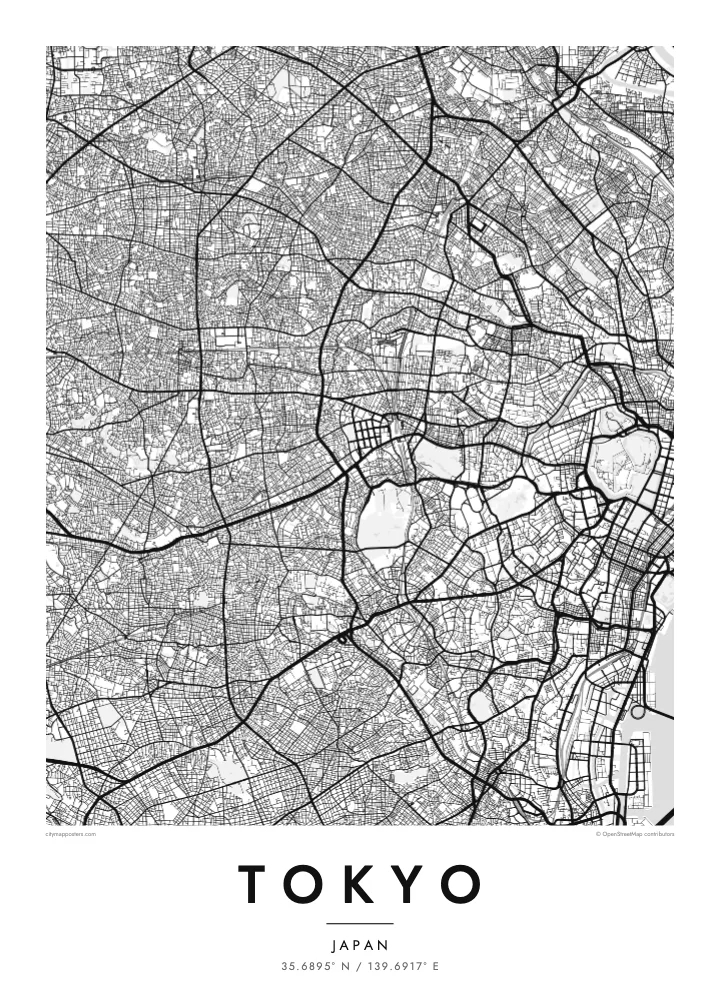
The former site of Edo Castle sits at the heart of the city, its moats and gardens forming a large open shape right beside the business district around Tokyo Station.
Ata mapa faigafua · Japan
35.6895° N / 139.6917° E
A vast, fine-grained city spreading from the moated grounds of the Imperial Palace to the reclaimed edges of Tokyo Bay.

Kolo e tahi, lanu e nima
Tuki he sitaili ke sio ai ʻi te holo. ʻE tatau pē te totogi ʻo te sitaili fuli pē — mokā tā, fakakātoa, peʻe ko he ʻu faila HD.
 Ngaahi pikiseli moʻoni · faila tā 24 × 36″
Mahino lelei ki te pulūti
Ko he konga 100% ʻo te faila tā moʻoni ʻaeni. Ko te ʻu posita fuli pē — mokā tā, fakakātoa peʻe download — ʻe fakatupu ʻi ʻomātou seva ʻi te 300 DPI, aʻu ki te 7,200 × 10,800 pikiseli, koia ʻe nofo mahino ai te ʻu ala liliki ʻi he tā 24 × 36″.
ʻI Te Puipui


Te mapa
Tokyo has no single downtown, and from above it looks more like a field of fine grain than a city with a centre. Yet there is a still point: the Imperial Palace, set within the moats and walls of the former Edo Castle, a broad, calm shape surrounded by some of the densest streets on earth. The city was called Edo until 1868.
Around the palace, the Yamanote Line draws a loop that links Shinjuku, Shibuya, Ikebukuro, Ueno and Tokyo Station, each a cluster of tight blocks and crossing rail lines. Most streets here have no names; addresses follow numbered districts and blocks instead, which is why the map looks like countless small cells rather than long, named avenues.
To the east, the Sumida River runs down to Tokyo Bay, where centuries of land reclamation have squared off the shoreline into artificial islands, docks and piers, Odaiba among them. A Tokyo map poster captures the contrast between the organic interior and the ruler-straight waterfront, with the wooded grounds of Meiji Shrine and Ueno Park as rare open patches.
The former site of Edo Castle sits at the heart of the city, its moats and gardens forming a large open shape right beside the business district around Tokyo Station.
Much of the waterfront is reclaimed land, and on the map it shows as a series of straight-edged artificial islands and wharves, a geometric fringe unlike anything further inland.
Between Harajuku and Yoyogi, a dense planted forest surrounds the shrine dedicated to Emperor Meiji, and together with neighbouring Yoyogi Park it forms one of the largest quiet spaces in central Tokyo.
Faʻu ke ʻau ʻa ʻau
Tuku he ʻaho, he hingoa peʻe he kiʻi palalau ʻa ʻau, fetogi te faʻahiga, te lahi peʻe te hake.
Ko te faʻata fua noa ʻe māʻulalo hono lelei pea ʻe ʻi ai he fakaʻilonga. Ko te ʻu tā mo te ʻu faila HD ʻe fakatupu ʻi te 300 DPI, aʻu ki te 7,200 × 10,800 px, ʻe mole ʻi ai he fakaʻilonga.
Koteā ko Tokyo
Tokyo tends to leave precise memories: a particular station exit, a small bar in a narrow lane, the view from a train window over endless rooftops. A map of the city gives those fragments a place, whether you lived there for work, studied there, or visited once and have wanted to return ever since.
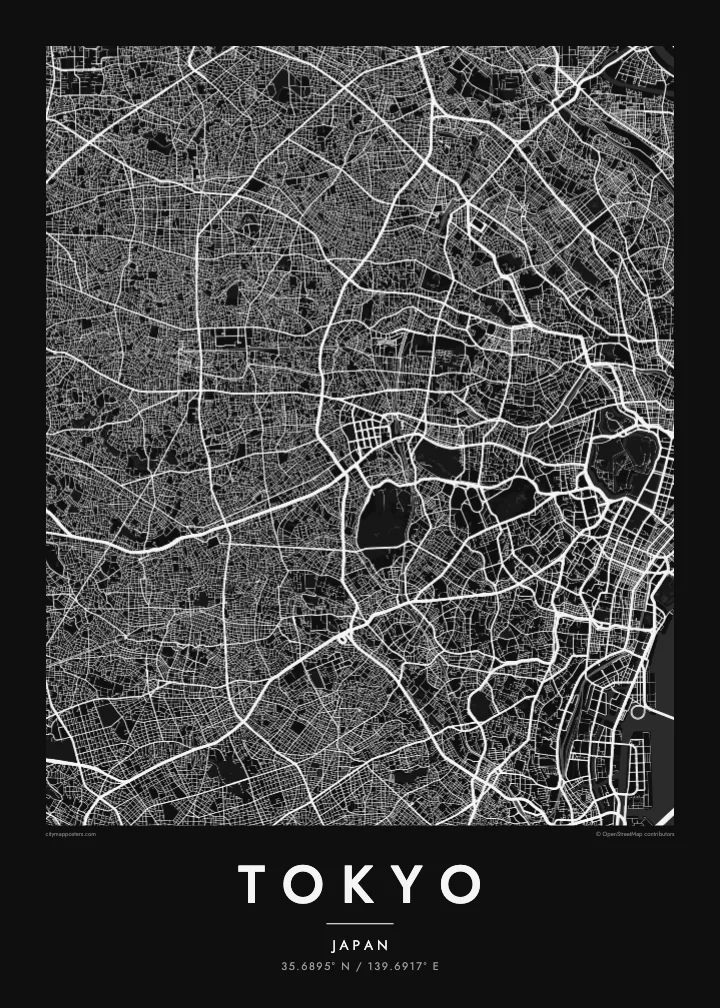
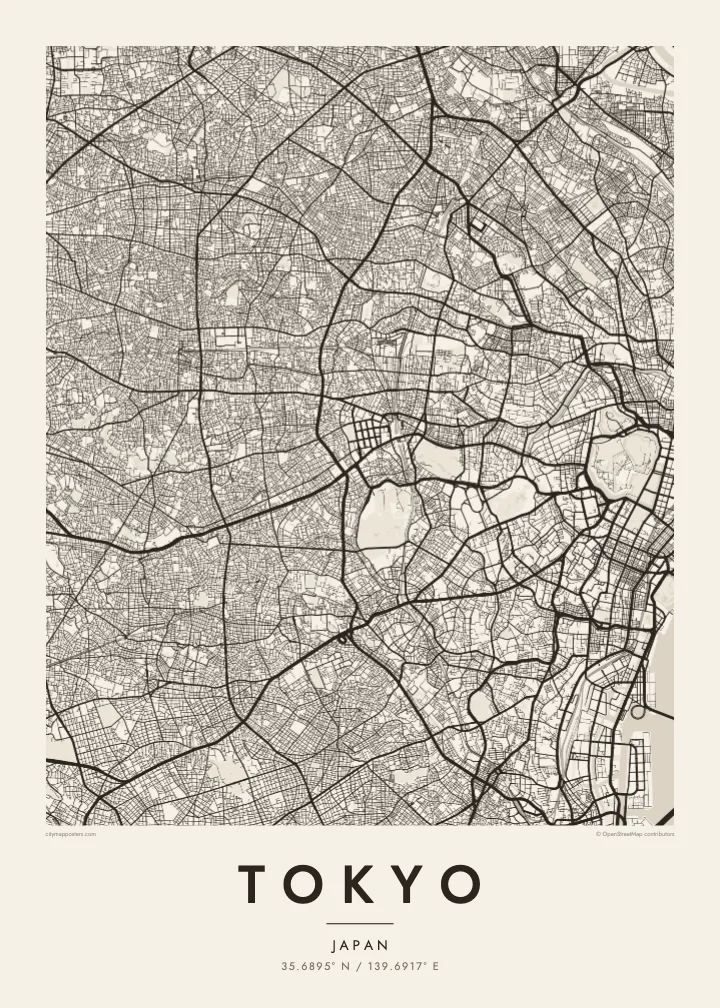
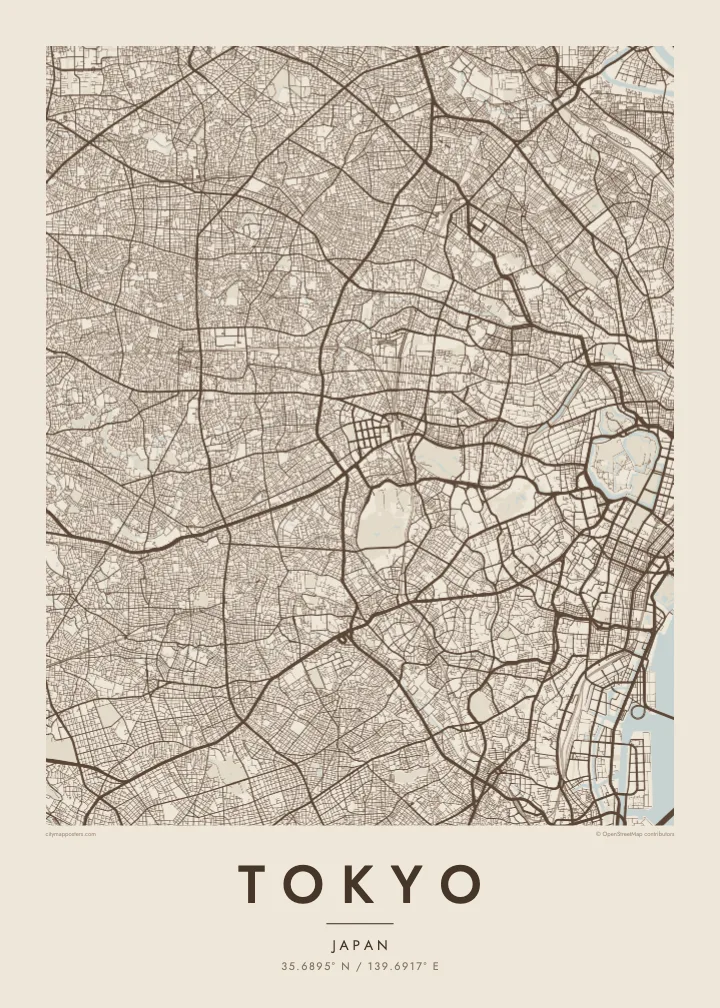
Write your own title and date on the poster, perhaps a neighbourhood, a name or the year you arrived. Then choose from five styles: Noir for the city after dark, Classic black & white for its fine detail, or Paper, Blueprint and Sand if you want it to sit more gently in a room.
Fakatau te posita Tokyo| Lahi ʻo te pulūti | Mahino | Faile |
|---|---|---|
| 30 × 40 cm11.8 × 15.7″ | 3,543 × 4,724 px | PNG · PDF |
| 29.7 × 42 cm (A3)11.7 × 16.5″ | 3,508 × 4,961 px | PNG · PDF |
| 42 × 59.4 cm (A2)16.5 × 23.4″ | 4,961 × 7,016 px | PNG · PDF |
| 45.7 × 61 cm18 × 24″ | 5,400 × 7,200 px | PNG · PDF |
| 50 × 70 cm19.7 × 27.6″ | 5,906 × 8,268 px | PNG · PDF |
| 61 × 91.4 cm24 × 36″ | 7,200 × 10,800 px | PNG · PDF |
Ko te ata ʻe mole totogi ʻe 900 px tona laulahi, mo te fakaʻilonga, ki te sioʻata pē. Ko te ʻu faile HD ʻe aʻu ki te liuga 8 tona mahino, pea ʻe pulūti lelei ʻi te lahi kātoa.
Fili he sitaili ʻi te tuʻa ʻo te pasina, pea fili leva te Posita Tā — he lahi pea, kapau ʻe ke loto ai, he fakakātoa — peʻe ko te ʻu Faila HD Fakakomipiuta. ʻE tahi pē te sitepu ʻo te totogi, pea ʻe fakafou fakavavevave pē tau pasina fakatau mai te taimi ʻe fai ai te totogi.
ʻE tā ʻi he pepa lelei ʻaupito 200 gsm matte, ʻi he tahi ʻo te ono lahi, mai te 30 × 40 cm ki te 24 × 36″. ʻE kamata te ʻu posita tā ʻi te $39, kātoa mo te ʻave.
ʻIo. Fili he fakakātoa ʻakau moʻoni ʻi te kili, hinahina, ʻakau natula peʻe ʻakau ʻuliʻuli. ʻE ʻi ai mo he sioga mālohi ʻe mole mafesi, pea kua teu ke tautau. ʻE kamata te ʻu posita fakakātoa ʻi te $99, kātoa mo te ʻave.
Ko te fakahoko e mole totogi ki te ʼu fenua e 60+. Ko te pōsita taki taha ʼe tā e te tahi ʼo ʼemau ʼu kaufakalogo tā ʼe ofi mai, ʼi te ʼu fenua e 30+, pea ʼe hoko mai ʼi te ʼu ʼaho gaue e 3–7. ʼE feala hau ke ke vakaʼi te tuʼunga mo te tracking ʼi Oku Fakamaʼu. ʼE ʼi ai te ʼu fenua ʼe 2–5 te ʼu vaiaho, pea ʼi te ʼu fenua ʼaē ʼe heʼeki tou fakahoko ki ai, ʼe fakahā e te saite ʼi muʼa ʼo tau totogi.
Fekau mai he ʻata ʻi loto ʻi te ʻaho e 14 talu mai te aʻu mai, pea mātou toe tā noa peʻe toe totogi atu.
ʻIo. ʻI te meʻa fakatonutonu ʻi te pasina ʻaeni, fetogi te kupu tāfito, te kupu lalo pea mo te laina koʻoliteti ki he meʻa fuli pē ʻe ke loto ai, pea fili he sitaili mo he lahi. Ko te ʻu fakatau tā, fakakātoa mo fakakomipiuta ʻe fakaʻaogaʻi katoa pē tou fakatātā.
Mo te $9 ʻe ke maʻu ai te ʻu faila PNG 300 DPI mo PDF kua teu ke tā, ʻi te ono lahi kātoa, ʻe mole ʻi ai he fakaʻilonga, ke ke tā ai ʻi soʻo he potu. Kei tā fakafiafia? Download muʻa he faʻata mokā mo he fakaʻilonga, ʻe fua noa.
