The Hai River
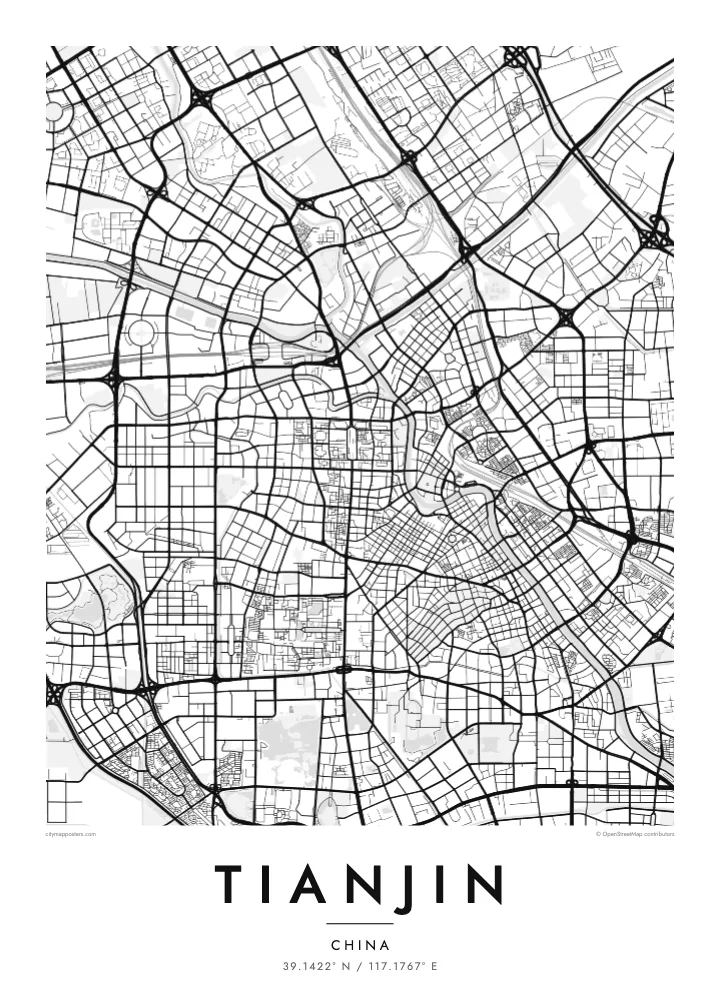
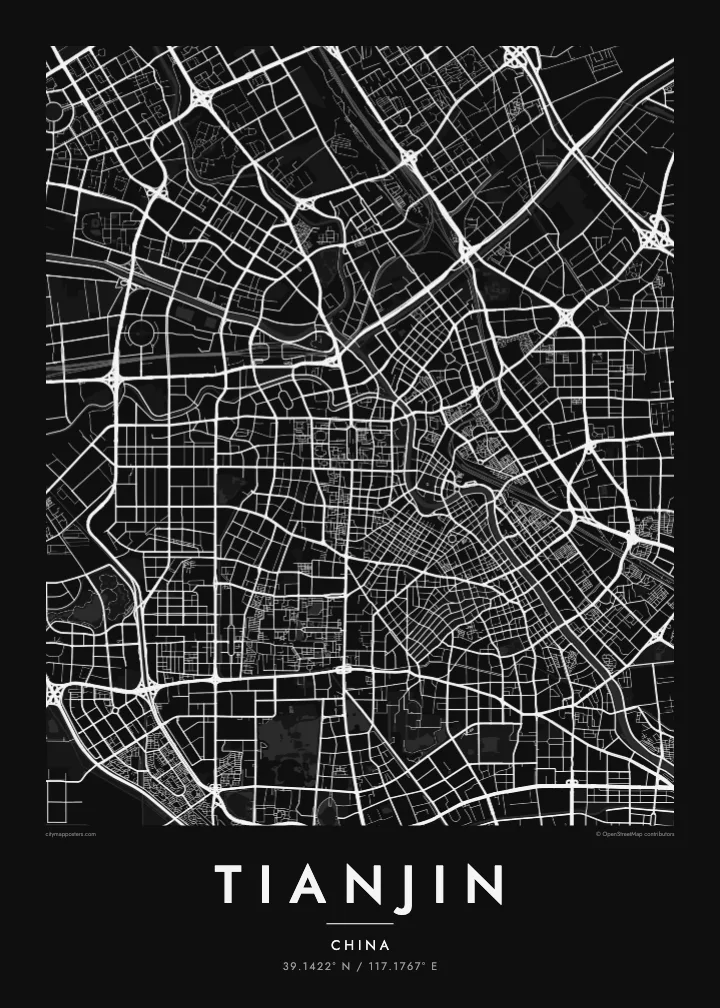
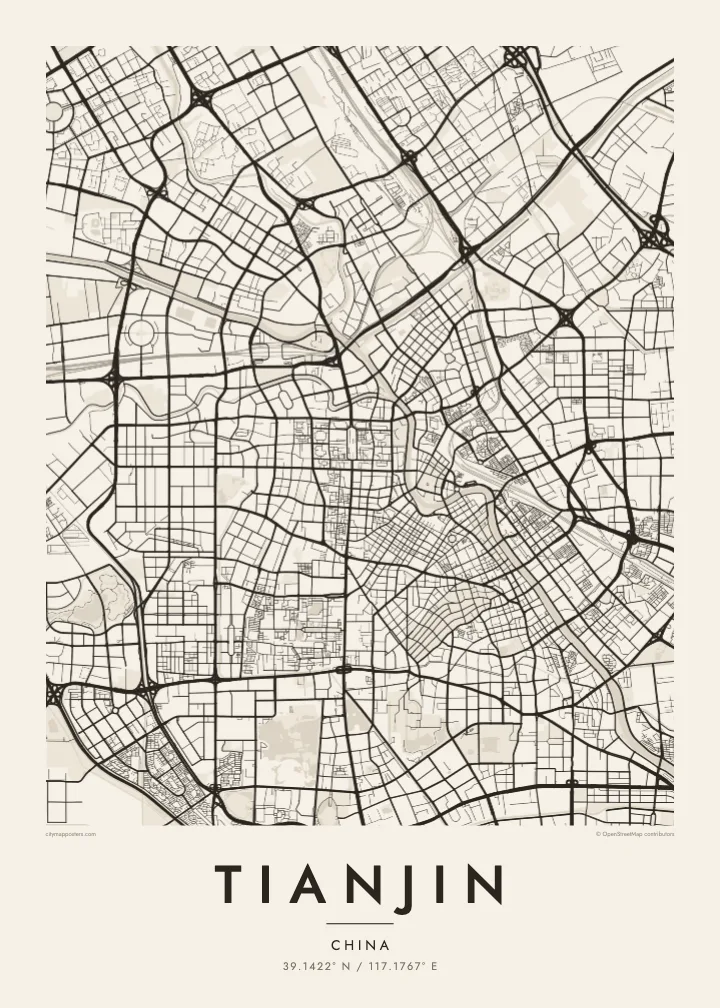
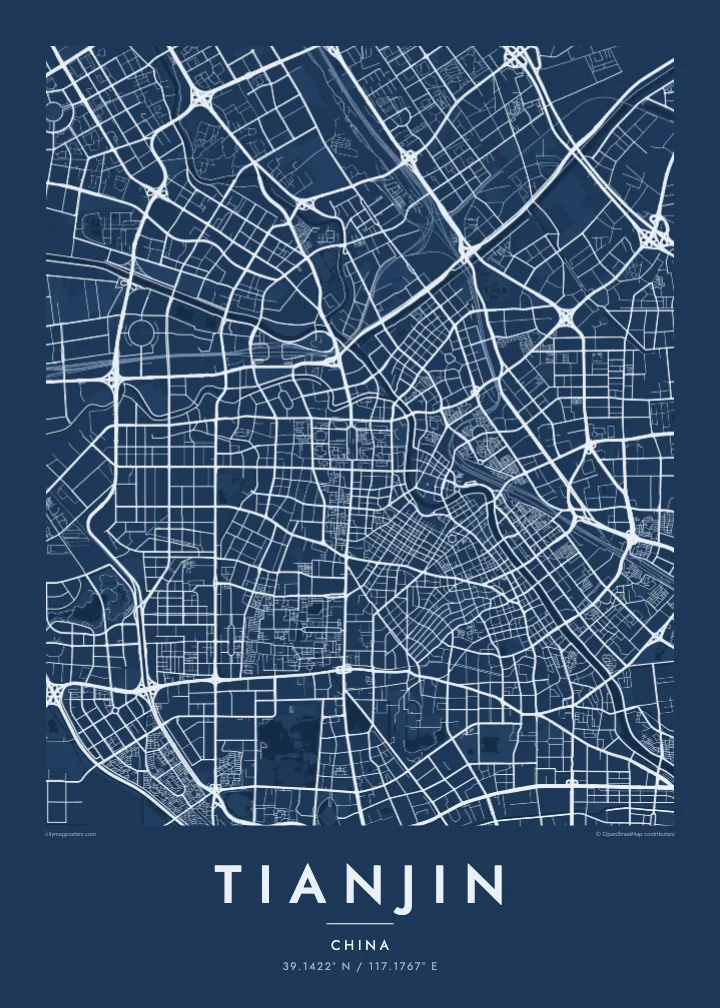
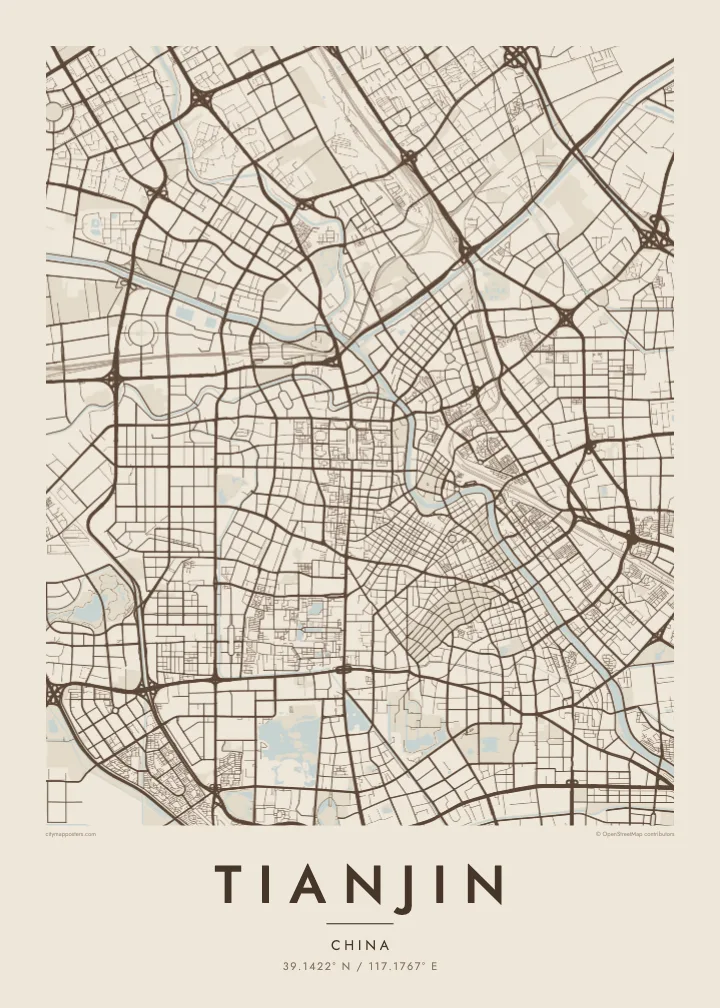
The river curves repeatedly through central Tianjin, forming loops and headlands that give the map its strongest shapes and connect the old city with the coast.
Fakatino mape mukamuka · China
39.1422° N / 117.1767° E
A port city threaded by the winding Hai River, with former concession quarters laid out along its banks
Taha e taone, lima e onoonoaga
Tapaki e taha puhala ke kitia ai ki luga he puipui. Kua tatai e totogi he tau puhala oti — pete he lolomi, poloka, po ke faila HD.
 Tau pikselo mooli · faila lolomi 24 × 36″
Maama mitaki ke lolomi
Ko e 100% e fahi mooli mai he faila lolomi. Ko e tau poster oti — pete kua lolomi, poloka, po ke utu hifo — kua taute ke he ha mautolu a tau tokoluga (server) ke he 300 DPI, hokotia ke he 7,200 × 10,800 piksela, ke maeke ai e tau ala ikiiki tote ke maaliali fakamitaki he lolomi 24 × 36″.
He Pā


Ko e mape
Tianjin grew where several rivers and the Grand Canal meet to form the Hai River, which then winds south-east through the city toward the Bohai Sea. That winding course is the central line on any map of Tianjin. Streets meet it at angles rather than in a single grid, so neighbourhoods on each bank follow their own orientation, and the result is a patchwork of plans joined by bridges.
Along the river lie the former foreign concessions, established in the late nineteenth and early twentieth centuries. The Five Great Avenues area, once part of the British concession, keeps a fine grid of tree-lined streets with European villas. Nearby, the Tianjin Eye, a Ferris wheel built into a bridge over the Hai River, marks one of the city’s crossings. Downstream, the Binhai New Area stretches out to the port.
Tianjin has long served as Beijing’s gateway to the sea, and high-speed trains now link the two cities in around half an hour. Its port is one of the busiest in northern China. A Tianjin map poster records a city shaped by trade, where concession-era blocks, older Chinese lanes and modern districts sit along the same river.
The river curves repeatedly through central Tianjin, forming loops and headlands that give the map its strongest shapes and connect the old city with the coast.
A compact grid of parallel roads and connecting streets in the former British concession, lined with early twentieth-century houses and clearly distinct from the surrounding blocks.
A large observation wheel mounted on the Yongle Bridge over the Hai River, one of very few Ferris wheels in the world built above a river crossing.
Taute ke ha hau
Lafi e aho, taha higoa po ke taha kupu haau, hiki e fakatino, lahi po ke tuaga.
Ko e kitiaaga nakai totogi kua tote e maaliali mo e fakamailoga vai. Ko e tau lolomi mo e tau faila HD kua taute ke he 300 DPI, hokotia ke he 7,200 × 10,800 px, nakai fai fakamailoga vai.
Ko e ha Tianjin
Tianjin suits people who know it beyond the commuter route from Beijing: former students, families from the old districts, anyone who has walked the concession streets. The winding river makes an elegant composition that feels calm on a wall.
Add your own title and subtitle, perhaps a street name or a date, and edit the coordinates line. Classic black & white, Noir, Paper, Blueprint and Sand are the five available styles, delivered as print-ready files or as a printed poster, framed or unframed.
Talaage e poster Tianjin| Lahi he lolomi | Maama | Tau faila |
|---|---|---|
| 30 × 40 cm11.8 × 15.7″ | 3,543 × 4,724 px | PNG · PDF |
| 29.7 × 42 cm (A3)11.7 × 16.5″ | 3,508 × 4,961 px | PNG · PDF |
| 42 × 59.4 cm (A2)16.5 × 23.4″ | 4,961 × 7,016 px | PNG · PDF |
| 45.7 × 61 cm18 × 24″ | 5,400 × 7,200 px | PNG · PDF |
| 50 × 70 cm19.7 × 27.6″ | 5,906 × 8,268 px | PNG · PDF |
| 61 × 91.4 cm24 × 36″ | 7,200 × 10,800 px | PNG · PDF |
Ke fakatatai, ko e fakatino noa kua 900 px e laulahi, fai fakamailoga mo e mo e tau mata komipiuta ni. Ko e tau faila HD kua ato hoko ke he 8× e maama ke he tau faahi takitaha mo e lolomi mitaki he lahi katoa he fakatino.
Fifili e taha puhala i luga he kupega, ti fifili e Poster Lolomi — e lahi mo e, kaeke ke manako ai koe, taha poloka — po ke Tau Faila HD Fakaeletonika. Ko e fakaotiaga totogi ko e taha gahua ni, ti ko e kupega he hau a talaaga ka fakafou fakahaga i mua he fakaotiaga e totogi.
Kua lolomi ai ke he pepa mitaki 200 gsm matte he taha he tau lahi ono, mai he 30 × 40 cm ke hoko ke he 24 × 36″. Kamata e tau poster lolomi mai he $39, kua putoia ai e utaaga.
E. Fifili e poloka akau malolō ke he lanu uli, tea, akau oki mooli, po ke akau pouli. Kua fakalataha mo e sioga malolō nakai malepe ti kua mautali ke tautau. Kamata e tau poster poloka mai he $99, kua putoia ai e utaaga.
Nakai totogi e fakafano ke he motu 60+. Ko e fakatino taha kua lolomi he fenoga lolomi ha mautolu kua tata mo e tau motu 30+, kua hoko mai he tau aho gahua 3–7. Maeke ia koe ke kikite e tuaga mo e fakamuitua he lalo he Haku Tau Fakatonu. Ke he falu motu kua 2–5 e tau tapu, ti ka nakai fakafano a mautolu ki ai, to fakaha he api tupe ia ki mua he totogi.
Fakafano mai e taha ata ki a mautolu he loto he 14 e tau aho tali mai he hokoaga, ti to lolomi foki e mautolu nakai totogi po ke liu atu e totogi ki a koe.
E. He editor i luga he kupega nei, hikihiki e matakupu, e matakupu lalo mo e laini coordinates ke he taha mena kua manako a koe ki ai, ti fifili e puhala mo e lahi. Ko e tau talaaga lolomi, poloka mo e fakaeletonika oti kua fakaaoga tonu e hau a fakatino.
Ma e $9 ka moua e koe e tau faila PNG 300 DPI mo e PDF kua mautali ke lolomi he tau lahi ono oti, nakai fai fakamailoga vai, ke lolomi i fe mena. Nakai maopoopo agaia? Utu hifo fakamua e kitiaaga nakai totogi ne fai fakamailoga vai.
Tata mai
